School Uniform & Bullying Risk Assessor
Assess how your current or prospective school environment balances uniform compliance with genuine anti-bullying efforts.
Fill out the profile on the left to receive a personalized assessment of your school's approach to bullying prevention beyond just uniforms.
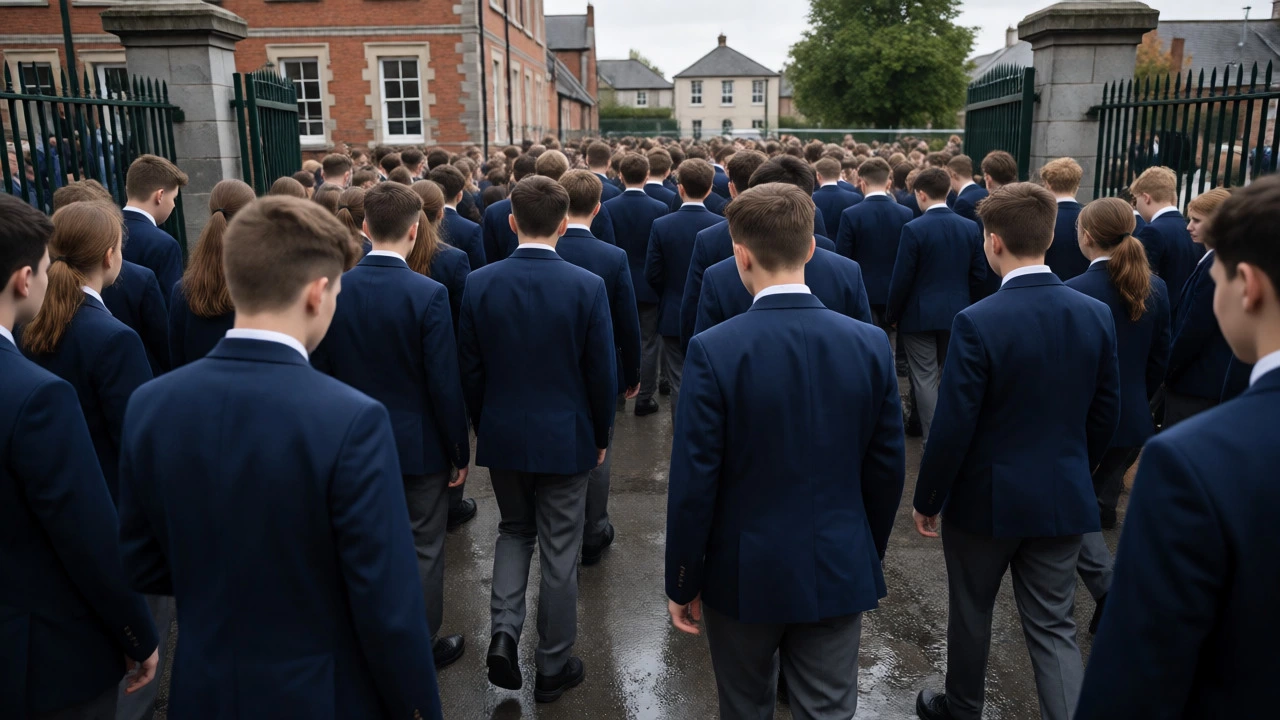
Walk through the gates of any secondary school in Dublin, Cork, or Galway on a Monday morning, and you will see a sea of identical blazers. From the crisp white shirts of St. Mary’s CBS to the distinct tartans of Scoil na Tríonóide Naofa, uniformity is the norm across Ireland’s education system. For decades, parents, teachers, and policymakers have operated under a simple assumption: if everyone looks the same, no one can be singled out for being different. But does this visual equality actually stop the mean words, the exclusion from lunch tables, and the cyberbullying that keeps kids up at night?
The short answer is complicated. While uniforms remove one layer of social signaling-clothing brands-they do not erase the human tendency to find differences. In Ireland, where community ties are tight and social hierarchies can start young, the relationship between dress code and kindness is nuanced. Let’s look at what the data says, what Irish parents are experiencing, and whether the traditional blazer is still doing its job.
The Logic Behind the Blazer
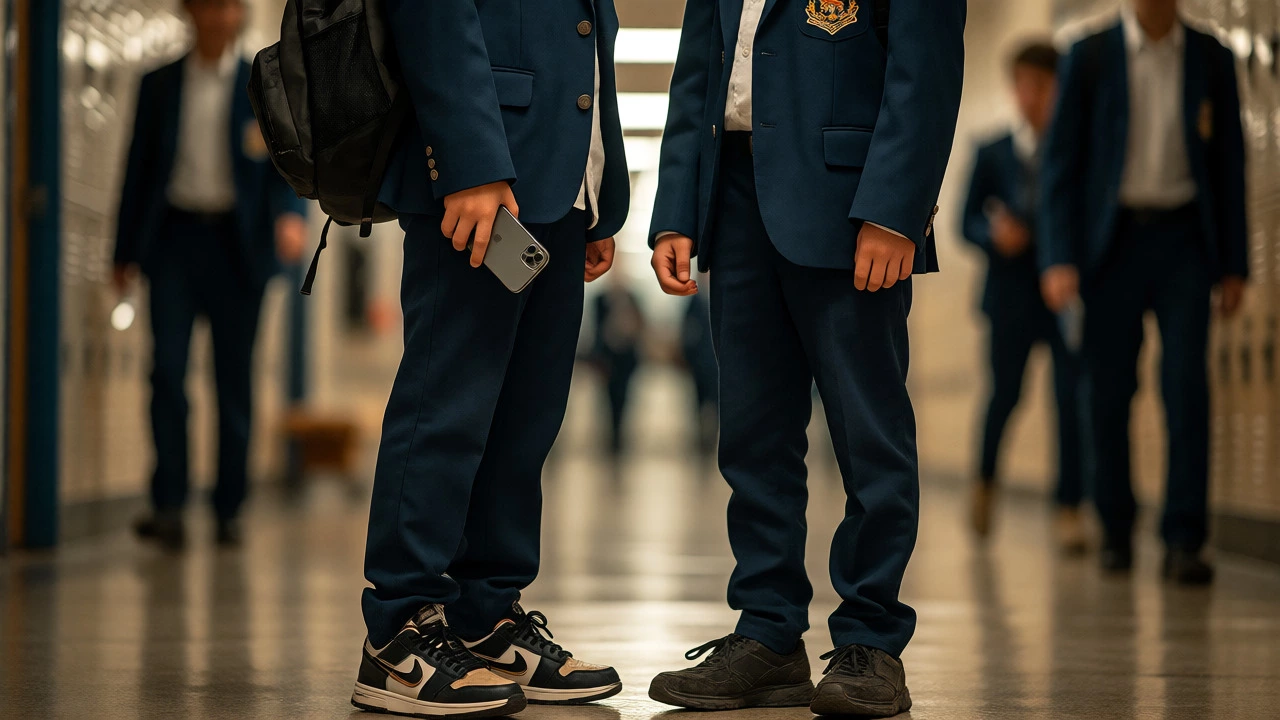
The argument for uniforms in Ireland has always been rooted in equity. If every child wears the same grey trousers and navy jumper, the pressure to wear expensive Nike trainers versus generic sneakers disappears. This logic suggests that by removing visible markers of wealth, we reduce the fuel for bullying. It sounds logical, but psychology tells a different story.
Bullying rarely stops because clothes match; it shifts targets. When financial status is hidden by a uniform, bullies often pivot to other identifiers. In many Irish suburban schools, the focus moves to accessories. A branded backpack, the latest iPhone model, or even the specific brand of water bottle becomes the new status symbol. I’ve spoken with parents in Naas who noted that while their children wore identical school shoes, the bullying centered entirely on who had the newest AirPods. The uniform didn’t prevent the behavior; it just changed the currency of the conflict.
Furthermore, the psychological concept of "deindividuation" plays a role here. Wearing a uniform can make students feel like part of a collective unit, which boosts school pride. However, it can also make individual struggles harder to spot. If a student is being bullied, they might hide it more effectively when they look exactly like everyone else. There is no subtle clue-a torn shirt, an odd haircut-to signal distress to a teacher walking down the corridor.
What the Research Actually Says
If you dig into the academic literature, the link between uniforms and reduced bullying is weak at best. A widely cited study from the University of Nevada found no significant difference in bullying rates between public schools with uniforms and those without. Closer to home, reports from the National Council for Special Education (NCSE) highlight that bullying interventions work best when they involve whole-school approaches, including peer mediation and staff training, rather than relying solely on dress codes.
A 2019 report by the Union of Students in Ireland (USI) surveyed thousands of students and found that 60% felt uniforms helped them fit in, but only 15% believed uniforms stopped others from picking on them. This gap is crucial. Fitting in is about belonging; stopping bullying is about safety. Schools often conflate the two, assuming that if students feel part of the group, they won’t attack each other. That is a dangerous oversimplification.
| Aspect | Perceived Benefit | Real-World Observation |
|---|---|---|
| Financial Pressure | Reduces competition over clothing brands. | Shifts competition to electronics, bags, and shoes. |
| Social Equality | Hides economic background during school hours. | Social circles still form based on neighborhood and family status. |
| Bullying Incidence | Believed to lower verbal abuse related to appearance. | No statistically significant drop in physical or cyberbullying cases. |
| Student Comfort | Promotes discipline and focus. | Can increase anxiety for neurodiverse students due to sensory issues. |
The Irish Context: Community and Conformity
Ireland is a small country with strong community networks. In towns like Ennis or Sligo, everyone knows everyone’s business. This tight-knit environment means that reputation travels fast. For some students, the uniform acts as a shield against local gossip. If you look like your neighbor, you are less likely to be judged for standing out. This cultural preference for conformity is deeply embedded in Irish society. We value "not making a fuss," and uniforms reinforce this value early on.
However, this conformity can backfire. Students who naturally stand out-whether due to ethnicity, disability, or personal style-may feel more exposed in a uniform setting. For a Traveller student or a child from an immigrant family, blending in visually doesn’t necessarily mean they are accepted socially. They may face microaggressions that have nothing to do with their blazer color. The uniform creates an illusion of sameness that masks deeper inclusion challenges.
Moreover, the cost of uniforms in Ireland remains a barrier. Despite the intention of equality, high-quality blazers from suppliers like Carrickmacross Lace Company or standard retailers can cost hundreds of euros per year. Families struggling with the cost-of-living crisis may send children to school in ill-fitting or second-hand uniforms, which can itself become a source of teasing. The promise of "equality" breaks down when the quality of the uniform varies significantly between households.
Cyberbullying: Where Uniforms Can’t Reach
Perhaps the biggest flaw in the "uniforms prevent bullying" argument is the rise of digital life. Most bullying today happens online, long after the final bell rings. When a student leaves school, they take off the blazer and log onto TikTok or Instagram. Here, the uniform is irrelevant. Their profile picture, their comments, and their interactions define their social standing.
In Ireland, smartphone ownership among secondary students is nearly universal. Cyberbullying involves screenshots, group chats, and anonymous apps. No amount of standardized dress code can regulate what happens in a WhatsApp group chat at 10 PM. Schools that rely on uniforms to manage behavior often neglect the digital citizenship education needed to handle online conflicts. Teachers may enforce rules about tucking in shirts, but they cannot police tone in a DM.
This disconnect leads to a false sense of security. Administrators might point to low reported incidents of hallway bullying as proof that uniforms work. But if the bullying has simply migrated to the cloud, the problem hasn’t been solved-it’s just gone underground. Parents need to ask: Is my child safer because they wear a uniform, or are they just hiding their pain better?

Alternatives and Hybrid Approaches
Not all Irish schools stick to rigid traditionalism. Some progressive institutions in Dublin and Limerick have experimented with relaxed dress codes. These schools allow students to choose from a palette of colors or styles within set guidelines. For example, allowing jeans of a certain cut or permitting hoodies during colder months. The goal is to balance identity expression with community cohesion.
These hybrid models often report higher student satisfaction. When students feel they have some autonomy over their appearance, they are less likely to rebel against authority figures. Rebellion often fuels conflict; cooperation reduces it. Additionally, flexible dress codes accommodate neurodiverse students who struggle with sensory processing. Scratchy wool blazers or stiff collars can cause immense distress for a child with autism spectrum disorder, distracting them from learning and making them vulnerable to mockery.
Another emerging trend is the use of "wellbeing checks" alongside uniform enforcement. Instead of focusing solely on compliance, staff use morning inspections as opportunities for connection. A quick chat about a tie knot can open a door to a conversation about how a student is feeling. This humanizes the process and shifts the focus from policing to caring.
Practical Advice for Irish Parents
If you are navigating the school system in Ireland, here is how to approach the uniform debate practically:
- Check the Second-Hand Market: Websites like Adverts.ie and local Facebook groups for parents in areas like Swords or Tallaght are goldmines for affordable, good-condition uniforms. Saving money reduces household stress, which indirectly supports a child’s emotional resilience.
- Talk About Status Symbols: Have open conversations with your children about why friends tease others. Help them understand that brands don’t define worth. If your child feels pressured to buy expensive extras, discuss budgeting together.
- Monitor Digital Behavior: Don’t assume school rules end at the gate. Ask your child about their online interactions. Are there cliques forming in group chats? Encourage them to report cyberbullying immediately.
- Voice Your Concerns: If a school’s uniform policy seems to prioritize aesthetics over comfort or inclusivity, raise it at the Parents’ Association meeting. Many schools are open to minor adjustments, such as allowing non-branded plain jumpers.
Ultimately, the question isn’t whether uniforms prevent bullying entirely-they don’t-but whether they contribute to a positive school culture. In Ireland, where community and tradition matter, uniforms serve a symbolic purpose. They remind us that we are part of something bigger. But symbols alone cannot fix human behavior. Real change comes from empathy, active listening, and addressing the root causes of insecurity in our children.
Do school uniforms really reduce bullying in Ireland?
There is no conclusive evidence that school uniforms directly reduce bullying rates in Ireland. While they may reduce competition over clothing brands, bullying often shifts to other factors like accessories, technology, or social media presence. Effective anti-bullying strategies require comprehensive programs involving staff, students, and parents, rather than relying solely on dress codes.
How much do school uniforms cost in Ireland?
Costs vary by school and supplier, but families can expect to spend between €150 and €400 per year for a full uniform kit, including blazers, jumpers, shirts, and trousers/skirts. Prices have risen recently due to inflation. Buying second-hand through local parent groups or online platforms can significantly reduce these expenses.
Are school uniforms mandatory in all Irish schools?
Most secondary schools in Ireland have a mandatory uniform policy, typically enforced via a code of conduct signed by parents and students. However, primary schools are more varied, with many adopting a simpler dress code or no strict uniform at all. Policies are set by individual Boards of Management, so requirements differ from county to county.
Does wearing a uniform help with social inclusion?
Uniforms can help students feel a sense of belonging and reduce immediate visual judgments based on fashion choices. However, they do not guarantee social inclusion. Students may still be excluded based on personality, interests, or socioeconomic cues that remain visible despite the uniform, such as footwear or personal items.
What should I do if my child is bullied despite wearing a uniform?
Document the incidents and speak to the class tutor or year head promptly. Request a meeting to discuss the school’s anti-bullying policy and how it applies to your child’s situation. Ensure the school investigates both in-person and online interactions, as cyberbullying may be occurring outside school hours.