
Irish Layering Logic Checker
Not sure if that trench coat is necessary? Answer these three questions to get the right advice for staying dry and stylish in Ireland.
Verdict:
...You’re standing outside your flat in Galway, watching the rain lash sideways against the window. It’s that specific kind of Irish drizzle that doesn’t just fall; it hunts you down. You grab your trusty waxed jacket-the one you’ve had since college because it looks great with jeans-but then you hesitate. Should you throw a heavy wool coat over it? Or is that just asking for a sweaty, bulky disaster? This isn’t just about looking stylish on Salthill Promenade; it’s about staying dry and warm without feeling like a stuffed sausage. The answer to do you wear a coat over a jacket depends entirely on what kind of day it is, where you are, and what fabric we’re talking about.
The Golden Rule of Irish Layering
Here is the hard truth most fashion blogs won’t tell you: generally, you do not wear a formal coat directly over a thick, insulated winter jacket. Why? Because you end up with two barriers trapping moisture against your skin, and zero flexibility if the weather shifts. In Ireland, the weather changes faster than the tide at Clifden. If you bundle up in a puffer under a trench, you’ll be overheating the moment you step into a heated pub or a crowded tram in Dublin city centre.
However, there are exceptions. The key is understanding the function of each layer. Your inner layer (the jacket) should provide warmth or style. Your outer layer (the coat) should provide protection from wind and rain. If your jacket is already waterproof and windproof-like a high-end Gore-Tex shell-you rarely need a coat over it unless it’s below freezing. But if you’re wearing a light denim jacket or a thin blazer, throwing a raincoat over it is not just acceptable; it’s essential survival gear in Connemara.
When It Works: Smart Combinations
Let’s look at scenarios where this double-layer approach actually saves your day. Think about commuting from Cork to Dublin by train. You’re inside the station, maybe walking through a drafty corridor, then sitting in an air-conditioned carriage. A heavy coat over a smart casual jacket works here if the coat is breathable. Look for coats made from technical wool blends or modern synthetic fabrics that allow sweat to escape. Brands available in local Irish boutiques often carry these hybrid styles.
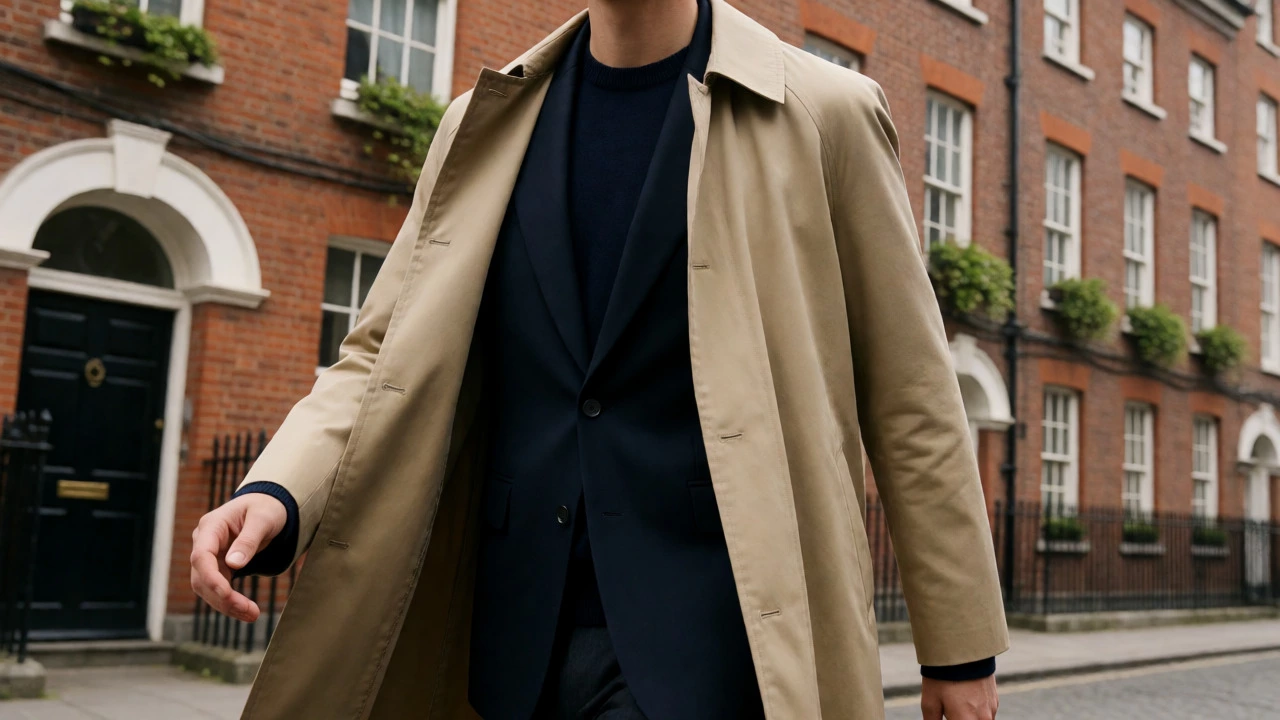
A classic example is the "city slicker" look. You wear a tailored navy blazer (your jacket) over a merino wool sweater. Then, you top it off with a long, unlined gabardine trench coat. This works because neither item is heavily insulated. The trench blocks the wind, the blazer adds structure, and you can easily take the trench off when you enter a restaurant in Temple Bar. If you tried this with a quilted liner jacket, you’d look lumpy and feel stifled.
When It Fails: The Bulky Mistake
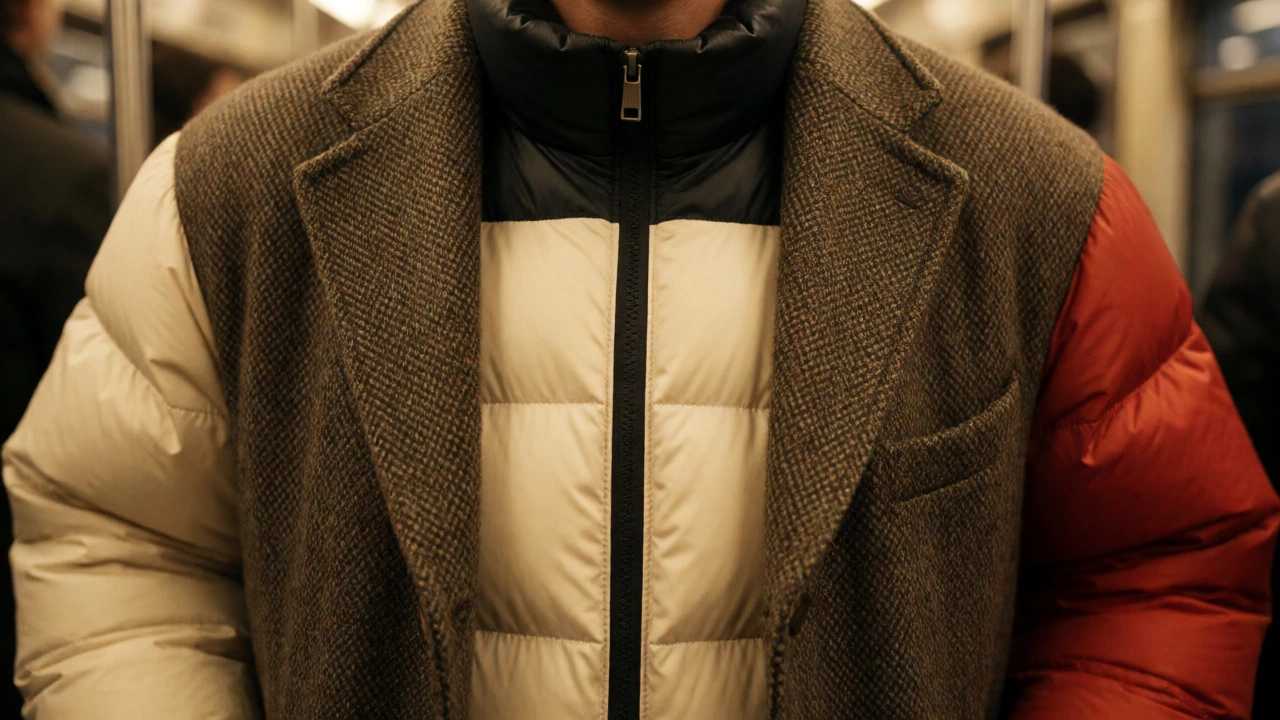
The biggest mistake people make is pairing a padded parka with a structured wool coat. Both items have volume. When you stack them, your arms can’t move freely, and you lose all dexterity. Try holding a coffee cup while wearing a down-filled North Face jacket under a tweed coat. You’ll look like you’re smuggling a basketball under your arm. It’s impractical for driving, cycling, or even just reaching for your phone.
Another failure point is water management. If your inner jacket is cotton (like a standard denim trucker jacket) and you put a non-breathable plastic raincoat over it, any sweat or humidity gets trapped. Once you stop moving, that dampness turns cold instantly. In our damp climate, this is a recipe for catching a chill. Always ensure your base layers wick moisture away before adding external barriers.
Ireland-Specific Advice: Dealing with Wind and Rain
In places like Donegal or Kerry, the wind is the real enemy, not just the rain. A lightweight windbreaker might seem sufficient, but if you’re also wearing a fleece-lined hoodie, you might want a longer coat to cover your lower back. Here, the length matters. A hip-length coat over a waist-length jacket leaves your core exposed to gusts. Opt for a coat that extends past the hem of your jacket. This creates a continuous shield against the elements.
Consider the material hierarchy:
- Base Layer: Merino wool or synthetic thermal (wicks moisture).
- Mid Layer (The Jacket): Fleece, light down, or softshell (provides insulation).
- Outer Layer (The Coat): Waterproof shell, trench, or waxed cotton (blocks wind/rain).
If your "jacket" is actually a mid-layer, yes, wear a coat over it. If your "jacket" is already a fully equipped outer shell, skip the coat. Check the care labels on your garments. Many Irish-made jackets, such as those from heritage brands like Harris Tweed or local artisan makers, are designed to be standalone pieces. Adding another layer often compromises their intended fit and function.
Style vs. Practicality: Making It Look Intentional
Fashion-wise, stacking layers can look messy if the colors clash or the silhouettes fight each other. Keep the inner jacket slim-fitting. Avoid oversized hoodies under fitted coats unless you’re going for a very deliberate streetwear aesthetic. In Dublin or Galway, the trend leans towards functional minimalism. A clean line is more appealing than a chaotic pile of fabric.
Try monochromatic layering. A charcoal grey wool coat over a black leather jacket looks sharp and cohesive. The textures contrast nicely without visual noise. Conversely, a bright red raincoat over a patterned tartan jacket can look disjointed unless you’re confident in mixing prints. Stick to neutral tones for the outer coat-it’s easier to match with whatever you’re wearing underneath.
Quick Decision Checklist
Before you head out, run through this quick mental checklist to decide if you need both items:
- Is it raining heavily? If yes, and your jacket isn’t waterproof, add a coat.
- Is it windy? If yes, and your jacket is porous (knit/cotton), add a windproof coat.
- Will you be indoors for long periods? If yes, avoid bulky combinations you can’t remove quickly.
- Are you active? Walking or hiking generates heat. Skip the extra coat if your jacket has good insulation.
- Is the temperature below 5°C? At this point, serious layering becomes necessary regardless of style concerns.
| Weather Condition | Jacket Type | Coat Needed? | Reason |
|---|---|---|---|
| Light Drizzle | Waxed Cotton / Leather | No | Already water-resistant; avoids bulk. |
| Heavy Storm | Denim / Knit Blazer | Yes | Jacket absorbs water; needs protective shell. |
| Cold & Dry | Down Puffer | No | Puffer provides sufficient insulation. |
| Windy & Cold | Fleece / Softshell | Yes | Wind cuts through fleece; coat blocks breeze. |
| Indoor/Office | Suit Blazer | Optional | Only for transit; remove upon arrival. |
Local Context: What People Actually Wear
Walk around St. Stephen’s Green or along the banks of the Corrib, and you’ll see a mix of approaches. Younger crowds often prefer the "one-and-done" mentality with high-quality technical jackets that handle rain and cold simultaneously. They skip the coat entirely. Older demographics or professionals commuting by car might stick to the traditional suit-blazer-trench combo because they spend less time exposed to the elements.
There’s also a cultural aspect to our clothing choices. We tend to value durability and versatility. An expensive Italian wool coat might look stunning, but if it gets soaked in a Galway squall, it takes days to dry. That’s why many locals opt for technical fabrics disguised as classic styles. You’ll find plenty of options in shops on Shop Street that blend aesthetics with practicality. Don’t be afraid to ask staff about breathability ratings. It’s a conversation worth having before spending €200+ on outerwear.
Troubleshooting Common Issues
If you find yourself constantly adjusting your layers throughout the day, your system is flawed. Maybe your coat is too tight over your jacket, restricting blood flow. Or perhaps your jacket is too slippery, causing the coat to slide off your shoulders. Fit is crucial. Ensure your coat allows enough room for the jacket underneath without pulling at the buttons. If you can’t raise your arms comfortably, size up the coat.
Another common issue is static cling. Synthetic linings in coats can create static electricity against wool sweaters or fleece jackets, making everything stick together awkwardly. Use anti-static spray or choose natural fiber linings if this bothers you. It’s a small detail, but it affects comfort significantly during long commutes.
Can I wear a raincoat over a puffer jacket?
Technically yes, but it’s usually unnecessary and uncomfortable. Most modern puffer jackets have DWR (Durable Water Repellent) coatings that handle light rain. For heavy storms, a dedicated waterproof shell is better than a fashion raincoat. If you must, choose a loose-fitting raincoat to avoid compressing the down insulation, which reduces its warmth.
What is the best jacket to wear under a coat in Ireland?
Thin, warm layers work best. Merino wool sweaters, light fleece pullovers, or slim-fit cardigans are ideal. Avoid bulky knits or heavy denim jackets under structured coats, as they distort the silhouette and restrict movement. A lightweight softshell jacket is also a great option for transitional weather.
Does wearing a coat over a jacket ruin the coat's shape?
It can stretch the shoulders and sleeves if the jacket underneath is too thick. To preserve the shape of your coat, buy it slightly larger if you plan to layer heavily. Alternatively, hang your coat properly after use to let the fibers recover. Frequent stress from bulky layers can permanently deform delicate fabrics like cashmere or fine wool.
How do I stay dry without wearing two heavy layers?
Invest in a high-quality waterproof membrane jacket (like Gore-Tex) that serves as both insulation and protection. Pair it with a moisture-wicking base layer. This eliminates the need for a separate coat. If you need style, look for waterproof jackets with minimalist designs that resemble traditional coats rather than sportswear.
Is it okay to wear a hoodie under a coat?
Yes, but keep the hoodie slim-fitting. Thick, oversized hoodies create bulk around the neck and shoulders, making the coat feel tight and looking sloppy. Zip-up hoodies are easier to manage than pullovers when layering, as you can adjust ventilation quickly. Choose thin cotton or tech-fabric hoodies for better results.