T-Shirt Quality Checker
Enter the specifications of the t-shirt you are considering to determine its expected durability and value.
Awaiting Input
Fill in the details to see your score.
You’ve probably been there. You buy a plain white tee from a high-street chain in Galway or Dublin, wear it twice, and suddenly the neckline looks like a wavy mess and the fabric has gone see-through. It’s frustrating, especially when you’re paying €25 for something that feels like a napkin. The truth is, most people don’t know how to tell if a t-shirt is actually good before they take it home. In Ireland, where our damp weather means we often layer up, having a base layer that holds its shape matters more than you think. A bad tee ruins an outfit; a great one lasts for years.
Check the Fabric Weight and Feel
Start with the material. Most cheap tees use short-staple cotton. This fiber breaks down quickly after washing, leading to pilling-that annoying fuzzball effect on your chest and sleeves. If you want durability, look for long-staple cottons like Pima or Supima. These fibers are longer, stronger, and smoother. When you run your hand over a high-quality shirt, it should feel dense and substantial, not flimsy.
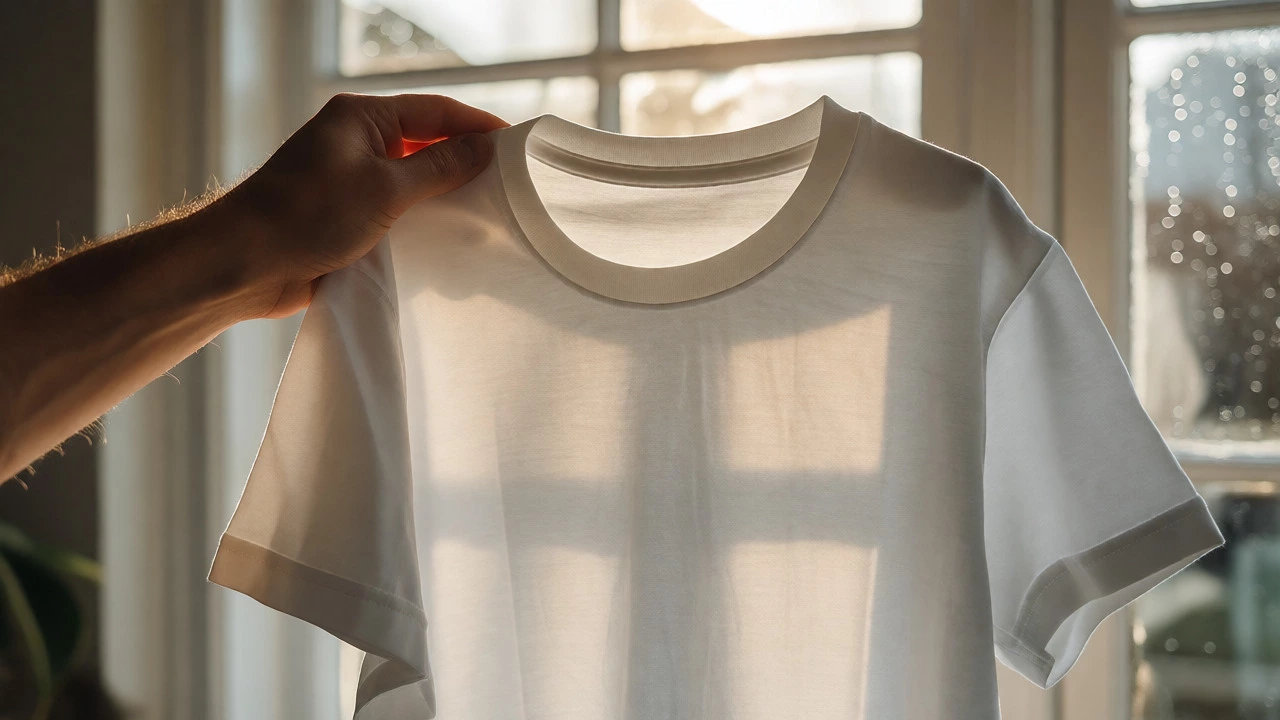
Fabric weight is measured in GSM (grams per square meter). For a standard daily tee, aim for 180-220 GSM. Anything below 150 GSM will likely be sheer and fragile. If you live in a coastal town like Clifden or Cork city, where the wind cuts through thin layers, a heavier 240+ GSM tee offers better warmth and structure without needing a separate undershirt. Hold the shirt up to the light. If you can clearly see the outline of your hand through the fabric, it’s too thin for regular wear unless you’re planning to wear it strictly as an undershirt under a blazer.
| GSM Range | Characteristics | Best Use Case in Ireland |
|---|---|---|
| <150 GSM | Very light, often sheer | Undershirt only, hot summer days |
| 160-190 GSM | Standard lightweight | Warm July evenings, gym wear |
| 200-240 GSM | Mid-weight, durable | Daily wear, mild autumn days |
| 250+ GSM | Heavyweight, structured | Cold winds, streetwear style, longevity |
Inspect the Seams and Stitching
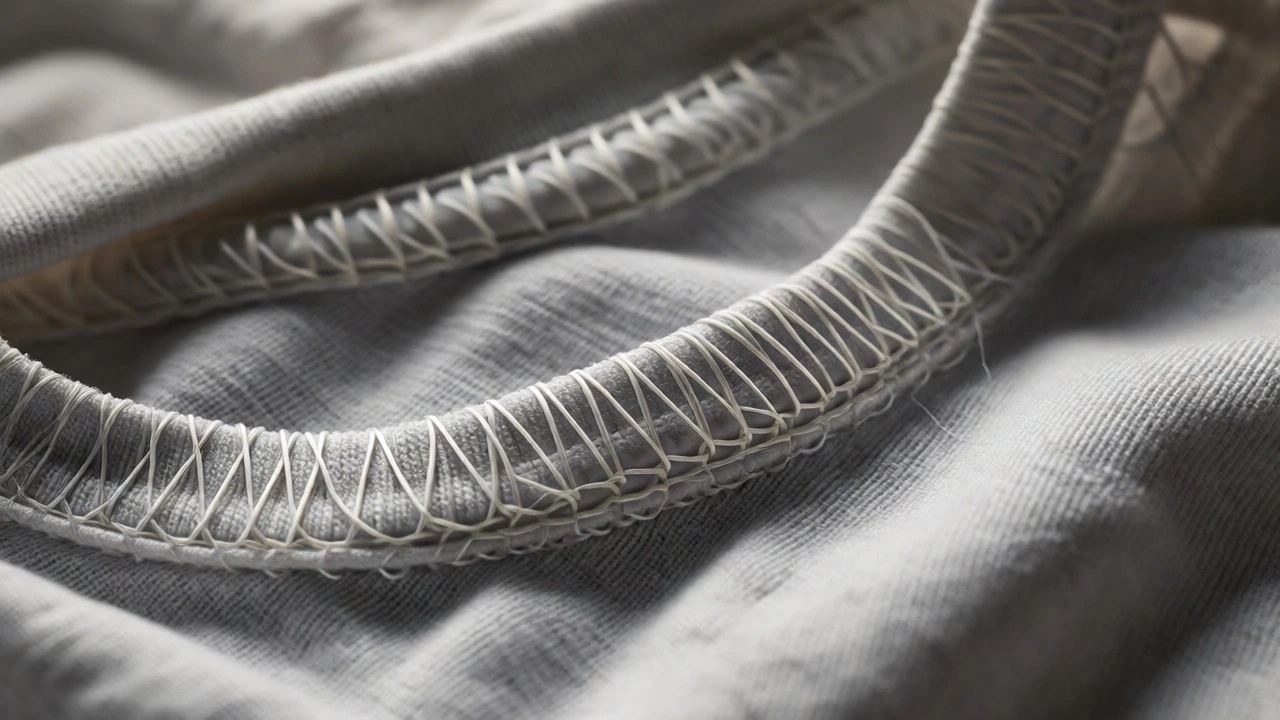
Flip the shirt inside out. This is where the secrets hide. Cheap manufacturing saves money by using fewer stitches per inch (SPI). Look at the side seams. A high-quality tee uses a twin-needle stitch or a flatlock seam. Twin-needle stitching creates two parallel lines of thread, which prevents the seam from unraveling and adds stretch resistance. Flatlock seams lie flat against the skin, reducing chafing-crucial if you’re walking around Trinity College campus or hiking the Wicklow Way.
Count the stitches. A standard industrial machine does about 8-10 SPI. Good brands push this to 12-14 SPI. More stitches mean the seam is tighter and less likely to pop open when you pull the shirt off over your head. Also, check the shoulder seams. They should be reinforced with tape. This "shoulder tape" stops the neckline from stretching out over time. Without it, that round neck becomes a wide boat neck after six months of wear.
Evaluate the Neckline Construction
The collar is the first thing to fail on a cheap tee. Run your fingers along the ribbing. It should feel tight and elastic, not loose or floppy. High-end shirts use a higher percentage of elastane (spandex) mixed with cotton in the collar band. This ensures the neck snaps back into shape after every wash. If the collar feels like soft rubber that doesn’t bounce back, it will sag within weeks.
Look for a coverstitch at the hem and sleeves. This is a specific type of stitch that looks like ladders on the inside but clean lines on the outside. It allows the fabric to stretch without breaking the thread. If you see single-thread zigzag stitching on the hem, put the shirt back. That method is faster and cheaper but prone to popping threads. Brands sold in boutiques on Grafton Street often prioritize these details because customers expect their clothes to survive the rainy season.
Test the Colorfastness and Print Quality
If you’re buying a graphic tee, check how the design is applied. Screen printing is the gold standard for durability. The ink sits on top of the fabric and cures hard. It won’t crack easily. Avoid plastisol prints that feel like a thick plastic sticker glued to your chest. These crack after a few washes in a hot cycle. Instead, look for water-based inks or discharge printing. These soak into the fibers, making the print feel part of the shirt rather than sitting on top.
For solid colors, rub a white cloth or tissue paper firmly against a dark area of the shirt. If color transfers onto the tissue, the dye wasn’t fixed properly. In Ireland’s hard water, poor dyes fade fast. A black tee might turn grey-blue after three washes. Ask yourself: would I wear this if it faded? If the answer is no, skip it. Local Irish brands often work with European mills that adhere to stricter environmental and dye standards, ensuring colors stay true longer.
Assess Fit and Cut Consistency
Lay the shirt on a flat surface. Check the symmetry. Do the sleeves match in length? Is the bottom hem straight? Poor quality control leads to twisted side seams, where the front panel rotates slightly relative to the back. This causes the shirt to twist around your body while you walk. You’ll notice this immediately if you try on a cheap tee from a discount store versus a well-made one from a specialist retailer.
Consider the armhole cut. Deep armholes restrict movement and make you look bulky. High-quality tees have higher, narrower armholes that allow full range of motion. This makes a huge difference if you’re active. Try raising your arms above your head. Does the shirt ride up excessively? Does it pull across the chest? A good cut accommodates your natural posture without excess fabric bunching at the waist.
Where to Find Quality Tees in Ireland
You don’t need to fly to Japan for premium basics. Ireland has a growing scene of ethical and quality-focused apparel. Look for labels that specify "combed cotton" or "ring-spun cotton." Combing removes short fibers and impurities, resulting in a smoother yarn. Ring-spinning twists the fibers together tightly, increasing strength.
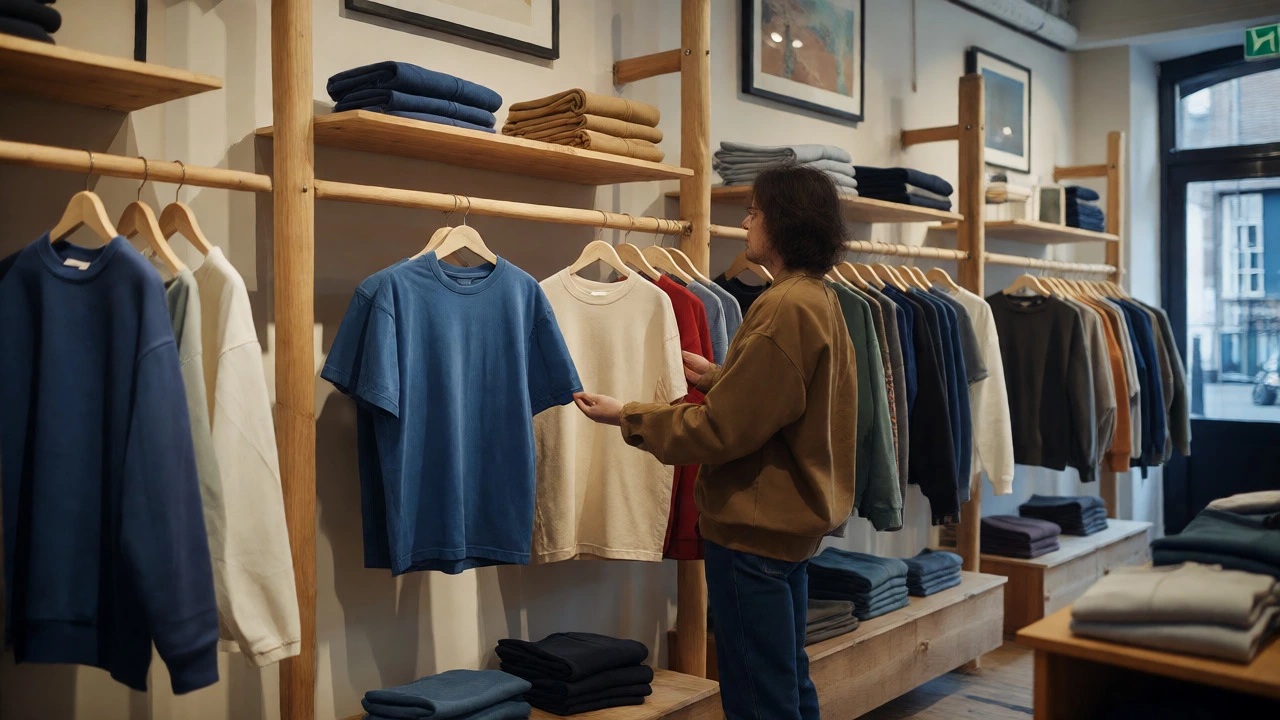
Visit independent shops in areas like Dublin’s Temple Bar or Cork’s English Market district. Staff there can often point you to brands that manufacture in Portugal or Turkey, countries known for higher labor standards and better textile infrastructure compared to some mass-production hubs. While price tags might show €30-€40 instead of €10, calculate the cost-per-wear. A €35 tee worn 50 times costs €0.70 per wear. A €10 tee worn five times costs €2.00 per wear. The math favors quality.
Common Pitfalls to Avoid
- Ignoring care labels: Always wash cold. Hot water shrinks cotton and fades prints. Air dry whenever possible; tumble drying destroys elastic fibers in collars.
- Buying purely on brand name: Some famous logos hide low-grade materials. Always inspect the physical product.
- Overlooking blend ratios: 100% cotton is breathable but wrinkles. A 5% elastane blend improves fit retention without sacrificing comfort.
By focusing on fabric weight, stitch density, and construction details, you stop guessing. You start knowing. Next time you’re shopping in Galway or browsing online, use this checklist. Your wardrobe-and your wallet-will thank you.
What GSM is best for a t-shirt in Ireland?
For general use in Ireland's variable climate, 180-220 GSM is ideal. It provides enough opacity and durability for daily wear without being too heavy for indoor heating or milder summer days. Heavier weights (240+ GSM) are better for winter layering or streetwear styles.
Why do my t-shirts shrink in the wash?
Cotton fibers tighten when exposed to heat and agitation. To prevent shrinking, wash in cold water (30°C or lower) and avoid high-heat tumble drying. Air drying preserves the size and integrity of the fabric.
Is organic cotton better for t-shirts?
Organic cotton is grown without synthetic pesticides, which is better for the environment and often softer. However, "organic" doesn't automatically mean "high quality." You still need to check the staple length and weave density. Organic long-staple cotton is the premium choice.
How many stitches per inch indicate good quality?
Look for at least 10-12 stitches per inch (SPI) on side seams. Premium shirts may reach 14-16 SPI. Fewer than 8 SPI suggests cheap, fast manufacturing that may lead to seam failure.
What is combed cotton?
Combed cotton undergoes a process that removes short fibers and impurities. This results in a smoother, stronger, and more durable yarn compared to carded cotton. It reduces pilling and increases the lifespan of the t-shirt.