Irish School Uniform Cost Estimator
Compare your current strategy with the most economical option (Second-hand).
Tip: Join local Facebook groups like "Galway Kids Clothes Swap" to find gently used blazers at a fraction of the price.
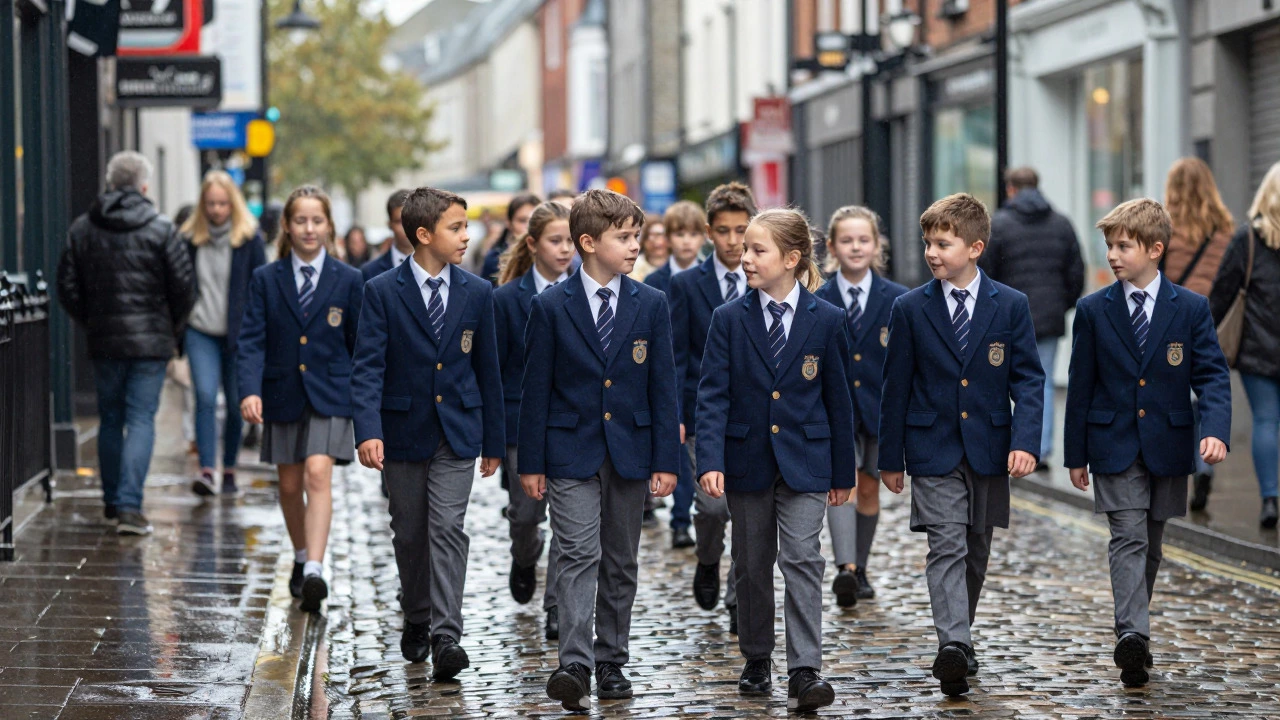
Walking down the high street in Galway or Dublin on a Tuesday morning, you’ll notice something distinct: the sea of navy blazers and grey trousers. In Ireland, school uniforms are not just a fashion choice; they are a cultural institution that shapes how we view childhood, class, and community. But do they actually make a difference, or are they just an expensive way to dress up eight-year-olds?
For many Irish families, the question isn't whether to buy a uniform, but how to navigate the specific rules of their local school while keeping the budget intact. The debate around uniforms in the Irish education system is nuanced. It touches on social equality, the practical realities of growing up in a country with unpredictable weather, and the financial strain on households. Let’s look at what the evidence says and what it means for your family.
The Equality Argument: Does It Really Level the Playing Field?
The most common argument for wearing a uniform in Ireland is equality. The idea is simple: if everyone wears the same clothes, no child can be judged by their brand name or the price tag on their jacket. In a society where socioeconomic gaps can be visible in clothing choices, this seems like a logical step.
However, the reality on the ground is more complex. While a standard grey sweatshirt from a major retailer looks similar to one from a premium brand, the quality varies significantly. A parent earning a lower income might struggle to replace a torn jumper as often as a wealthier family, leading to visible differences in wear and tear. Furthermore, "uniform" often extends beyond the core items. Many schools in urban centers like Cork or Limerick have strict requirements for specific shoes, socks, or even rain gear. When you add these mandatory extras, the total cost can vary wildly depending on where you shop.
Research conducted by the National Council for Curriculum and Assessment (NCCA) suggests that while uniforms reduce bullying related to clothing brands, they don't eliminate all social stratification. Children still find ways to differentiate themselves through accessories, hair styles, or the condition of their belongings. So, does it make a difference? Yes, but it’s a partial solution rather than a complete fix for social inequality.
The Financial Reality: What Does It Actually Cost in Ireland?
Let’s talk numbers. The cost of equipping a child for school in Ireland has risen sharply over the last decade. For a primary school student, you’re looking at roughly €150 to €250 for the initial set of clothes, excluding books and stationery. For secondary school students, the figure jumps to between €300 and €500, largely due to the requirement for blazers, ties, and formal shoes.
This cost hits hard in rural areas where access to large retail chains is limited. Families in counties like Mayo or Donegal often have to travel to larger towns to find specific items, adding transport costs to the equation. In contrast, families in Dublin or Galway City have easier access to outlets and discount stores, which can help mitigate the expense.
School Uniform Costs is a significant financial burden for many Irish households, averaging €450 per child per year when including replacements and seasonal changes. This figure includes the initial purchase plus the inevitable damage from active play. To manage this, many parents in Ireland rely on second-hand markets. Local Facebook groups dedicated to buying and selling children's clothes have become essential resources. You can often find gently used blazers and shirts for a fraction of the retail price, making the system more accessible for those on tighter budgets.
Practicality vs. Tradition: The Weather Factor
You cannot discuss school uniforms in Ireland without mentioning the weather. Our climate is damp, windy, and frequently rainy. A traditional uniform consisting of a wool sweater and cotton trousers can feel less than ideal when the temperature drops below five degrees Celsius in January.
This is why the modern Irish uniform has evolved. Most schools now allow or require thermal layers underneath the standard issue clothes. Waterproof jackets are non-negotiable. In fact, the quality of a child's outerwear often matters more than the uniform itself for daily comfort. If a child is cold or wet, their ability to focus in class diminishes. Therefore, the "difference" a uniform makes is heavily dependent on how well the base layer accommodates our specific meteorological conditions.
Some schools in the west of Ireland have started experimenting with more practical fabrics for their core uniform items, moving away from pure wool towards blends that dry faster and retain heat better. This shift reflects a growing understanding that functionality should not be sacrificed for tradition.
Psychological Impact: Identity and Belonging
Beyond money and weather, there is a psychological dimension. Wearing a uniform creates a sense of belonging to a group. In Irish culture, community ties are strong. Being part of a school team, whether it’s GAA, football, or simply the student body, fosters a collective identity. The uniform acts as a visual marker of this membership.
For new students, especially those moving to Ireland from abroad or transferring between schools, the uniform can provide a sense of security. They don’t have to worry about fitting in with the latest fashion trends; they just need to match the rest of the cohort. This reduces anxiety for many children, particularly during their first few weeks.
However, for teenagers entering secondary school, the uniform can feel restrictive. Adolescence is a time of self-expression, and being required to wear the same outfit as everyone else can sometimes lead to minor rebellions or resentment. Schools that allow some flexibility, such as choosing between two colors of sweaters or allowing hoodies under blazers on certain days, tend to report higher levels of student satisfaction.
How to Navigate the System: Tips for Irish Parents
If you’re preparing for the upcoming school year, here are some practical tips to keep costs down and stress low:
- Check the School Website First: Every school in Ireland publishes its uniform policy online. Read it carefully. Some schools specify exact brands, while others list acceptable alternatives. Knowing the specifics before shopping saves money.
- Utilize Second-Hand Markets: Join local Facebook groups like "Galway Kids Clothes Swap" or "Dublin Preloved Uniforms." These communities are incredibly active and offer great deals on barely used items.
- Buy in Bulk: Socks, underwear, and t-shirts are consumables. Buying them in bulk from discount retailers can save 20-30% compared to buying single pairs.
- Label Everything: With so many identical items circulating in the school system, labeling every piece of clothing with your child’s name is crucial. Losing a blazer is expensive; losing a labeled one is rare.
- Plan for Growth: Children grow quickly. Avoid buying too many expensive top-tier items. Instead, invest in durable basics and use cheaper options for items that will be outgrown in six months.

Comparing Approaches: Strict vs. Flexible Policies
Not all schools in Ireland handle uniforms the same way. There is a spectrum of strictness. On one end, you have schools with rigid, traditional policies that mandate specific brands and colors. On the other, you have schools with flexible guidelines that prioritize comfort and inclusivity.
| Feature | Strict Policy | Flexible Policy |
|---|---|---|
| Brand Requirements | Specific brands listed | Any brand meeting color specs |
| Cost Impact | Higher due to limited options | Lower due to wider shopping range |
| Student Satisfaction | Often lower among teens | Generally higher |
| Enforcement | High, with penalties for non-compliance | Low, focused on general neatness |
| Best For | Schools prioritizing traditional identity | Schools prioritizing inclusivity and budget |
The trend in Ireland is slowly shifting towards the flexible model. As the cost of living rises, more parents are advocating for policies that don't dictate specific brands. This allows families to shop where they can afford, reducing the financial pressure while maintaining the visual consistency of the school community.
Frequently Asked Questions
Are school uniforms mandatory in all Irish schools?
Yes, the vast majority of state-funded primary and secondary schools in Ireland require uniforms. However, the specific items required vary by school. Independent schools also require uniforms, often with stricter brand guidelines. Check your specific school's website for their exact policy.
How much does a full school uniform cost in Ireland?
On average, expect to spend between €150 and €250 for a primary school student and €300 to €500 for a secondary school student. This estimate covers the initial set of clothes. Additional costs may arise for sports kits, specific footwear, or replacements throughout the year.
Where can I find cheap school uniforms in Ireland?
The best places to find affordable uniforms are local Facebook buy-and-sell groups, charity shops, and online marketplaces like Vinted. Many Irish families actively trade gently used uniforms. Discount retailers also carry basic items like socks, t-shirts, and trousers that meet most school specifications.
Do school uniforms really stop bullying?
Uniforms reduce bullying related to clothing brands and style, but they do not eliminate all forms of bullying. Research shows that while brand-based teasing decreases, other social dynamics remain. Uniforms create a baseline of equality, but they are just one tool in fostering a positive school environment.
Can children wear hoodies under their blazers?
This depends entirely on the individual school's policy. Some schools strictly prohibit hoodies, while others allow them as a warm layer under the blazer, provided the hoodie is plain and matches the school colors. Always check the specific guidelines provided by your school administration.