Women's Boot Size Advisor (UK 9.5 vs 10)
Enter your foot measurement details to get a personalized recommendation between UK 9.5 and UK 10.
Recommended Size:
--You’re standing in a fitting room on Grafton Street or scrolling through an online retailer’s site, staring at two pairs of the same women's boots. One is a UK 9.5, the other a UK 10. You try them on, and they feel... almost identical. So why does that tiny half-size matter? In Ireland, where our weather demands sturdy footwear and our feet swell just like everyone else’s, understanding the difference between a 9.5 and a 10 isn’t just about numbers-it’s about comfort during those long walks from Dublin city centre to Phoenix Park, or hiking up the Wicklow Mountains.
The gap between these two sizes is physically small-about 4 millimetres in length and slightly less in width-but its impact on your day is huge. If you get it wrong, you might end up with blisters by lunchtime or loose heels that cause tripping on cobblestones. Let’s break down exactly what changes when you move from a 9.5 to a 10, specifically for women buying boots here in the Irish market.
Understanding the Measurement Gap
Shoe sizing can be confusing because different regions use different scales. In Ireland, we primarily follow the UK sizing system, which differs from US or European standards. A UK 9.5 is not the same as a US 9.5. When comparing a UK 9.5 to a UK 10, you are looking at a specific increment defined by the Brannock device, the standard tool used for measuring feet.
Here is the hard data:
- Length Increase: Moving from a 9.5 to a 10 adds approximately 4mm (roughly 1/6th of an inch) to the internal length of the shoe.
- Width Increase: Standard width shoes also increase in girth. A size 10 will have a wider ball area than a 9.5, even if both are marked 'Standard' or 'Medium' width.
- Vamp Height: The part of the boot covering your instep rises slightly higher on a larger size. This matters significantly for high-cut boots, like knee-highs or over-the-knee styles popular in autumn fashion.
While 4mm sounds negligible, think about how your foot behaves inside a boot. Your toes need space to splay naturally. If your toes hit the front of a 9.5 when walking downhill, that constant pressure causes bruising. Conversely, if you wear a 10 but only needed a 9.5, your foot slides forward with every step, causing heel slip. This friction is the primary cause of blisters, especially when wearing thick wool socks common in Irish winters.
| Attribute | UK Size 9.5 | UK Size 10 | Difference |
|---|---|---|---|
| Internal Length (approx.) | 275 mm | 279 mm | +4 mm |
| Ball Width (Standard) | Baseline | +2-3 mm wider | Slight expansion |
| Heel Counter Fit | Tighter lock | Looser lock | Risk of slip |
| Instep Volume | Lower profile | Higher volume | Better for high arches |
Why Boot Construction Changes Everything
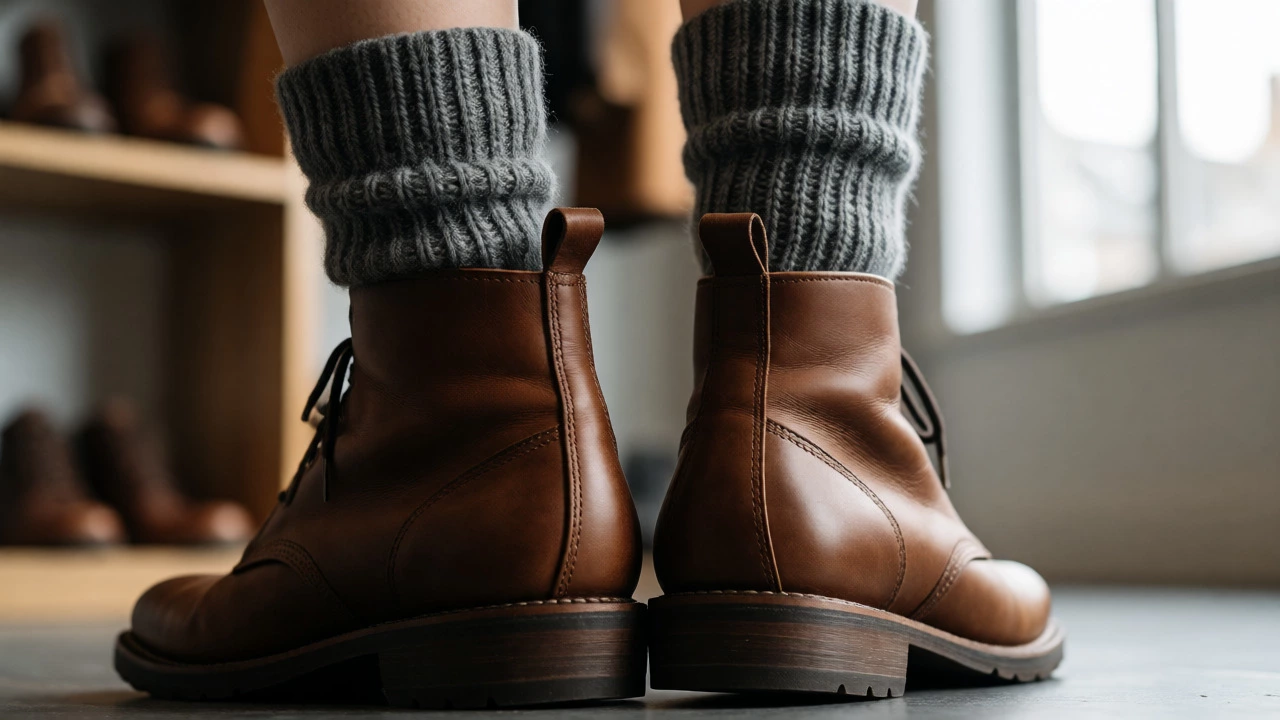
Not all boots are created equal, and this is where many shoppers in Cork, Galway, or Belfast go wrong. Sneakers often have flexible mesh uppers that stretch. Leather and rubber boots do not stretch nearly as much, particularly around the toe box and heel counter. If you buy a pair of rigid Chelsea boots in a 10 when you should have bought a 9.5, you cannot simply "break them in" to make them smaller. They will remain too big.
Consider the material. Suede and soft leather will give way after a few wears, potentially turning a snug 9.5 into a comfortable fit. However, waterproof Gore-Tex lined boots or stiff work-style ankle boots maintain their shape. For these, precision is key. If you are between sizes, the construction dictates your choice. With a structured winter boot, erring on the side of the larger size (10) allows for thicker thermal socks without crushing your circulation. But if it’s a sleek leather ankle boot for office wear, the 9.5 might provide the necessary support to prevent your foot sliding around.
The Impact of Irish Weather and Socks
Living in Ireland means dealing with rain, wind, and fluctuating temperatures. Your foot size actually changes depending on the conditions. Feet tend to swell slightly in warm weather and shrink in cold weather. However, the type of sock you wear plays a massive role in whether a 9.5 or a 10 fits best.
In November and December, most Irish women wear heavier wool or thermal socks. A size 9.5 boot designed for thin cotton socks will feel painfully tight with a thick Merino wool blend. The extra 4mm of length in a size 10 accommodates the bulk of the sock fabric. Conversely, in spring, when you switch to lighter liners, that same size 10 might feel sloppy.
There is also the issue of wet feet. If you are caught in a sudden shower near the Cliffs of Moher or walking home from a pub in Dublin, your feet may swell due to heat retention inside non-breathable rubber boots. Having a little extra room (the 10) prevents discomfort during these spikes in volume. However, too much room leads to water pooling inside the boot if the seal isn't perfect.
How to Measure Correctly at Home
Don’t rely on the size label of your old sneakers. Foot shapes change over time, and pregnancy, weight fluctuations, or age can alter your foot dimensions permanently. Here is a simple method to determine if you are truly a 9.5 or a 10:
- Time of Day: Measure your feet in the late afternoon or evening. Feet expand throughout the day due to activity and gravity. Measuring in the morning might lead you to choose a size that becomes too tight by 5 PM.
- Wear Your Intended Socks: Put on the exact pair of socks you plan to wear with the boots. If you buy size 10 boots but wear thin socks, they won't fit.
- The Wall Method: Stand with your heel against a wall on a piece of paper. Mark the tip of your longest toe. Measure the distance from the wall to the mark in millimetres.
- Add Allowance: Add 10mm (1cm) to this measurement for toe room. Compare this total to brand-specific size charts. Note that brands like Clarks, Geox, or Hunter may vary slightly in their lasts (moulds).
If your measurement lands squarely between sizes-for example, requiring 276mm of space-you are effectively a 9.5 in some brands and a 10 in others. Always check the specific brand’s conversion chart rather than assuming universal consistency.
Fitting Tips for Specific Boot Styles
Different boot types react differently to size discrepancies. Here is how to handle the most common styles found in Irish wardrobes:
Knee-High and Over-the-Knee Boots
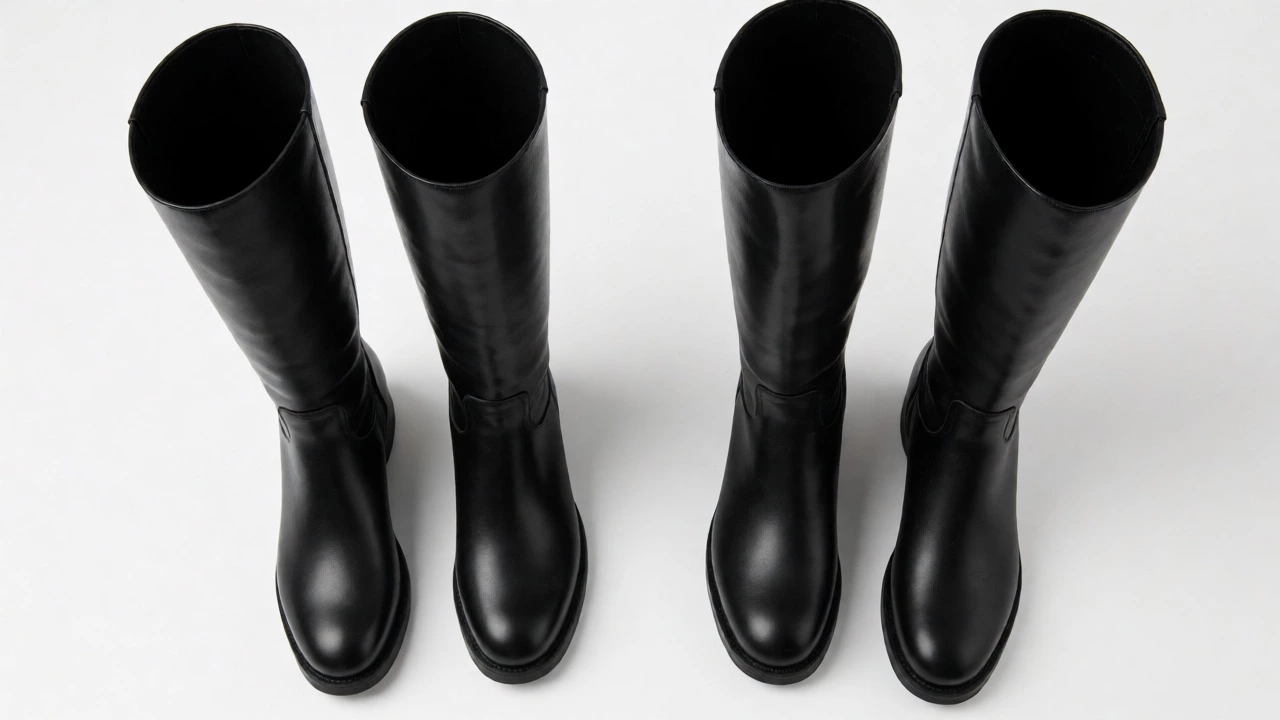
The calf circumference increases with shoe size. If you buy a size 10 instead of a 9.5, the shaft of the boot will be wider. If you have slim calves, a size 10 might gape at the back. Look for boots with adjustable buckles or elastic panels if you are unsure. For tall boots, the rise from ankle to knee also increases slightly with size, so a 10 might sit higher on your thigh than expected.
Ankle Boots and Chelsea Boots
These rely heavily on a snug heel fit. Because there are no laces to tighten, a half-size too big means your heel lifts out of the boot with every step. This causes rubbing on the Achilles tendon. If you find yourself constantly pulling your boots up, you likely need the 9.5. Use heel grips or tongue pads to fill space if you already own the 10s.
Hiking and Outdoor Boots
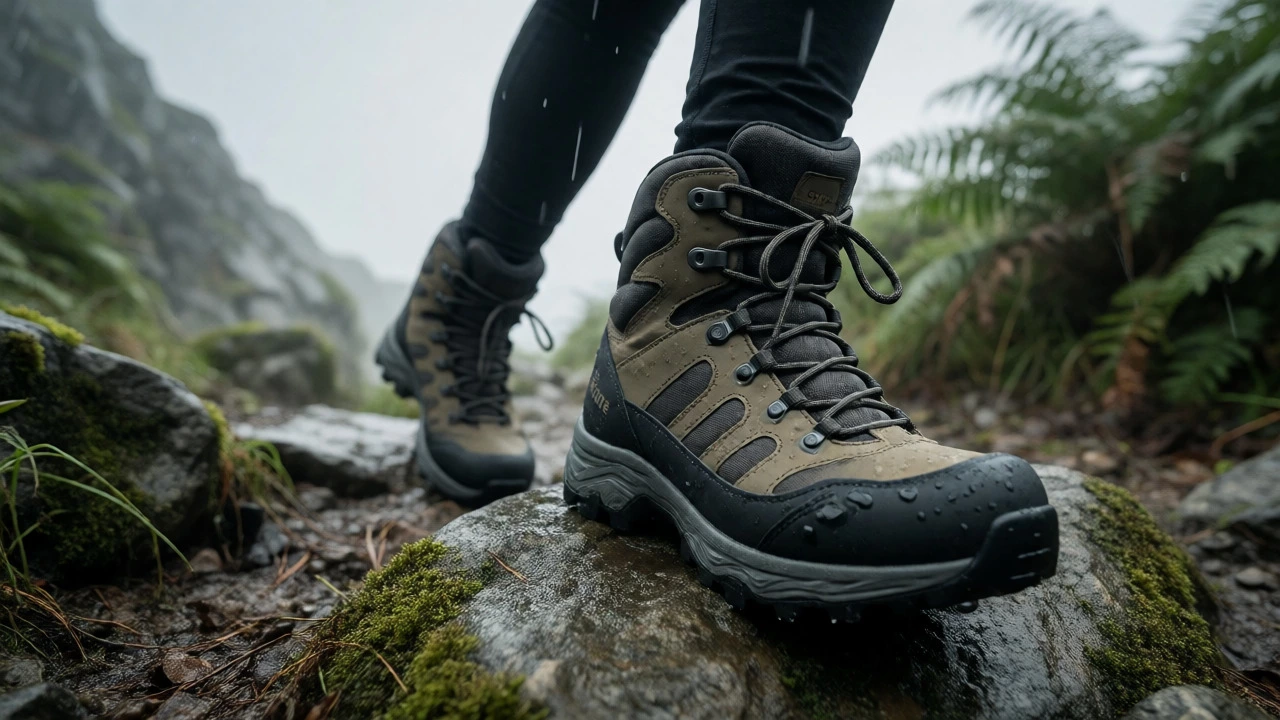
For activities like hiking in Killarney National Park, fit is critical for safety. You want a secure midfoot hold but room for toes. Experts generally recommend going half a size up (choosing the 10 over the 9.5) for hiking boots to accommodate foot swelling during long treks and thick moisture-wicking socks. Downhill descents push your foot forward; if you don’t have that extra 4mm, your toenails will take the hit.
Common Myths About Half Sizes
Many people believe that half sizes are just marketing tricks to sell more inventory. They aren’t. The engineering behind shoe lasts accounts for subtle anatomical differences. Some people have longer toes but narrow heels; others have short toes but wide forefeet. A 9.5 caters to those who fall in the middle of the distribution curve.
Another myth is that you can always fix a too-big shoe with insoles. While insoles help, they raise your foot inside the boot, which can reduce headroom. In low-cut ankle boots, this might cause your toes to press against the top of the vamp. It’s better to get the right size initially than to try to engineer a fix that compromises comfort.
Also, remember that left and right feet are rarely identical. It is common for one foot to be a 9.5 and the other a 10. If this is you, buy the size that fits your larger foot (the 10) and use a thinner insole or heel grip on the smaller side. Never buy the smaller size hoping it will stretch enough to fit the bigger foot; it usually results in pain.
Where to Shop and Try On in Ireland
Online shopping offers convenience, but trying on boots remains the gold standard for avoiding returns. Major Irish retailers like Brown Thomas, Arnotts, or Penneys offer fitting services. Staff members are often trained to spot issues like bunions or high arches that affect sizing.
If you prefer online ordering, look for retailers with free return policies within 30 days. Brands like ASOS, Next, or specialized boot shops like Jovial Fashions allow you to order both a 9.5 and a 10, try them on at home with your own socks, and send back the one that doesn’t work. Just ensure you keep the original packaging intact to qualify for refunds.
For custom fits, consider local cobblers in cities like Dublin or Cork who can add padding or adjust the interior structure of off-the-rack boots. Sometimes, a professional adjustment can turn a near-perfect 9.5 into a flawless fit, saving you from buying the next size up unnecessarily.
Is a UK 10 the same as a US 10?
No. A UK 10 is approximately equivalent to a US 12 for women. The UK sizing scale runs two numbers lower than the US scale. Always convert carefully when buying international brands.
Should I size up or down for winter boots?
Generally, size up by half a size (e.g., choose a 10 over a 9.5) for winter boots to accommodate thicker thermal socks and natural foot swelling caused by heat retention. However, ensure the heel does not slip excessively.
What if my feet are different sizes?
It is very common for one foot to be larger than the other. Always fit your boots to your larger foot. You can use a heel grip or a slightly thicker insole on the smaller foot to prevent slipping.
Do leather boots stretch enough to bridge the gap between 9.5 and 10?
Soft leather may stretch about half a size with wear, but stiff leather, suede, or synthetic materials will not. Relying on stretching to gain a full half-size is risky and often leads to misshapen boots.
How do I know if my boot is too big?
If your heel lifts more than 1/8th of an inch when walking, or if your foot slides forward to hit the toe box when going downhill, the boot is too big. Blisters on the heel or toes are clear signs of poor fit.