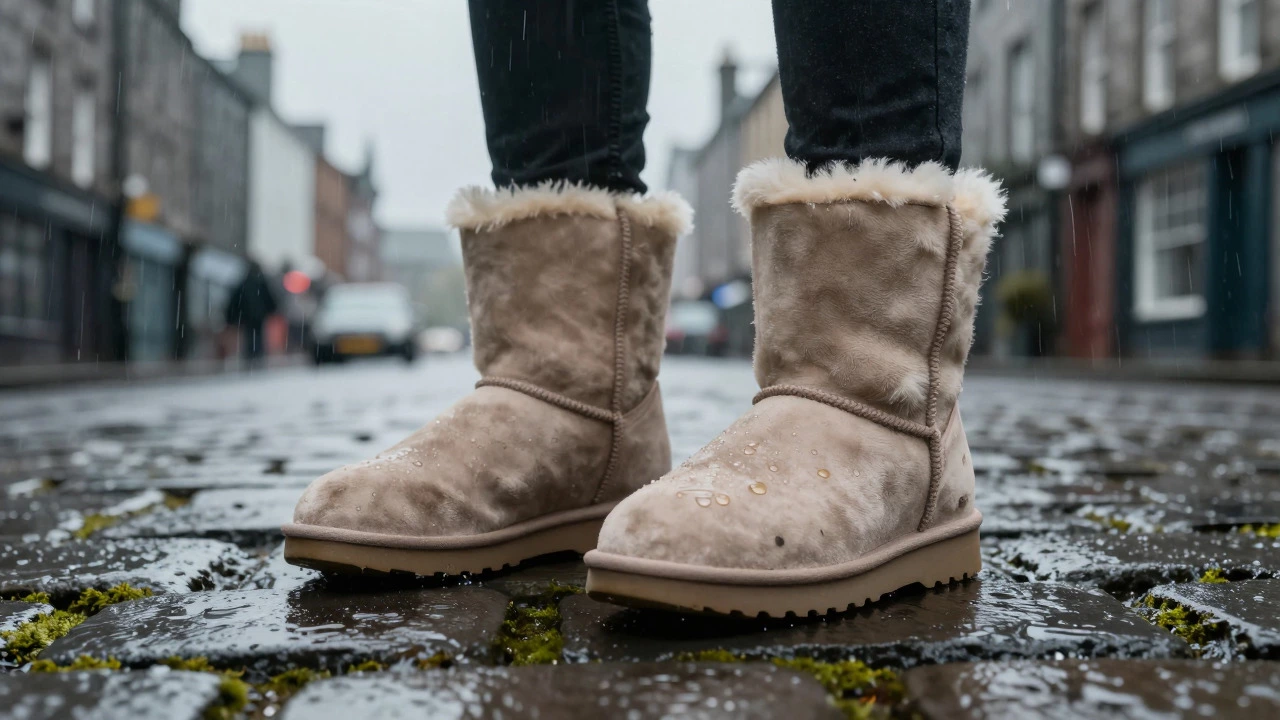
UGG Survival Simulator
Test your knowledge of keeping sheepskin boots safe in the unpredictable Irish climate.
Choose Your Adventure
Select a scenario to see how it affects your boots:
Light Drizzle
Walking through Galway City streets.
Deep Puddle
Stepping into water near Salthill Promenade.
Coastal Spray
Saltwater exposure at Cliffs of Moher.
Winter Slush
Road salt and wet slush in Cork city center.
Immediate Reaction
Your boots are getting wet! What do you do?
Result Title
Description goes here.
If you live in Ireland, you know that "dry" is a relative term. One minute you are walking through the cobbled streets of Galway City under a bright sun, and the next, you are dodging puddles on Shop Street because the Atlantic has decided to dump its entire contents on the west coast. In this climate, footwear choices are not just about fashion; they are about survival. This brings us to the most common question I hear from friends and neighbors alike: why can't you get UGGs wet?
It seems counterintuitive. These boots are made from sheepskin, an animal that spends half its life outside in the elements. Surely, the skin of a sheep should be tough enough to handle a bit of drizzle, right? But here is the catch: the sheepskin used in high-quality boots like UGGs is processed differently than the hide on a living animal. Understanding this distinction is crucial if you want your boots to last more than one rainy season.
The Science Behind Sheepskin Sensitivity
To understand why water is the enemy of these boots, we need to look at how they are constructed. UGG boots are primarily made from double-faced sheepskin. This material consists of two layers bonded together: the leather outer side and the wool inner side. The magic of this combination is that it regulates temperature. The wool absorbs moisture vapor from your feet while releasing it into the air, keeping you warm without overheating.
However, this structure is porous. When liquid water hits the surface, it doesn't just sit on top like it would on rubber or synthetic plastic. Instead, it penetrates the leather fibers. Once inside, several things go wrong:
- Fiber Swelling: Leather expands when wet. If the boot dries unevenly or too quickly (say, near a radiator in your Dublin apartment), the fibers contract and harden, leading to cracks.
- Wool Matting: The soft fleece lining can become matted and lose its loft. Imagine washing a cashmere sweater in hot water and putting it in the dryer; that is essentially what happens to the interior of your boots.
- Staining: Water leaves mineral deposits behind as it evaporates. In Ireland, where our rain often picks up dust and pollution from city centers like Cork or Belfast, these stains can be permanent.
So, while the sheep itself is fine in the rain, the processed double-faced sheepskin in your boots is fragile. It needs protection.
The Irish Weather Factor: More Than Just Rain
Living in Galway, I have learned to respect the local microclimate. We don't just get rain; we get wind-driven rain that finds every gap in your defense. A light shower might seem harmless, but combined with a strong breeze coming off the Corrib River, it soaks through fabric and leather faster than you think.
Consider a typical day out. You might start at the Spanish Arch for coffee, then walk along the Salthill Promenade. The ground there gets slick with seawater spray and rain. If you step into a deep puddle near the Cliffs of Moher visitor center, your UGGs aren't just getting damp; they are submerging. This is where the damage accelerates. Saltwater, common in coastal areas like Kerry or Donegal, is particularly harsh. Salt draws moisture out of the leather, drying it out and causing brittleness over time.
Even in urban areas, road salt used during winter months can destroy untreated sheepskin. While Ireland doesn't see heavy snowfall like Scandinavia, our winters are wet and slushy. Walking through slush is a recipe for disaster for any suede or sheepskin footwear.
Can You Waterproof Them? The Real Answer
You will see products marketed as "UGG waterproofers" in stores across Ireland, from Dunnes Stores to smaller boutiques in Kilkenny. Do they work? Yes, but with major caveats. Most sprays create a hydrophobic barrier that causes water to bead up and roll off. However, this barrier wears off. It is not permanent.
If you plan to wear your boots regularly in Ireland, you must treat them before you wear them. And you must re-treat them after every few wears, especially if you encounter rain. Here is a simple routine:
- Clean first: Use a suede brush to remove dirt. Dirty boots repel water poorly.
- Spray evenly: Apply a specialized sheepskin protector spray in a well-ventilated area. Don't soak the boot; mist it lightly.
- Dry naturally: Let them dry away from direct heat. No radiators, no hairdryers.
Even with this treatment, remember that "water-resistant" is not "waterproof." You can still get them soaked if you stand in a puddle for too long. Think of the spray as a shield against light drizzle, not a submarine hull.

What To Do If They Get Wet Anyway
Let's be honest: accidents happen. You slip on a wet cobblestone in Temple Bar, or you forget your umbrella during a sudden downpour in Limerick. If your UGGs get wet, panic is your worst enemy. Follow these steps to minimize damage:
| Step | Action | Why It Matters |
|---|---|---|
| 1 | Remove the insoles | Insoles hold the most water and take the longest to dry. Removing them speeds up the process significantly. |
| 2 | Stuff with newspaper | Newspaper absorbs moisture from the inside. Change it every hour until it stays dry. Avoid paper towels, which can leave lint. |
| 3 | Air dry at room temperature | Heat damages leather. Never put wet boots on a radiator or in front of a fire. Let them breathe slowly. |
| 4 | Brush gently | Once completely dry, use a suede brush to restore the nap. Brush in one direction to avoid fraying. |
| 5 | Reapply protector | Water strips away existing protective coatings. Re-spraying ensures future resistance. |
A common mistake people make is trying to speed up drying by using heat. In Ireland, where central heating is common in homes, it is tempting to place wet boots near the fireplace or heater. Resist this urge. Rapid drying shrinks the leather and ruins the shape of the boot. Patience is key.
Alternatives for the Irish Climate
If you find yourself constantly battling the elements, perhaps UGGs are not the best choice for daily wear in Ireland. There are alternatives that offer similar comfort without the fragility.
Birkenstock Boston clogs are made from oiled leather or suede that is more durable than sheepskin. They still require some care but handle light rain better. Another option is Dr. Martens, a brand with strong roots in the UK and Ireland. Their smooth leather boots are nearly impervious to rain and can be polished easily. For those who truly love the shearling look but need durability, consider buying waterproof shearling-lined boots from brands like Timberland or The North Face. These brands design their outer shells specifically to repel water while keeping the cozy interior intact.
Another local favorite is investing in good quality gaiters. Gaiters cover the ankle and lower part of the boot, preventing water from entering the top opening. This is a clever trick used by hikers in Connemara to keep their feet dry while trekking through boggy terrain.

Maintenance Tips for Longevity
To make your boots last, integrate maintenance into your routine. Store them in a cool, dry place. Avoid wearing them on consecutive days if possible, allowing the moisture from your feet to evaporate between uses. Use cedar shoe trees to maintain shape and absorb odors.
Regular brushing keeps the suede looking fresh. Keep a small suede eraser handy for scuffs. If you notice stains appearing despite your efforts, take them to a professional cleaner. Many cobbler shops in Ireland, such as those found in traditional markets like the English Market in Cork, offer expert restoration services for expensive footwear.
Remember, UGGs are luxury items designed for comfort and style, not for hiking through peat bogs or standing in floods. Treat them with respect, protect them from the elements, and they will reward you with years of warmth and coziness.
FAQ
Can I wear UGGs in the rain in Ireland?
You can wear them in light drizzle if they are properly treated with a waterproofing spray. However, for heavy rain or prolonged exposure, it is best to avoid them. The persistent dampness in Ireland can lead to staining and damage over time.
How do I clean my UGGs if they get muddy?
Let the mud dry completely first. Then, gently brush off the dried mud with a suede brush. For stubborn stains, use a small amount of white vinegar on a cloth to dab the area, then let it air dry. Avoid soaking the boots in water.
Will my UGGs shrink if they get wet?
They can shrink if exposed to heat while wet. Always air dry them at room temperature. If you use a hairdryer or place them near a radiator, the leather may contract and become tight.
Is it worth buying waterproof UGGs?
Yes, if you live in a wet climate like Ireland. UGG offers specific lines labeled as "Weatherized" or "Waterproof." These have additional treatments applied at the factory that provide better resistance than standard models, though they still require care.
Can I machine wash my UGGs?
Absolutely not. Machine washing will ruin the sheepskin, causing the wool to mat and the leather to crack. Always hand clean or use specialized cleaning kits designed for suede and shearling.