Irish Safety Footwear Standard Finder
Not sure which boots you need? Select your primary work environment below to find the recommended European standard.
Recommended Footwear Specification
Standard Code: Heavy Duty Outdoor
Based on EN ISO 20345
Essential Features:
Toe Cap Recommendation:
You’ve probably heard the term OSHA approved footwear thrown around in job interviews or health and safety briefings. But here’s the catch: if you’re working in Ireland, OSHA doesn’t actually exist here. The Occupational Safety and Health Administration is a US agency. So why do Irish employers keep asking for it? And more importantly, what do they actually mean when they say your boots need to be "OSHA approved"?
In Ireland, we follow European standards, specifically those set by the International Organization for Standardization (ISO) and adopted by the National Standards Authority of Ireland (NSAI). When an Irish site manager asks for OSHA-approved boots, they are usually using American shorthand for compliant safety footwear. They want boots that protect your feet from heavy falling objects, sharp nails, and slippery surfaces. If you buy a pair of sneakers with a steel plate because the label said "OSHA," you might find yourself sent home on your first day at a construction site in Dublin or Galway.
The Transatlantic Confusion: Why We Talk About OSHA Here
It’s a common mix-up. Many multinational companies operating in Ireland have headquarters in the United States. Their global safety policies often reference OSHA standards (like ASTM F2413) because that’s what their corporate lawyers understand. However, once those policies hit the ground in Cork or Limerick, they get translated into EU law.
Under the Safety, Health and Welfare at Work Act 2005, employers in Ireland must provide Personal Protective Equipment (PPE) that meets specific European standards. This means your boots don’t need an OSHA stamp; they need a CE mark and compliance with EN ISO 20345. This standard dictates everything from how much weight the toe cap can withstand to how well the sole grips wet concrete.
So, if you see a job ad saying "OSHA compliant boots required," just read it as "European-standard safety boots." Don’t go hunting for a US certification that won’t satisfy an Irish inspector.
Decoding the Codes: What EN ISO 20345 Actually Means
You’ll see codes like SB, S1, S2, and S3 printed on the tongue or side of every decent safety boot sold in Ireland. These aren’t random letters; they tell you exactly what protection you’re getting. Understanding them saves you money and keeps your toes intact.
| Code | Protection Level | Best For | Key Feature |
|---|---|---|---|
| SB | Basic Safety | Light industrial work, warehousing | Toe cap impact resistance (200 Joules) |
| S1 | Enhanced Safety | Indoor workshops, dry environments | Antistatic properties, energy absorption in heel |
| S2 | Water Resistant | Kitchens, food processing, light rain | Water-resistant upper material |
| S3 | Heavy Duty Outdoor | Construction sites, agriculture, landscaping | Penetration resistant midsole + cleated outsole |
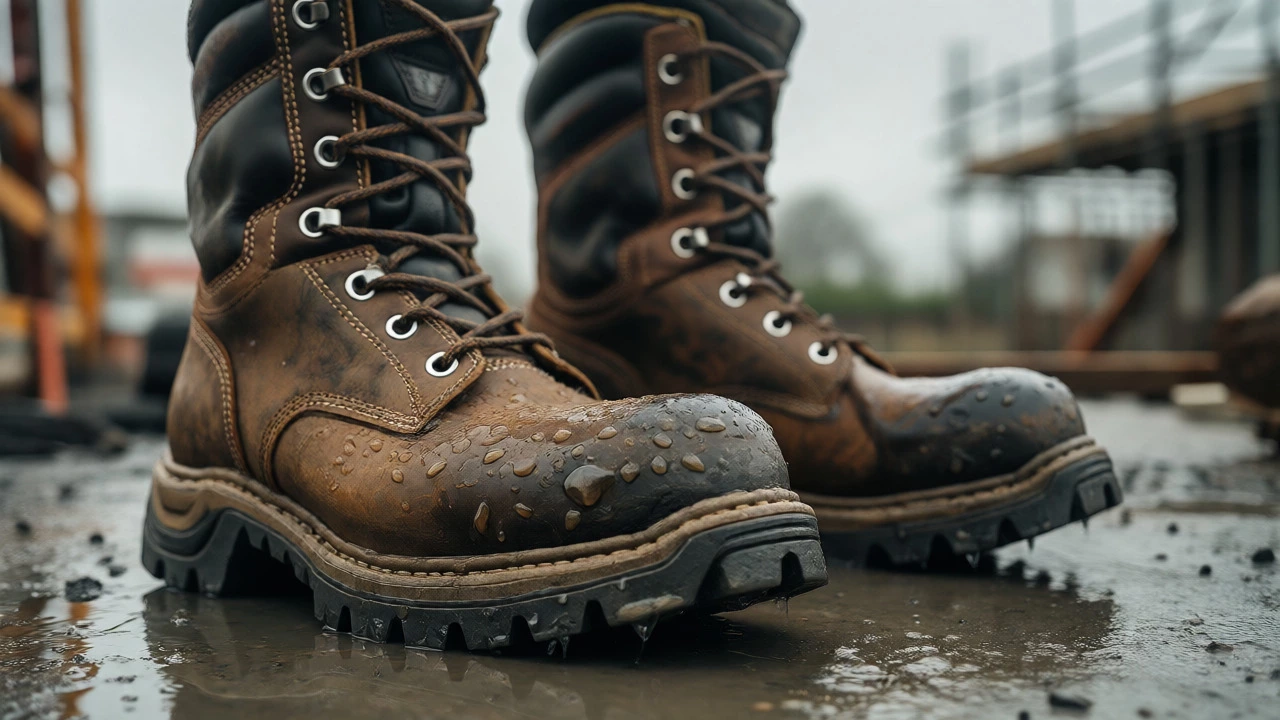
Most construction workers in Ireland will need S3 rated boots. Why? Because Irish weather is unpredictable. You might start your shift in dry conditions, but by lunchtime, you could be standing in mud. S3 boots have a penetration-resistant midsole, which stops nails and screws from piercing through the bottom of the shoe. They also have deep treads (cleats) to help you grip slippery surfaces.
If you’re working in a hospital kitchen in Belfast or a brewery in Kilkenny, S2 might suffice. These boots resist water splashes but aren’t fully waterproof. They’re easier to clean and lighter than full leather S3 boots, which matters when you’re on your feet for ten hours straight.
Steel Toe vs. Composite Toe: Choosing Your Shield
Once you know the code (S1, S2, S3), you have to decide what goes inside the toe cap. Traditionally, this was steel. Today, composite materials are gaining popularity, especially among electricians and airport staff.
Steel toe caps are cheap, strong, and conductive. They’re great for general construction where you’re lifting heavy bricks or timber. However, steel conducts cold. If you’re working outdoors in Donegal in January, your toes will freeze faster in steel-toe boots compared to composite ones.
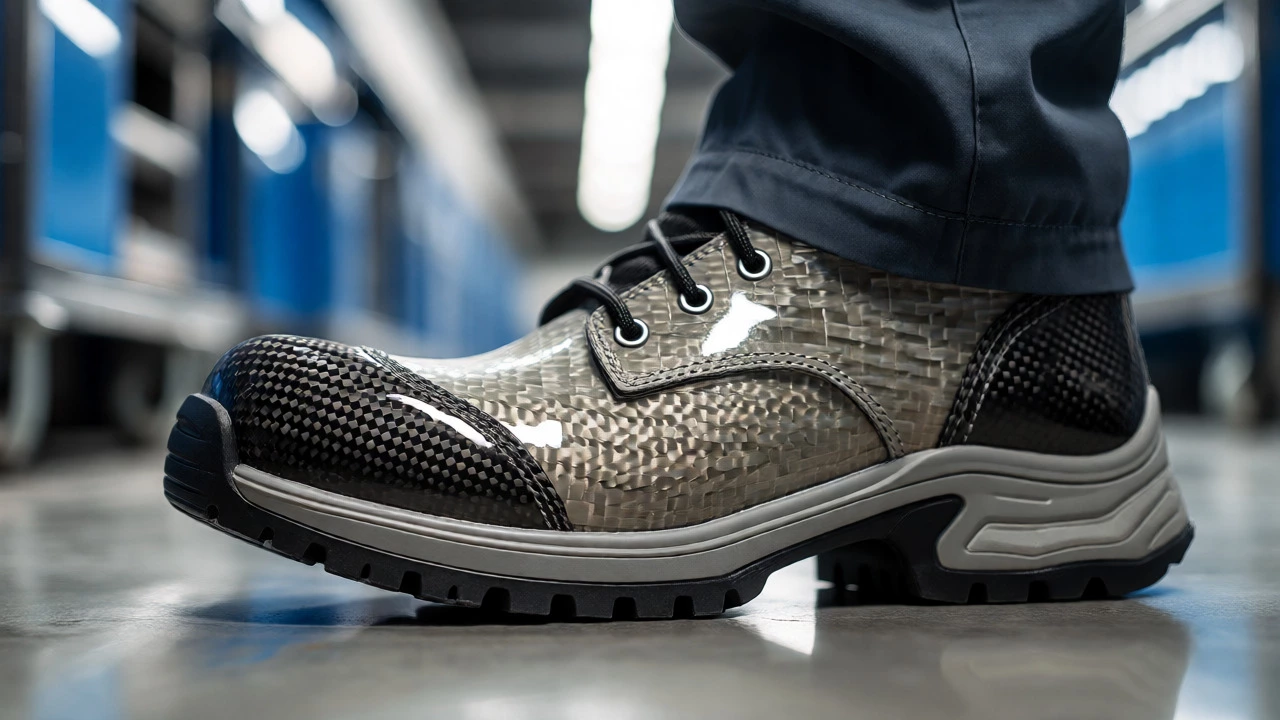
Composite toe caps are made from non-metallic materials like carbon fiber, plastic, or fiberglass. They offer the same 200-joule impact protection as steel but are lighter and do not conduct electricity. This makes them ideal for electricians who work near live wires. They also don’t set off metal detectors, which is a huge plus if you work at Shannon Airport or any secure facility.
A quick tip: check if your employer requires non-metallic footwear. Some high-security zones in Ireland ban metal entirely. Always ask before buying.
Fitting Tips for the Irish Climate
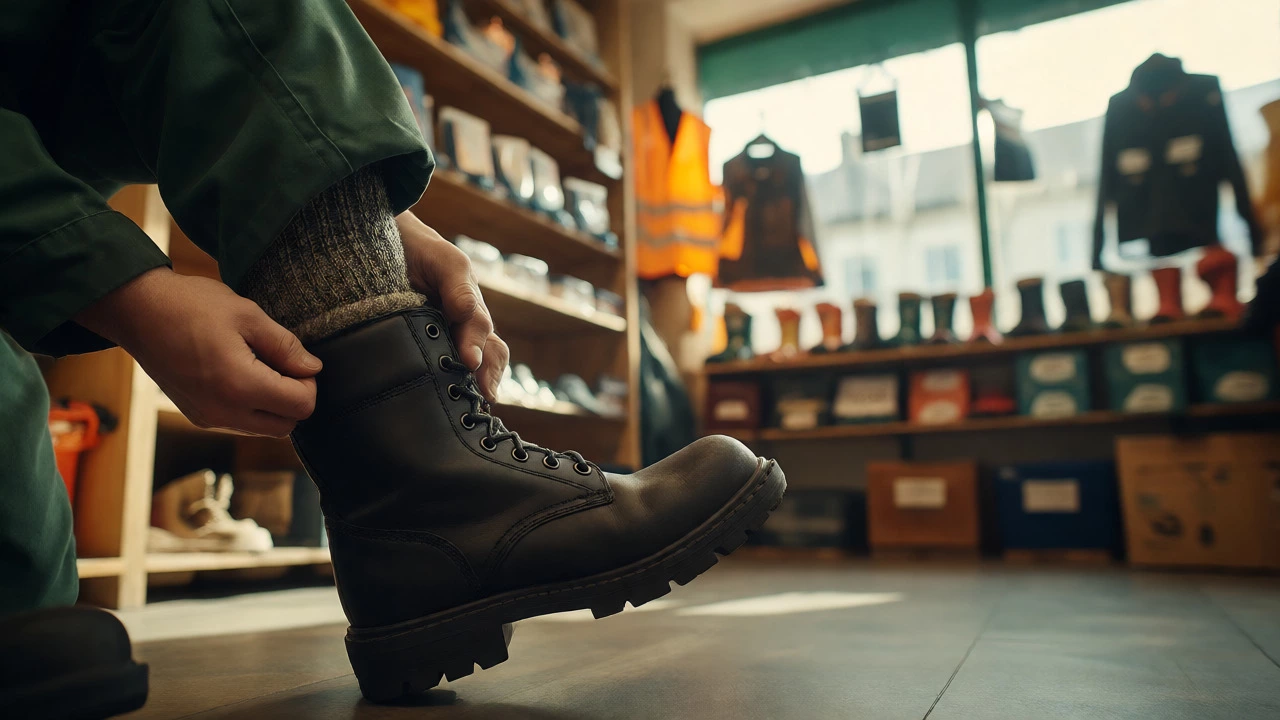
Buying safety boots isn’t like buying casual trainers. You need to account for thick socks and foot swelling. In Ireland, we often wear wool-blend safety socks. These are thicker than cotton. If you try boots on with thin dress socks, they’ll feel fine in the shop but cut off circulation after two hours on site.
- Try them on late in the day: Your feet swell throughout the day. Trying boots on at 4 PM ensures they won’t be too tight during a long shift.
- Wiggle room: You should be able to wiggle your toes freely. If they touch the front, you’ll get bruised toenails within a week.
- Heel lock: Your heel shouldn’t slip up and down when you walk. Blisters are the enemy of productivity.
- Break them in: Never wear new safety boots on your first day at a new job. Wear them around the house for a few evenings to soften the leather.
Also, consider the width. Many Irish workers have wider feet due to years of physical labor. Brands like Caterpillar or Dr. Martens often run narrower. Look for brands that offer wide-fit options, such as Red Wing or local Irish suppliers who stock specialized orthopedic-friendly designs.
Where to Buy Compliant Footwear in Ireland
You don’t need to import boots from America. Ireland has a robust network of safety suppliers. Major chains like Chadwicks and Woodie's DIY carry basic S3 boots, but specialist safety stores offer better variety and expert advice.
For professional-grade gear, look for distributors of major brands like Timberland PRO, Caterpillar, and Atlas. Atlas is particularly popular in Ireland because they design boots specifically for European feet shapes and harsher weather conditions.
Don’t forget online options. Websites like Safety First Supplies or Industrial Clothing Company deliver across Ireland. Just make sure you can return them if the fit is wrong. Buying online without trying them on is risky for footwear.
Maintenance: Making Your Boots Last
Safety boots are an investment. A good pair costs between €80 and €150. To get your money’s worth, you need to maintain them. Mud and rain are constant threats in Ireland.
- Clean regularly: Wipe off mud daily. Dried mud cracks leather over time.
- Condition the leather: Use a quality leather conditioner every month. This prevents cracking and keeps the material flexible.
- Dry properly: Never put wet boots next to a direct heat source like a radiator. It dries out the leather and weakens the glue. Stuff them with newspaper instead.
- Check the soles: Inspect for wear patterns. Uneven wear might indicate you need orthotic insoles, which can save your knees and back.
If your boots are soaked through, take the insoles out and let both air dry separately. Mold grows fast in damp, dark places, and nobody wants athlete’s foot in July.
Beyond the Boots: Other PPE Considerations
Footwear is just one part of the puzzle. While you’re shopping, think about the rest of your kit. In Ireland, visibility is crucial, especially for road workers and farmers. High-visibility vests are mandatory under many site rules. Pair your S3 boots with durable trousers that have reinforced knees. If you’re handling chemicals, ensure your gloves match your footwear’s level of protection.
Remember, PPE is the last line of defense. Good habits-like keeping walkways clear and wearing ear protection when necessary-matter just as much as your boots. But since we’re focusing on feet, remember that slips, trips, and falls are the most common workplace injuries in Ireland. Proper footwear significantly reduces this risk.
Do I really need steel toe caps for office jobs?
No. Unless you work in a warehouse or lab where heavy objects might fall, standard comfortable shoes are fine. Steel toes are for environments with physical hazards.
Can I wear my own safety boots, or does the employer provide them?
In Ireland, employers are legally required to provide appropriate PPE free of charge. However, many skilled tradespeople prefer to buy their own for comfort and hygiene reasons. Check your contract; some companies offer a boot allowance instead.
What is the difference between S1 and S3 boots?
S1 boots are for indoor, dry areas and have antistatic properties. S3 boots are for outdoor use, have water-resistant uppers, and include a penetration-resistant midsole to stop nails from piercing the sole.
Are composite toe caps weaker than steel?
No. Both meet the same EN ISO 20345 standard for impact resistance (200 joules). Composite caps are just lighter and non-conductive, making them safer for electricians.
How often should I replace my safety boots?
There is no fixed rule. Replace them when the tread wears down, the leather cracks, or the toe cap shows signs of damage. For heavy users, this might be every 6-12 months. For lighter use, they can last several years.