Boot Sizing & Conversion Calculator
Your Details
Enter your details to see the perfect fit.
If you’ve ever stood in the fitting room of a shop on Grafton Street or browsed an online store from your kitchen in Galway, wondering why your usual size feels wrong in a pair of boots, you are not alone. This is one of the most common frustrations for shoppers across Ireland. The short answer? No, your boot size is rarely the exact same as your flat shoe size. In fact, assuming they are identical is the fastest way to end up with blisters during a rainy walk through the West of Ireland.
Understanding how boot sizing differs from standard shoe sizing can save you time, money, and discomfort. Whether you are buying sturdy wellies for farm work, ankle boots for a night out in Dublin, or hiking boots for the Wicklow Mountains, getting the fit right requires knowing the specific rules that apply to each type of footwear.
Why Boots Fit Differently Than Shoes
The main reason boots don't fit like your everyday sneakers or heels comes down to structure. A typical running shoe or ballet flat is designed to be flexible. It bends with every step you take. Boots, however, are built for support and protection. They have stiffer materials-often leather, suede, or heavy-duty synthetic fabrics-that do not stretch as easily as the canvas or mesh found in trainers.
Think about the last time you bought a pair of Dr. Martens or a classic pair of Hunter wellingtons. If you tried them on with thin socks and expected them to feel loose immediately, you probably made a mistake. Leather boots, especially those popular in the Irish fashion scene, need a break-in period. During this time, the material molds to the shape of your foot. If you buy them too big hoping they will shrink, they will just look sloppy. If you buy them too small, you will suffer.
Another factor is the shaft height. Ankle boots hug your lower leg, while knee-high boots cover more surface area. The friction between the boot shaft and your calf can make the footbed feel tighter than it actually is. This is why many people find they need a half-size up in their boots compared to their casual shoes.
The Sock Factor: Crucial for Irish Weather
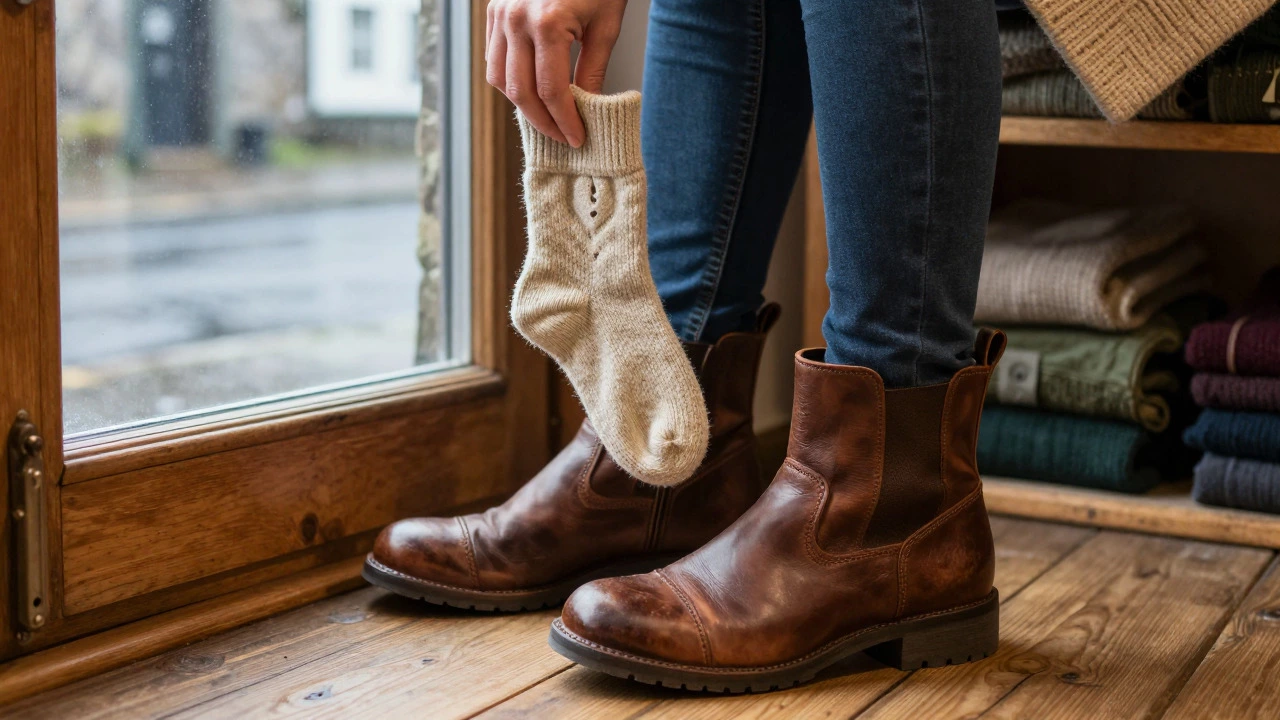
In Ireland, weather dictates footwear. You cannot separate boot sizing from the thickness of the socks you plan to wear. If you are buying boots for summer festivals like Electric Picnic or Body & Soul, you might wear thin cotton socks. In that case, your regular shoe size might work fine for lightweight ankle boots.
But if you are shopping for winter gear, the equation changes completely. Most of us here reach for thick wool blends or thermal socks when the temperature drops below 5°C. These socks add significant volume inside the shoe. A size 6 UK in a thin-sock scenario might become a cramped size 6 when paired with a chunky merino wool sock from a local brand like Kilkenny Knitwear or even a high-street option from Primark.
- Thin socks: Stick to your usual shoe size for lightweight ankle boots or fashion boots.
- Medium socks: Consider going up half a size for leather chelsea boots or riding boots.
- Thick/Wool socks: Go up one full size for wellington boots, hiking boots, or work boots intended for outdoor use.
UK vs EU Sizing: Navigating the Confusion
Living in Ireland means we primarily use UK sizing. However, many online retailers, especially international ones shipping to our doorsteps, default to US or European sizes. This creates a major point of confusion. A UK size 6 is equivalent to a EU size 39 and a US size 7. But here is the catch: different brands interpret these conversions differently.
A pair of Nike Air Force 1s in a UK 6 might fit perfectly, but a pair of Clarks desert boots in a UK 6 could feel tight because Clarks often runs slightly larger or narrower depending on the model. Always check the specific brand’s size chart. Do not rely on generic conversion tables found on Google. If you are buying from an Irish retailer like Brown Thomas, Jack Wills, or even smaller boutiques in Cork or Limerick, they usually provide accurate UK sizing guides.
When ordering from overseas sites, measure your foot in centimeters. This is the only universal standard. Place your heel against a wall, mark the tip of your longest toe, and measure the distance. Compare this measurement to the brand’s specific cm chart, not the UK/US/EU number.
Type of Boot Matters: Specific Sizing Rules
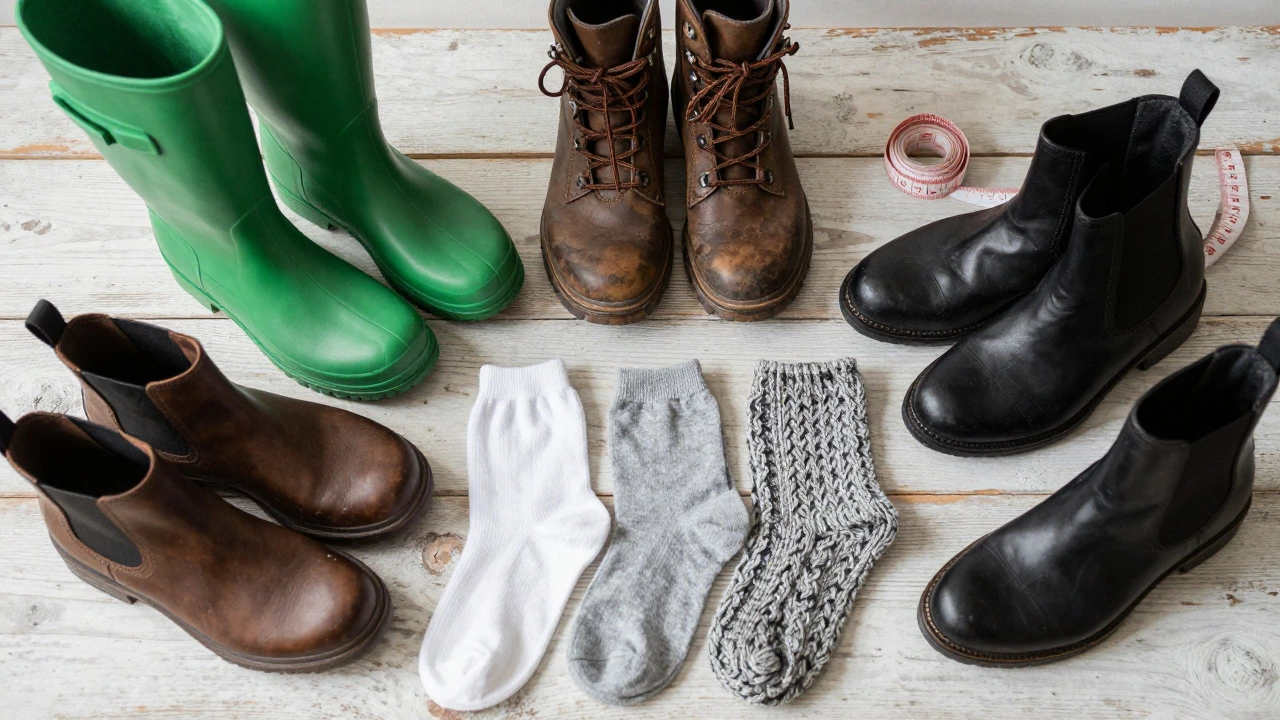
Not all boots are created equal. The style of the boot significantly impacts how you should approach sizing. Here is a breakdown based on common styles worn in Ireland:
| Boot Type | Material | Sizing Advice | Best For |
|---|---|---|---|
| Ankle Boots | Leather/Suede | True to size or half-up | Daily wear, office, evenings |
| Wellingtons (Wellies) | Rubber/PVC | One size up | Farming, festivals, heavy rain |
| Hiking Boots | Waterproof Leather | Half to one size up | Mountains, trails, long walks |
| Knee-High Fashion Boots | Stretch Fabric | True to size | Style-focused, less walking |
| Chelsea Boots | Smooth Leather | True to size | Casual chic, urban environments |
For example, rubber wellies do not stretch at all. If you buy them true to size, your toes will likely hit the front when you walk downhill, which is painful and dangerous. Always size up for wellies. Conversely, knee-high boots made with elasticated panels around the calf can accommodate a wider range of leg shapes, so sticking to your normal foot size is usually safe unless you have particularly wide calves.
Width Issues: The Hidden Problem
Many women in Ireland struggle with width rather than length. Standard UK sizing assumes a medium width (often labeled as 'B' or 'M'). If you have narrow feet, a standard size might feel loose around the heel, causing slipping. If you have wide feet, the sides of the boot will squeeze, leading to pain and numbness.
Brands like Clarks and Naturalizer often offer wide-fit options. For fashion boots, some designers run narrow, such as certain Italian brands sold in luxury department stores. Others, like British heritage brands, tend to have a broader last. If you know you have wide feet, look for keywords like 'wide fit,' 'extra depth,' or 'stretchable upper.' Avoid stiff, non-stretch materials if you have wider feet unless you are willing to pay for professional stretching services, which are available at most cobbler shops in towns across Ireland.
Online Shopping Tips for Irish Consumers
With the rise of e-commerce, many of us prefer ordering boots online from the comfort of home. However, returns can be a hassle, especially if you are dealing with international shipping costs. To minimize risk:
- Read Reviews: Look for comments specifically mentioning fit. Phrases like 'runs large' or 'true to size' are gold. Pay attention to reviewers who mention their foot shape (wide/narrow).
- Check Return Policies: Ensure the retailer offers free returns within Ireland. Some international sites charge restocking fees or require you to pay return shipping, which can eat into your budget.
- Order Two Sizes: If you are unsure, order your usual size and one size up. Try them on at home with the socks you intend to wear. Keep the boxes and tags intact until you decide.
- Use Virtual Try-On Tools: Some major retailers now offer AR (Augmented Reality) features on their apps that can give you a rough idea of how the boot looks, though this doesn't help with fit.
Local Irish online retailers often have better customer service and easier return processes than overseas giants. Supporting local businesses also means faster delivery times, which is crucial if you need boots for an upcoming event or sudden change in weather.
Break-In Period: What to Expect
Even if you get the size right, new boots will feel stiff initially. This is normal. Leather needs to soften and conform to your unique foot shape. Wear your new boots around the house for short periods before taking them out for a long day. Use leather conditioner to keep the material supple. If hot spots develop, apply moleskin pads or blister plasters preemptively.
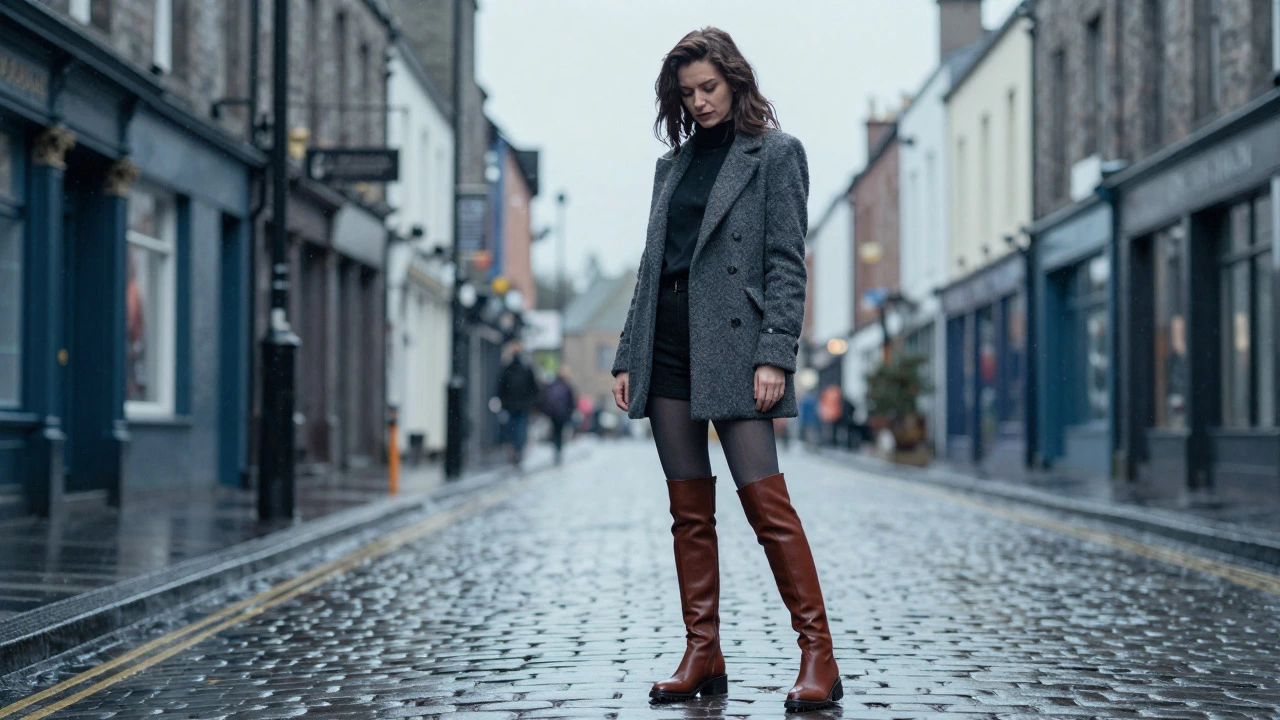
If after two weeks of wearing them indoors the boots still cause pain, they are likely the wrong size or shape for your foot. Don't hope they will improve; exchange them. Your feet deserve comfort, especially when navigating cobblestone streets in cities like Galway or Derry.
Should I size up for leather boots?
It depends on the stiffness of the leather. Soft, supple leather may require no size adjustment. Stiff, thick leather (like that used in work boots or heavy winter boots) often benefits from going up half a size to allow for the break-in period without causing excessive pressure points.
Do wellington boots run big or small?
Most wellington boots, including popular brands like Hunter and Dunlop, tend to run true to size or slightly large. However, because they are made of non-stretch rubber, it is generally recommended to size up by half or one full size if you plan to wear thick socks, which is common in Ireland.
How do I measure my foot for boot sizing?
Stand on a piece of paper with your heel against a wall. Mark the tip of your longest toe. Measure the distance in centimeters. Compare this measurement to the specific brand's size chart. Always measure both feet, as one is often slightly larger, and size according to the larger foot.
Are UK shoe sizes the same as US sizes?
No. UK sizes are typically one number lower than US women's sizes. For example, a UK size 6 is usually a US size 7. Always double-check the conversion chart provided by the retailer, as variations exist between brands.
What should I do if my boots are too tight?
If they are only slightly tight, try wearing them with thinner socks and using a leather stretcher spray. For significant tightness, visit a local cobbler who can professionally stretch the leather. If they are rubber or synthetic, they cannot be stretched, so you must exchange them for a larger size.