
Irish Work Shoe Selector
Find Your Perfect Irish Work Shoes
Answer these questions to get personalized recommendations for footwear that works in Ireland's conditions.
Recommended Features
Select your options above to see recommendations
Top Irish Brands
Select your options above to see recommendations
Standing all day in Ireland isn’t just about long shifts-it’s about wet pavements in Galway, icy sidewalks in Dublin, concrete floors in Cork warehouses, and the constant damp that seeps into your bones. If you work in a hospital, a pub, a factory, or even a busy retail store in Limerick, your feet are your most worn-out asset. The right work shoes aren’t a luxury here; they’re a necessity for surviving the Irish climate and the grind of daily work without ending up in physio.
Why Irish Conditions Demand Special Shoes
In Ireland, the weather doesn’t take days off. Rain falls 200+ days a year, and even when it’s not pouring, the ground stays damp. Indoor workplaces-like supermarkets in Belfast or nursing homes in Waterford-often have tiled or polished concrete floors that reflect cold and offer zero shock absorption. Combine that with 8-12 hour shifts, and you’re asking for plantar fasciitis, knee strain, or chronic back pain.
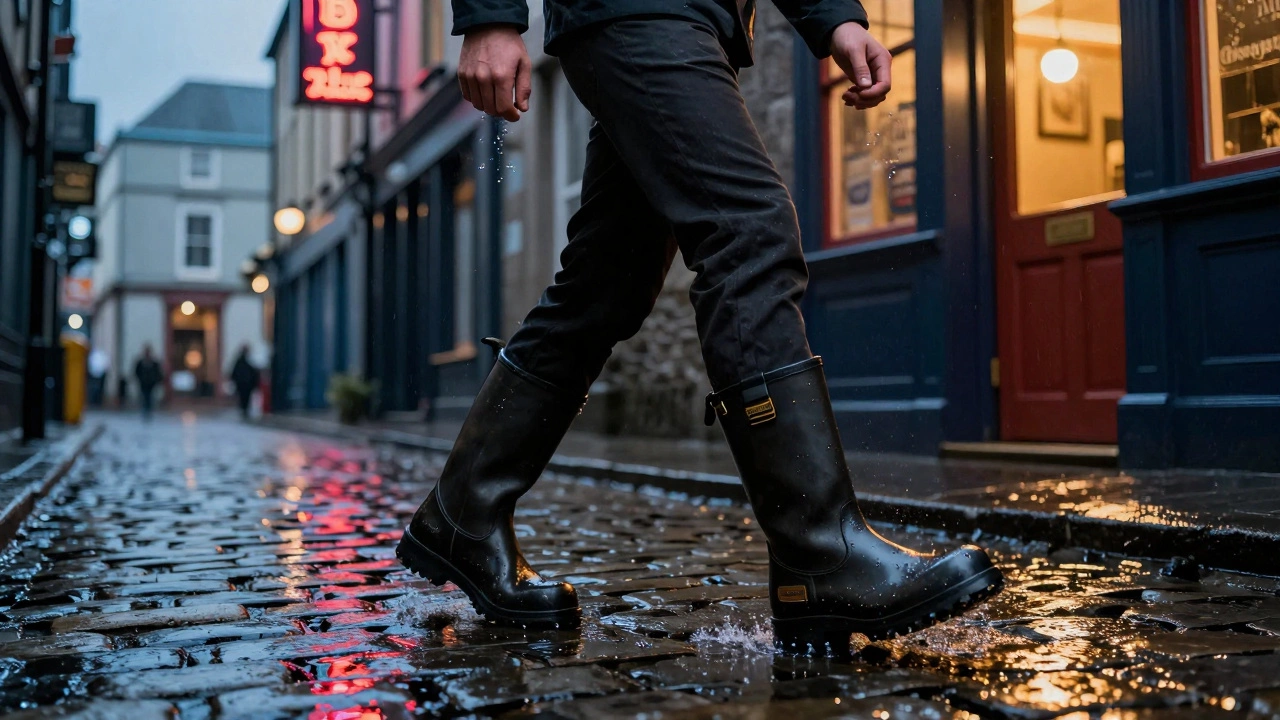
Most off-the-shelf work boots sold online don’t cut it here. They’re designed for dry construction sites in Arizona, not for slipping on wet linoleum in a Clonmel pharmacy or standing behind a counter in a busy Derry café. You need shoes that handle moisture, offer serious cushioning, and grip like they’re glued to a Belfast cobblestone.
What to Look for in Work Shoes for Ireland
Not all cushioned shoes are equal. Here’s what actually works in real Irish workplaces:
- Waterproof, not just water-resistant-Look for Gore-Tex or sealed seams. Brands like Clarks and Geox have Irish-friendly models that keep feet dry through winter showers and spilled coffee alike.
- Slip-resistant soles-The European standard is SRA, SRB, or SRC. Avoid shoes labeled only ‘non-slip’-that’s marketing speak. Look for the actual certification. Dr. Martens’ work line and Blundstone boots meet this in Ireland’s toughest environments.
- EVA or polyurethane midsoles-These materials absorb impact better than rubber alone. Rockport and Dansko use these in their professional lines, and nurses in Tallaght Hospital swear by them.
- Arch support-If you have flat feet (common in Ireland’s population), you need built-in support. Brands like Birkenstock (with their cork footbed) or Orthofeet offer models that don’t look like orthopedic devices but still deliver.
- Lightweight-Heavy steel-toe boots are overkill unless you’re on a construction site. For most Irish jobs, a composite toe or no toe protection at all is fine. Less weight means less fatigue by 5 p.m.
Top 5 Work Shoes Trusted in Irish Workplaces
Based on feedback from nurses, bar staff, warehouse workers, and retail staff across Dublin, Cork, and Limerick, these five models consistently get the nod:
| Brand & Model | Best For | Key Feature | Price Range (€) | Where to Buy in Ireland |
|---|---|---|---|---|
| Dansko Professional Clogs A classic in healthcare and hospitality, with a roomy toe box and contoured footbed | Hospitals, pharmacies, cafés | Antimicrobial footbed, slip-resistant rubber sole | €130-€160 | Shoe City, Dunnes Stores, online via Dansko.ie |
| Clarks Unstructured Cloudsteppers Lightweight, breathable, and designed for all-day comfort without looking like work gear | Retail, offices, call centers | Ortholite insole, cushioned midsole, machine-washable | €90-€120 | Clarks stores nationwide, J.J. Clarke, online |
| Blundstone Thermal Boots Waterproof, insulated, and rugged enough for outdoor work in winter | Warehouse, delivery, farming | Thermal lining, slip-resistant outsole, pull-on design | €140-€170 | Blundstone.ie, Outdoor Ireland, Decathlon |
| Rockport Eberdon Looks like a smart casual shoe but engineered for all-day standing | Front desk, sales, admin roles | Memory foam insole, flexible sole, leather upper | €110-€140 | Rockport Ireland, Brown Thomas, online |
| Dr. Martens 1460 Soft The iconic boot, now with air-cushioned soles for comfort | Bars, kitchens, creative industries | Goodyear welt, durable, grippy sole, stylish | €120-€150 | Dr. Martens stores in Dublin, Cork, Galway; Boots |
What to Avoid
Don’t fall for the trap of buying cheap work shoes from online marketplaces. Many are made with cheap EVA foam that flattens after two weeks. I’ve seen nurses in Letterkenny return shoes after a month because the arch support vanished-leaving them with heel pain by Tuesday.
Avoid shoes with:
- Thin, flat insoles (they’re just cardboard with foam)
- Hard rubber soles without grooves (they turn your floor into an ice rink when wet)
- Leather uppers without waterproofing (they soak up moisture like a sponge)
- No return policy (Irish consumer law protects you-use it)
Remember: in Ireland, if you buy something that doesn’t fit or causes pain, you’re entitled to a return or exchange under the Consumer Rights Act 2022. Don’t suffer in silence.
Pro Tips for Irish Workers
- Get fitted in the afternoon-Your feet swell by the end of the day. Buy shoes when they’re at their largest.
- Use moisture-wicking socks-Merino wool blends from Smartwool or Icebreaker keep feet dry and warm without bulk. Cotton socks? They’re a mistake.
- Replace insoles-Even the best shoes lose cushioning. Swap in Sole or Superfeet insoles every 6-9 months. They’re €30-€50 and extend shoe life by years.
- Try before you buy-Visit Shoe City in Limerick, Dunnes Stores in Galway, or Foot Locker in Belfast. Walk around the store. Stand on a hard surface. If your heel lifts or your toes feel squashed, keep looking.
Where to Buy in Ireland
You don’t need to order from the UK. These Irish retailers offer reliable service and local returns:
- Shoe City - Nationwide, with trained staff who know Irish foot shapes.
- Dunnes Stores - Carries Clarks, Geox, and Birkenstock with generous return windows.
- Decathlon - Great for budget-friendly, high-performance options like Kalenji or Quechua.
- Blundstone.ie - Official Irish site with free returns and winter delivery.
- Local orthopaedic shoe shops - In Cork, Galway, and Dublin, you’ll find small shops that custom-fit shoes for flat feet or bunions. Ask your GP for a referral.
Real Stories from Irish Workers
Máire, a 52-year-old nurse in St. James’s Hospital, Dublin: "I wore cheap hospital shoes for 10 years. My feet felt like they were on fire by shift’s end. I switched to Dansko clogs after a physio told me I had plantar fasciitis. Within a week, the pain dropped by 70%. I’ve bought three pairs since. Worth every euro."
Conor, a bar manager in Galway: "I’m on my feet 10 hours, six days a week. I used to wear boots from a hardware store. They were heavy and made my knees ache. I bought Blundstone Thermal boots last winter. I’ve had them 18 months, no wear, no leaks, no complaints. My boss even asked where I got them."
Final Thought: Your Feet Are Your Foundation
In Ireland, work isn’t just about what you do-it’s about how long you can keep doing it. Standing all day is part of the job for millions. But you don’t have to accept pain as a given. The right pair of shoes isn’t an expense; it’s an investment in your health, your productivity, and your ability to enjoy life after work.
Don’t wait until your heel starts screaming. Pick a pair that matches your job, your feet, and the damp Irish ground beneath you. Your future self will thank you.
Are work shoes for standing all day worth the price in Ireland?
Yes. Shoes that cost €120-€160 last 2-3 years with proper care. Cheap shoes under €60 often collapse in 3-6 months, forcing you to replace them twice as often. Over time, you save money-and pain-by investing in quality. Plus, many Irish retailers offer payment plans or seasonal sales.
Can I use running shoes for work instead?
Not recommended. Running shoes are built for forward motion, not standing still. Their cushioning breaks down faster under static weight, and their soles aren’t designed for slippery floors. In Ireland’s wet conditions, a running shoe can become a hazard. Stick to work-specific footwear with slip-resistant ratings.
Do I need steel toes for Irish jobs?
Only if you’re working on a construction site, in a warehouse with heavy machinery, or handling pallets. For retail, healthcare, hospitality, or office roles, composite toe or no toe protection is fine. Steel toes add weight and reduce comfort-unnecessary for most Irish workplaces.
What’s the best brand for wide feet in Ireland?
Clarks and Dansko both offer wide-fit versions. Clarks’ "Wide Fit" line is especially popular among Irish customers with broader feet. Avoid narrow Italian-style shoes. Many Irish people have wider foot shapes due to genetics and lifestyle-don’t force your feet into tight designs.
How often should I replace my work shoes in Ireland?
Every 12-18 months if you’re on your feet 6+ hours daily. Signs it’s time: flattened insoles, worn-out treads, or discomfort returning after a few hours. If you notice your heel slipping or your arches aching more than usual, don’t wait-replace them. Your body will thank you.