Wide Boot Width Finder
Enter your widest calf circumference below to find the recommended UK/Ireland width code. Remember to measure while standing with weight evenly distributed.
Recommended Width
Select a unit and enter your measurement.
Why this matters?
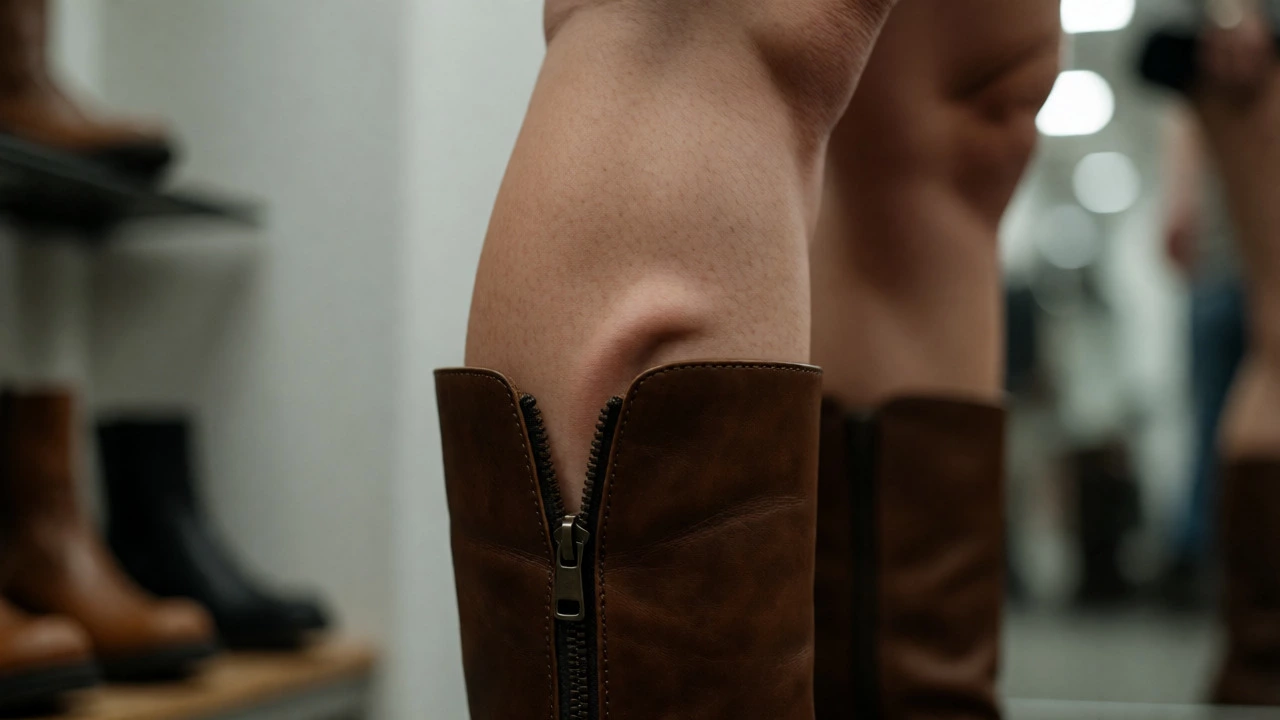
Standard boots often fail Irish women due to muscular calves or swelling from walking. Choosing the right width prevents zipper gaps and circulation issues.
You’ve probably been there. You’re standing in a fitting room in Grafton Street or scrolling through an Irish online retailer, staring at a boot that looks perfect but has a label saying "Width H." You try it on, and it’s either too tight around the calf or slides off your heel like it’s trying to escape. Confusing? Absolutely. But understanding what wide H means is the difference between buying boots you’ll actually wear during a wet Galway November and collecting expensive leather bricks.
In Ireland, our feet and calves are often wider than the standard "B" or "C" widths most mainstream brands stock. We walk more uneven terrain, we wear thicker wool socks (thanks to our damp, chilly climate), and frankly, many of us just have a different bone structure than the models used for standard sizing charts. If you’ve ever felt squeezed by standard boots, this guide breaks down exactly what H width means, how it differs from other sizes, and how to find pairs that survive both Irish weather and long days on your feet.
Decoding the Width Letter System
Shoe width isn’t random; it’s a standardized scale based on the girth of the foot and the circumference of the calf. In the UK and Ireland, we typically use letters ranging from A to K, though some specialist brands go even wider. Here’s the breakdown so you stop guessing:
- A and B: Narrow. Think ballet flats or very slim ankle boots. Rarely suitable for anyone with a normal-to-wide calf.
- C and D: Standard/Medium. This is what you get at most high-street shops like Penneys or Primark. If your calves are muscular or naturally wider, these will cut into your skin.
- E and EE: Wide. These offer extra room across the ball of the foot and slightly more calf space. Good for people who need a bit of breathing room but aren't struggling with extreme width.
- F and G: Extra Wide. Getting into true comfort territory for those with broader frames or swelling issues later in the day.
- H and J: Super Wide / Extra Extra Wide. This is where things get serious. An H width boot is designed for significant calf circumference-often 17 inches (43 cm) or more at the widest point of the calf.
So, when you see "H," it doesn’t just mean the shoe is wider across the toes. For boots, it primarily refers to the shaft width-the part that goes up your leg. If you have strong thighs or calves from cycling along the Greenway or just genetics, H is likely your sweet spot.
Why Standard Boots Fail Irish Women
Let’s be honest: most mass-market boots are made for a specific body type that doesn’t match the average Irish woman’s lower leg. The standard "medium" width assumes a narrow ankle and a tapered calf. But look around any pub in Dublin or Cork on a Friday night. Many women have sturdy, muscular legs. When you force a size 6 C-width boot onto a leg that needs an E or F, you get two problems:
- The Zipper Gap: The zip won’t close all the way, leaving a gaping hole that lets rain in. And let’s face it, if there’s one thing we have plenty of in Ireland, it’s rain.
- The Circulation Cut-Off: Tight elastic or rigid leather compresses blood flow. After two hours walking around St. Stephen’s Green, your feet swell. A boot that fits perfectly at 9 AM might feel like a vice grip by 5 PM.
Switching to an H width solves this by providing structural support without compression. It allows you to wear proper thermal socks-essential when the wind comes off the Atlantic-and still feel comfortable after ten thousand steps.
| Width Code | Typical Calf Circumference (Approx.) | Best For | Common Issue in Standard Fit |
|---|---|---|---|
| B / C (Standard) | Up to 15 inches (38 cm) | Slim ankles, no muscle bulk | Zip won't close; painful pressure points |
| D / E (Wide) | 15 - 16.5 inches (38 - 42 cm) | Average build, mild swelling | Tight over jeans or thick socks |
| G / H (Extra Wide) | 17 - 18.5 inches (43 - 47 cm) | Muscular calves, larger frame, edema | Heel slip if not properly fitted |
| J+ (Super Wide) | 19+ inches (48+ cm) | Very broad calves, medical needs | Rarely found in high street stores |
Measuring Correctly: Don’t Trust Your Shoe Size Alone
Here’s a trap many people fall into: they know their shoe size is a UK 6, so they assume an H width will fit. Wrong. Width is independent of length. You could have a size 4 foot with a massive calf, or a size 9 foot with a slender ankle. You need to measure.
Grab a soft tape measure (the kind you’d use for sewing). Stand up straight with your weight evenly distributed. Find the widest part of your calf-that’s usually about halfway between your knee and your ankle. Measure around that spot. Do this for both legs; they’re rarely identical. Use the larger measurement.
If your measurement is 17 inches or higher, ignore anything labeled "standard" or "regular." Look specifically for H, J, or "extra wide" tags. Some brands, like Clarks or Rieker, which are popular here due to their focus on comfort, sometimes offer specific wide-fit lines. Others, like Waldläufer, specialize in wider lasts entirely.
Where to Find Wide H Boots in Ireland
Shopping for wide-fit footwear in Ireland can be hit-or-miss depending on where you live. If you’re in a city like Dublin, Belfast, or Cork, you have better access to physical stores. But for those of us in rural areas or smaller towns like Ballina or Ennis, online shopping is often the only realistic option for finding true H widths.
High Street Options: Visit specialist comfort stores rather than fashion boutiques. Stores like Shoe Zone occasionally carry wider options, but selection varies wildly by location. Clarks outlets often have a "Comfort" range that includes wider widths, but you must ask specifically-they don’t always display them prominently. Check their website first to see which local branches stock the H range.
Online Retailers Serving Ireland: This is where the real variety lives. Websites like Zalando and About You allow you to filter by width, which is a game-changer. However, always check the return policy. Shipping back to Germany or Poland can cost €10-€15 unless you have a free returns label. Look for retailers with Irish warehouses or generous free-return windows.
Specialist Brands: Consider brands that design for wider feet from the ground up. Floris van Bommel and certain German orthopedic-friendly brands ship to Ireland and consistently produce H and J widths. While pricier, a pair of €150 boots that fit correctly beats three pairs of €60 boots that hurt your feet every time you wear them.
Styling Tips for Wider Calves
Just because you need a functional fit doesn’t mean you have to sacrifice style. The old rule that "wide boots make your legs look shorter" is outdated. With the right styling, H-width boots can actually elongate your silhouette.
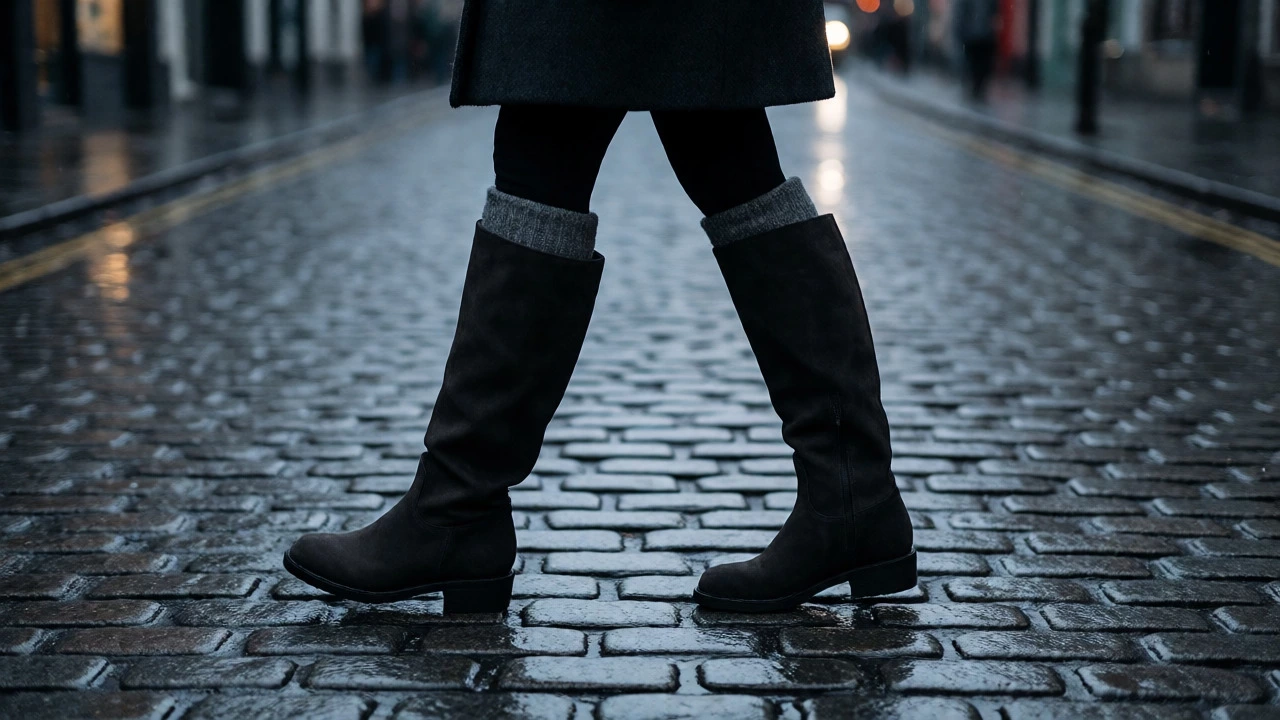
Go Monochrome: If you’re wearing black boots, wear black leggings or dark denim underneath. This creates a continuous vertical line, making your legs appear longer despite the bulkier boot shaft. Brown boots work well with earth tones-think olive greens and rust oranges, colors that suit the Irish landscape beautifully.
Watch the Shaft Height: Mid-calf boots can sometimes cut the leg in half visually. If you have wider calves, consider going slightly higher (knee-high) or slightly lower (ankle boot with stretch panels). Knee-high H boots provide uniform coverage without creating a horizontal break at the widest part of your calf.
Embrace Texture: Suede and nubuck have more give than smooth leather. They also hide creasing better, which happens faster on wider boots as the material stretches over the curve of the calf. Plus, suede looks fantastic against the grey skies typical of our winters.
Caring for Wide Leather Boots in Wet Weather
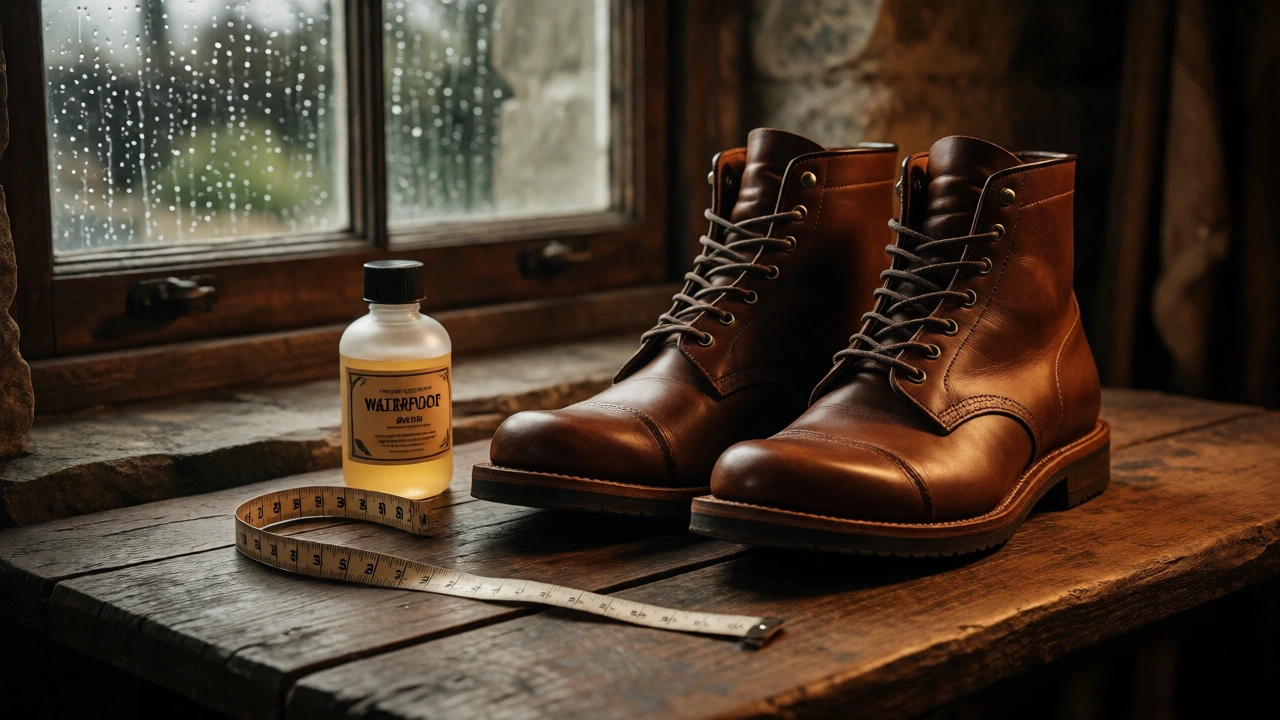
Ireland’s dampness is tough on leather. Wide boots often have more surface area exposed to splashes from puddles on footpaths. To keep your H-width investment looking good:
- Waterproof Regularly: Use a wax-based conditioner or spray every month during autumn and winter. Pay extra attention to the seams near the zipper, as that’s where water seeps in.
- Dry Naturally: Never put wet boots near a radiator. The heat dries out the leather, causing cracks. Stuff them with newspaper and let them air dry in a cool, ventilated room.
- Rotate Them: Give each pair 24 hours to dry out completely between wears. This prevents odor and keeps the shape intact.
Remember, a well-maintained pair of H-width boots can last five years or more. In a country where we value practicality and durability, that’s a smart investment.
Frequently Asked Questions
Is H width the same as EE width?
No. EE (or E) is considered "wide," while H is "extra wide." There is usually a significant difference in calf circumference-often 1 to 2 inches (2.5 to 5 cm)-between EE and H. If EE boots feel tight around the top of your calf, H is likely the correct next step.
Do I need a bigger shoe size if I buy H width boots?
Not necessarily. Width and length are separate measurements. However, some brands adjust the entire last (mold) when increasing width, which might make the toe box feel slightly different. Always try them on with the socks you plan to wear. If you’re between sizes, stick to your usual length and prioritize the width fit.
Which brands sell H width boots in Ireland?
Brands like Clarks, Rieker, Waldläufer, and Floris van Bommel often stock H and J widths. Online retailers such as Zalando and About You allow filtering by width. Specialist comfort stores in Dublin and Cork may also carry niche European brands that cater to wider feet.
Can I stretch my current boots to fit like H width?
You can stretch leather boots slightly, but don’t expect miracles. A cobbler can widen the toe box and add a bit of ease to the shaft, but stretching a C-width boot to H dimensions will distort the shape and weaken the structure. It’s better to buy the correct width initially.
Are H width boots more expensive?
Sometimes, yes. Because they require more material and are produced in smaller quantities, H-width boots can cost 10-20% more than standard widths. However, given the longevity and comfort benefits, many Irish women find the extra cost worthwhile compared to replacing ill-fitting cheap boots frequently.