Leather Shoe Condition Checker for Ireland
This tool helps you determine if your leather shoes are still in good condition or need to be replaced based on Ireland's unique climate and cultural conditions. Select all conditions that apply to your shoes.
Check Your Shoes
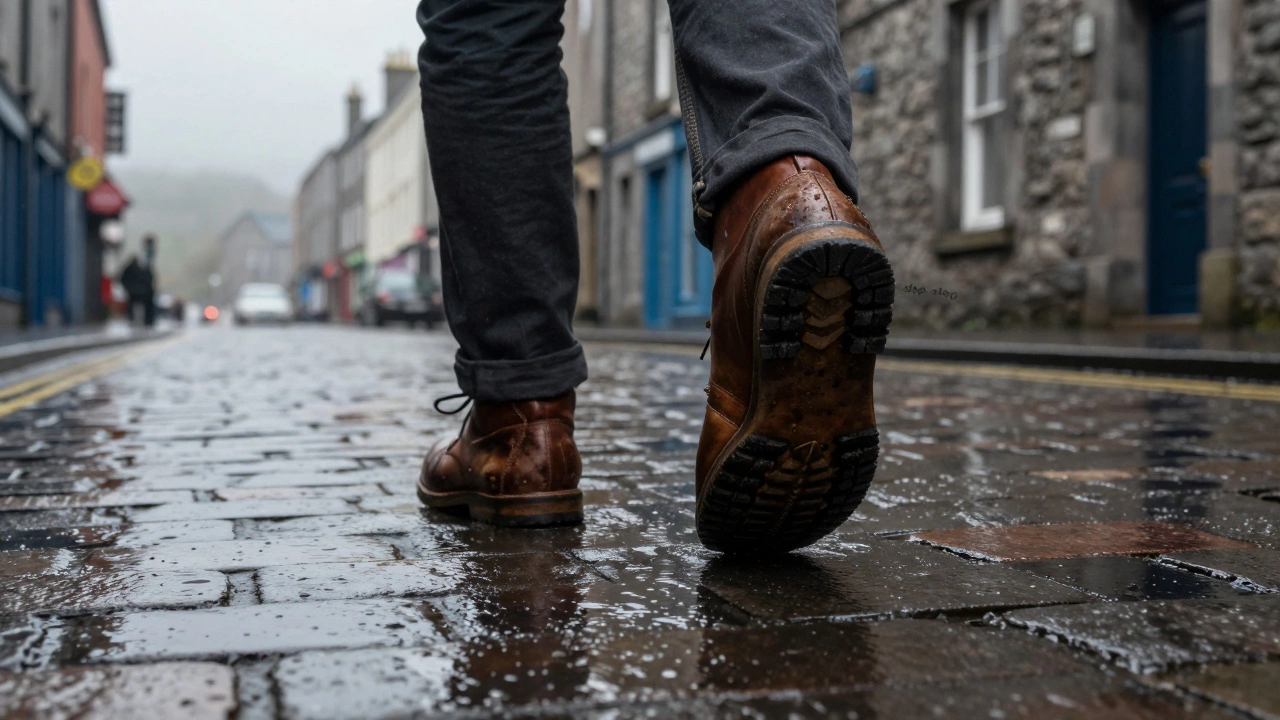
Leather shoes are a staple in Irish wardrobes. Whether you're walking the cobbled streets of Galway, commuting through Dublin’s morning rush, or hiking the Cliffs of Moher, your leather shoes take a beating. But how do you know when it’s time to let them go? In Ireland, where rain is a daily companion and dampness clings to everything, leather doesn’t just wear out-it decays. And throwing them out too early wastes money. Waiting too long risks your feet, your posture, and your safety.
Signs Your Leather Shoes Are Done in Ireland
Here’s what to look for if you live in Ireland:
- Water stains that won’t fade - Even after drying, if the leather looks blotchy or darkened in patches, it’s lost its natural oils. This is common after months of walking through puddles in Limerick or standing in wet queues outside Trinity College.
- Cracked or flaking soles - Many Irish leather shoes, especially budget ones from retailers like Dunnes Stores or Aldi, use glued soles. After 6-12 months of constant damp, the glue breaks down. You’ll hear a soft slap-slap when you walk. That’s not style-that’s structural failure.
- Heel wear that tilts you sideways - If your heel is worn unevenly, especially on the outer edge, you’re compensating for uneven pavements. Dublin’s older sidewalks, Cork’s cobbles, and Belfast’s uneven kerbs all contribute. A tilted heel isn’t just uncomfortable-it strains your knees and lower back.
- Odour that won’t go away - Leather absorbs moisture. In Ireland’s humid climate, that means bacteria thrive. If your shoes smell like wet wool or sour cheese even after airing them out for a week, the lining is beyond saving.
- Loose stitching or separated uppers - Brands like Clarks and Ecco are built to last, but even they can’t fight constant damp. If the vamp (the front part) is pulling away from the sole, it’s not a repair job-it’s a replacement.
Why Irish Weather Is Harsher Than You Think
Ireland isn’t just rainy. It’s constantly damp. The average annual rainfall is over 1,000mm, but that’s misleading. In places like the Wild Atlantic Way or the Wicklow Mountains, you get fog, mist, and ground moisture that seeps into shoes even when it’s not raining. The temperature rarely rises above 18°C, so shoes never fully dry. That’s why a pair of leather shoes in Dublin lasts half as long as the same pair in London or Paris.
Many people assume leather is durable. But untreated, unconditioned leather in Ireland’s climate turns brittle. It cracks. It stiffens. It loses its shape. That’s why local cobblers in places like Ennis, Sligo, or Letterkenny recommend conditioning your shoes every 6-8 weeks with a product like Obenauf’s Leather Oil or Saphir Renovateur. Skipping this step cuts your shoe’s life by 40%.
When to Replace vs. Repair
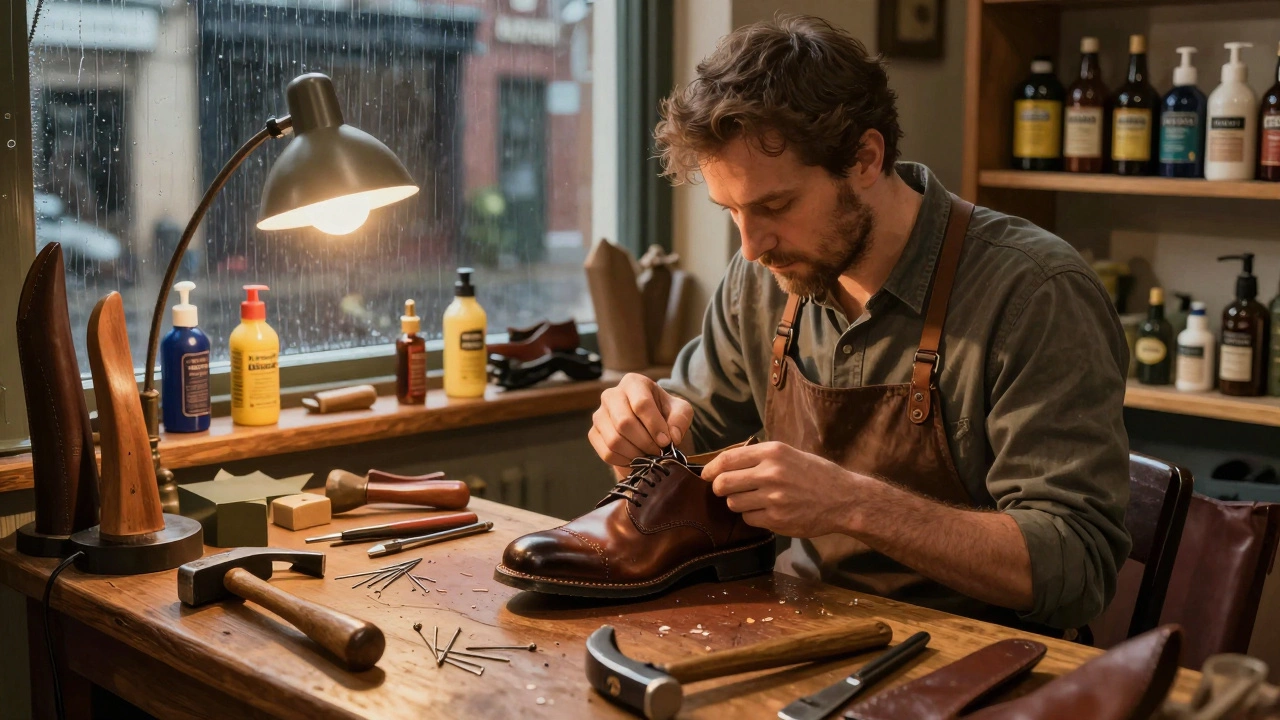
Before you toss them, ask: Can this be fixed? In Ireland, skilled cobblers are still common. Places like Shoe Repair Dublin on South William Street or Galway Cobbler on Shop Street offer resoling, heel replacement, and re-stitching for €30-€60. That’s cheaper than buying new, especially if the upper is still solid.
But not every shoe is worth saving:
- Worth repairing: A well-made pair from Clarks, Ecco, or a local Irish brand like Boots of Ireland with intact leather, good stitching, and only worn soles.
- Not worth repairing: Shoes with cracked uppers, rotting linings, or soles that are already separating from the welt. If the leather feels like cardboard, it’s done.
Pro tip: If you bought your shoes from a chain store like Dunnes or Primark, and they’ve lasted less than a year, don’t feel bad about replacing them. Those are disposable in Ireland’s climate. Save your money for better-made shoes that can handle the damp.
What to Look for When Buying New in Ireland
Not all leather shoes are created equal. Here’s what to prioritize:
- Goodyear welted construction - This means the sole is stitched to the upper, not glued. It allows for multiple resoles. Brands like John Lobb (available at Brown Thomas) or Church’s (in Dublin’s Grafton Street) use this. Even mid-range options like Trickers or Red Wing (sold at Footwear Ireland in Cork) are worth the investment.
- Water-resistant leather - Look for shoes treated with Chromexcel or Waxed Leather. These repel moisture better than plain veg-tanned leather. Brands like Blundstone (popular in Ireland for work boots) have leather versions that handle rain better than most dress shoes.
- Non-slip soles - Ireland’s wet streets are slippery. Rubber lug soles or Vibram soles with deep treads give you confidence on wet cobbles in Kilkenny or icy paths in Connemara.
Don’t be fooled by shiny, polished looks. A shoe that looks perfect in a store window may fall apart after two months of Irish weather. Ask the salesperson: “Is this sole glued or stitched?” If they hesitate, walk away.
How Long Should Leather Shoes Last in Ireland?
Here’s a realistic lifespan based on usage:
| Shoe Quality | Usage Frequency | Expected Lifespan | Best For |
|---|---|---|---|
| Low-end (Dunnes, Aldi) | Daily | 6-9 months | Occasional wear |
| Mid-range (Ecco, Clarks) | Daily | 1.5-2 years | Commuting, work |
| High-end (Church’s, Trickers) | Daily | 3-5 years (with resoling) | Long-term investment |
| High-end (John Lobb, Crockett & Jones) | 3-4x/week | 7+ years (multiple resoles) | Formal events, professionals |
One man in Cork replaced his Ecco shoes every 18 months-until he started using a shoe tree and conditioning them monthly. They lasted 4 years. Simple habits make a huge difference.
What to Do With Old Leather Shoes
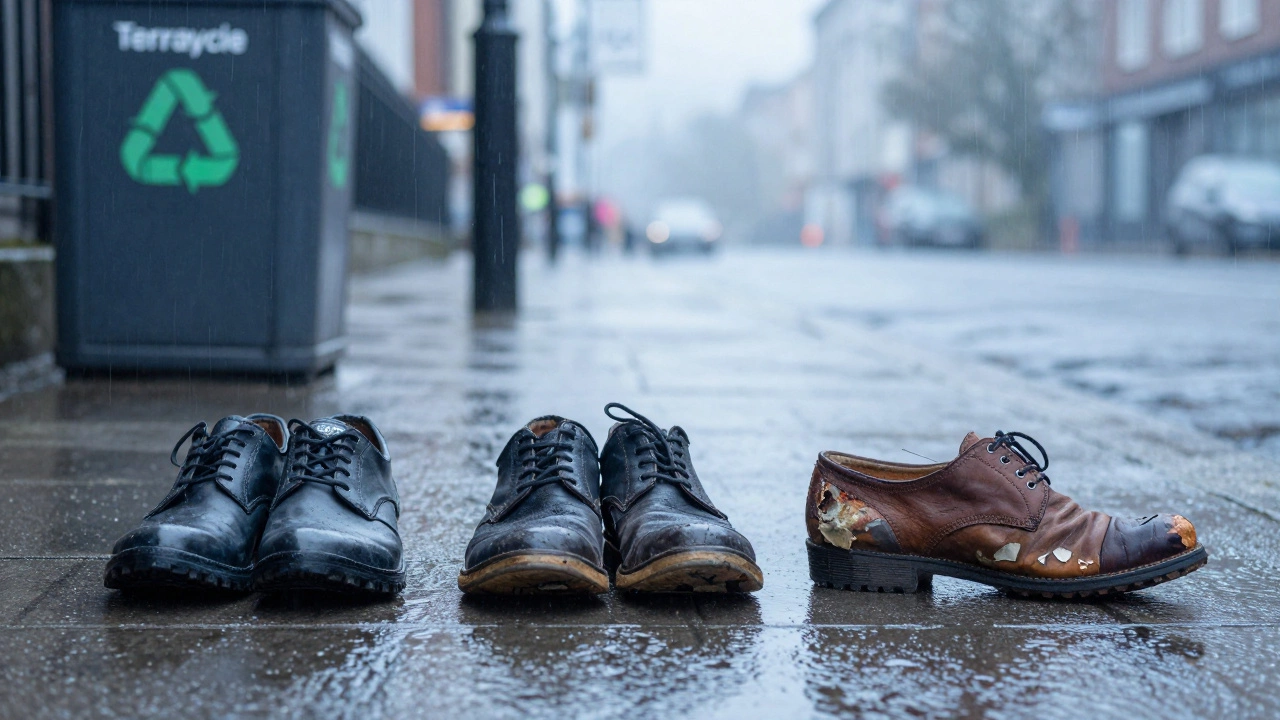
Don’t just bin them. Ireland has recycling options:
- Take them to a cobbler - Many will take worn shoes for parts. The leather can be reused for repairs or crafts.
- Donate to shelters - Organisations like Focus Ireland or St. Vincent de Paul accept gently used footwear for people in need. Even worn shoes can help someone stay dry.
- Recycle through TerraCycle - In partnership with Irish retailers, TerraCycle accepts old shoes for material recycling. Drop-off points exist in Dublin, Limerick, and Galway.
- Repurpose them - Cut the soles for garden stepping stones. Use the leather for small craft projects. Irish artisans often turn old boots into coasters or keychains.
Throwing leather shoes in the bin isn’t just wasteful-it’s irresponsible in a country where sustainability is gaining traction. From Galway’s zero-waste markets to Belfast’s repair cafes, there’s a growing culture of keeping things alive.
Final Rule: When in Doubt, Test It
Before you toss your shoes, do this:
- Wear them for a full day in the rain.
- Walk on a wet pavement-do they slip?
- Stand on one foot. Does your ankle wobble?
- Smell them. Is there a sour, fungal stink?
- Press the leather. Does it feel stiff, brittle, or cracked?
If two or more of these are yes, it’s time. Don’t wait until you’re limping. Don’t wait until the sole falls off mid-walk on Grafton Street. In Ireland, your shoes are your first line of defence against the weather. Treat them with care, but don’t cling to them out of guilt.
Good leather lasts. But even the best won’t last forever-especially here.
Can I wear leather shoes in the Irish winter?
Yes, but only if they’re properly treated. Use a waterproofing spray like Nikwax before winter hits. Avoid wearing thin-soled dress shoes on icy paths-opt for boots with rubber soles instead. If you must wear leather, carry a small towel to wipe them down after every walk.
Are Irish-made leather shoes better for the climate?
Not necessarily. Brands like Boots of Ireland use quality materials, but what matters more is construction. A well-made shoe from Italy or Sweden with Goodyear welting and water-resistant leather will outperform a locally made glued shoe. Look at the build, not the label.
How often should I condition my leather shoes in Ireland?
Every 6-8 weeks if you wear them regularly. In winter, every 4 weeks. Use a conditioner with natural oils-like lanolin or beeswax. Avoid silicone-based sprays; they trap moisture inside the leather, which accelerates decay.
Do shoe trees really help in Ireland’s damp climate?
Yes, more than anywhere else. Shoe trees absorb moisture and maintain shape. Cedar ones are best-they also fight odour. Leave them in overnight after every wear. It’s the single most effective habit to extend your shoe’s life in Ireland.
What’s the most common mistake Irish people make with leather shoes?
Letting them air-dry by the radiator. Heat cracks leather. Instead, dry them slowly at room temperature with newspaper inside. Replace the paper every few hours. Never use a hairdryer or oven.