China Footwear & Etiquette Guide
1. Essential Vocabulary
Click a card to hear the pronunciation context and see the Irish equivalent.
Select a Term
English: -
Irish Context: -
2. Etiquette Quiz
Test your knowledge on Chinese home protocols.
Question goes here...
Quiz Complete!
You scored 0 out of 0.
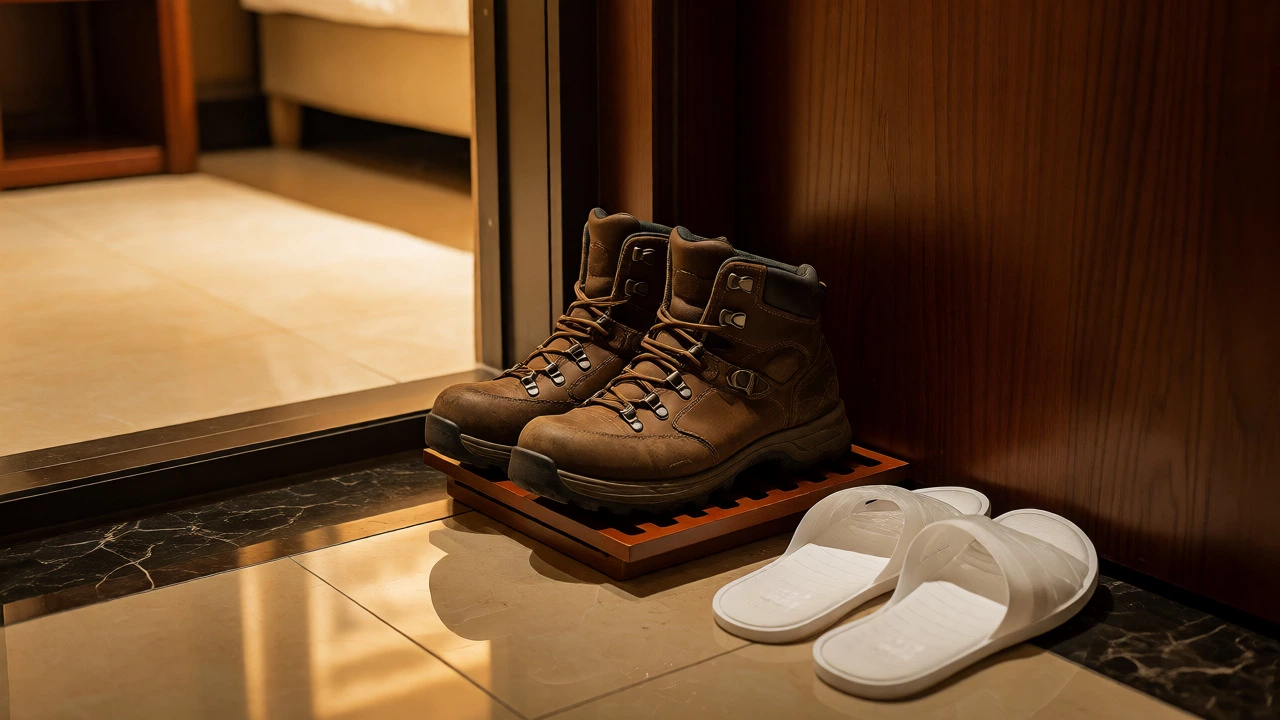
You’re standing in a hotel room in Beijing or Shanghai, looking at the pair of plastic slides by the door, and you wonder: what do Chinese people call slippers? If you’re an Irish traveler used to kicking off your boots at the door but keeping socks on inside, this small cultural detail can trip you up. In China, the rules are different. You don’t just take your shoes off; you swap them for specific indoor footwear provided by the host or hotel. Knowing the right word-tuōxié (拖鞋)-isn’t just about language; it’s about respecting a norm that keeps homes clean in a country where dust and rain are constant companions.
The Word You Need: Tuōxié
Let’s cut straight to the chase. The standard Mandarin term for slippers is tuōxié. It literally translates to "drag shoe" because you slide your foot into them without using your hands to tie laces or pull heels up. This isn't slang; it's the everyday term you'll hear in households across China, from the bustling streets of Guangzhou to the quieter villages in Yunnan.
Why does this matter for someone flying out of Dublin Airport? Because if you try to say "shoes" (xiézi) when you mean slippers, you’ll confuse your host. They might think you want your outdoor sneakers back. But if you point to the rack and say "tuōxié," everyone understands instantly. It’s a tiny effort that shows you’ve done your homework, much like knowing how to order a pint properly in a Galway pub.
| Mandarin Term | Pinyin | English Equivalent | Irish Context Example |
|---|---|---|---|
| 拖鞋 | Tuōxié | Slippers / Flip-flops | Indoor house shoes provided in hotels |
| 鞋子 | Xiézi | Shoes (general) | Your hiking boots from Wicklow Mountains |
| 袜子 | Wàzi | Socks | Thermal socks for cold floors |
| 室内鞋 | Shìnèi xié | Indoor shoes | Closed-toe slippers for winter |
Why China Is Different From Ireland
In Ireland, we have a mixed relationship with removing shoes. Some families insist on it, especially during wet weather when the mud from Connemara trails gets everywhere. Others let kids run around in socks. But in China, the line is sharp. Outdoor shoes carry dirt, bacteria, and city grime. Indoor floors are often tiled or polished wood, surfaces that show every speck of dust. Wearing outdoor shoes inside is considered rude, almost as bad as wearing muddy boots onto a pristine white sofa in a Dublin townhouse.
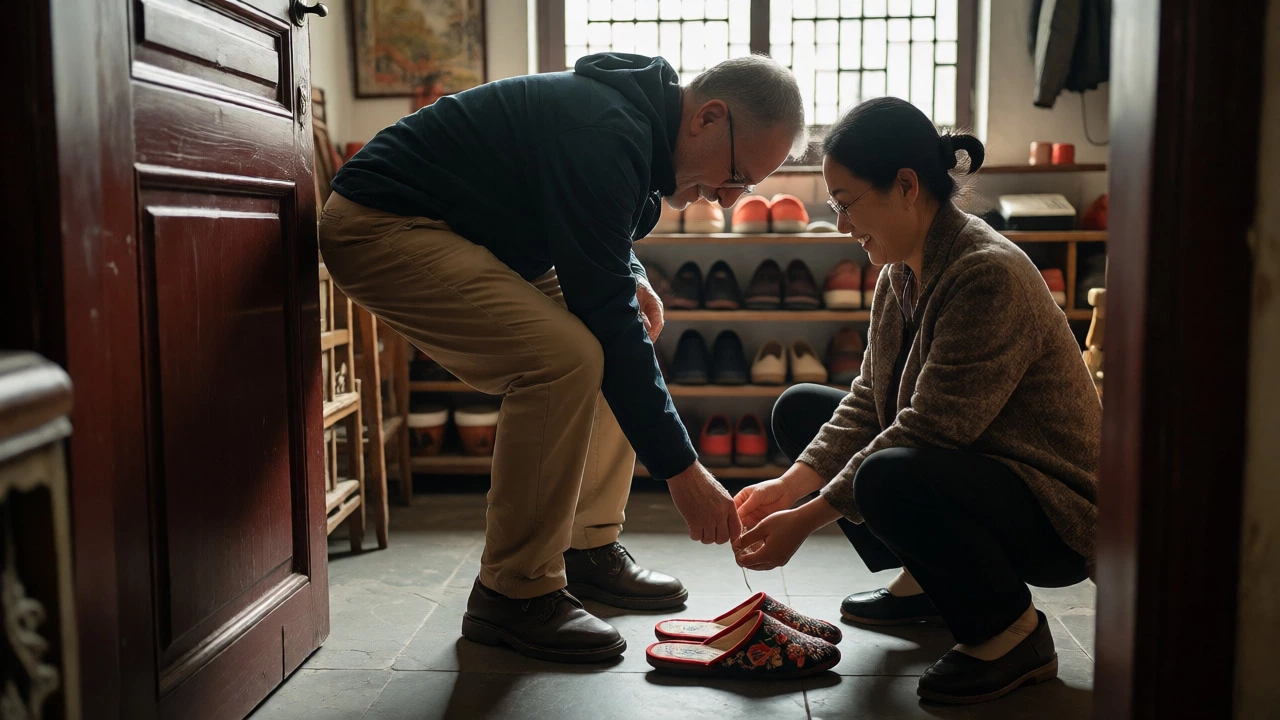
This hygiene focus stems from practicality. Many Chinese cities experience high levels of particulate matter and frequent rain. Bringing that outside world into your living space is avoided at all costs. When you visit a home in Chengdu, you won’t be offered a choice. You’ll see a shoe rack by the entrance, and you’ll know what to do. You leave your trainers there and slip on the provided tuōxié. If you forget, your host will gently remind you. It’s not a suggestion; it’s protocol.
Types of Slippers You’ll Encounter
Not all tuōxié are created equal. What you find depends on where you are and who hosts you. Understanding these variations helps you pack better and avoid awkward moments.
- Plastic Hotel Slippers: These are ubiquitous in budget hotels across Asia. They’re thin, disposable, and often slippery. If you’re coming from a rainy week in Cork, you might miss the grip of your own non-slip soles. Pack a pair of sturdy rubber-soled flip-flops if you plan to use communal showers or walk to breakfast in a hostel.
- Fabric Cotton Slippers: Common in homes and higher-end guesthouses. These are warm, soft, and often embroidered. They’re perfect for cooler months when heating might be inconsistent. Think of them as the Chinese equivalent of those woolly booties you wear around the house in January.
- Leather or Synthetic Closed-Toe Shoes: Sometimes called shìnèi xié, these look more like loafers than slippers. They’re common in offices or formal homes. If you’re visiting a business partner in Shenzhen, you might be expected to wear these instead of open-toed slides.
For Irish travelers, the biggest shock is often the lack of variety in cheap accommodations. You might expect fluffy, memory-foam comfort like you get in a luxury B&B in Kerry. Instead, you get a flimsy piece of molded plastic. It works, but it’s not cozy. Bring your own comfortable pair if you value foot health after long days walking the Great Wall.
Etiquette Rules Every Visitor Should Know
Knowing the word tuōxié is step one. Knowing how to behave is step two. Here’s what you need to remember to avoid faux pas.
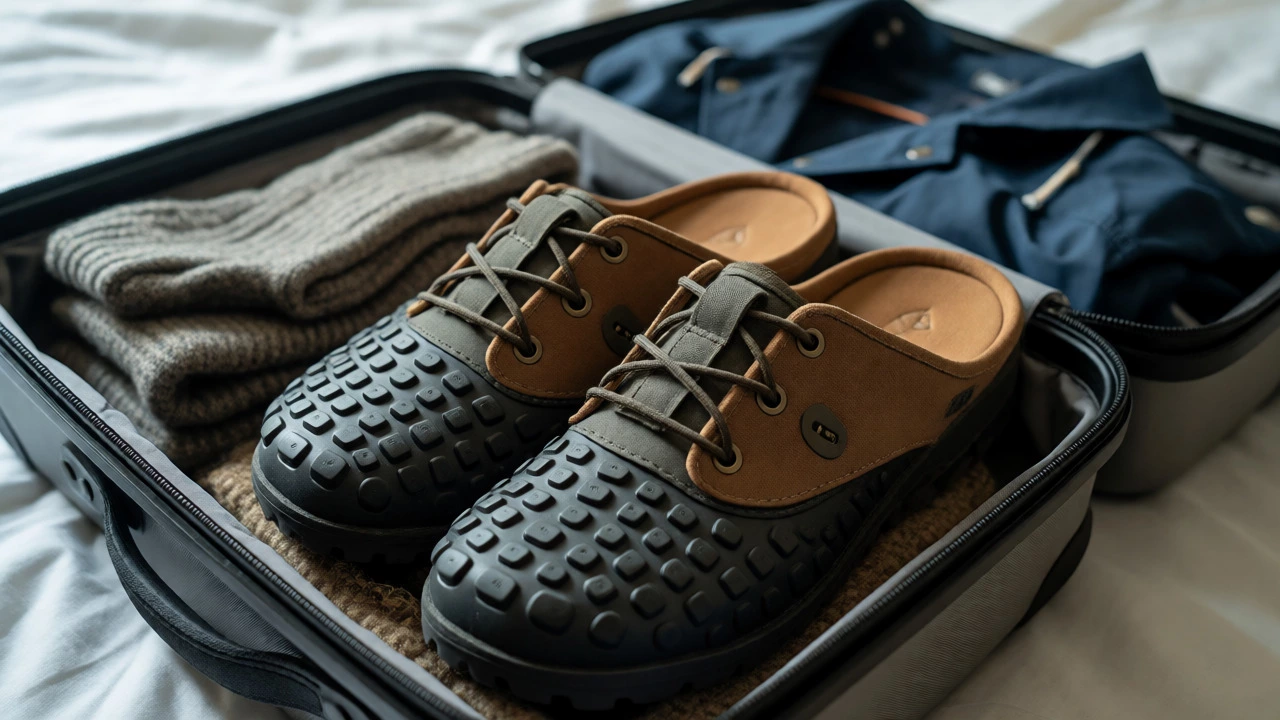
First, never wear your outdoor shoes on carpeted areas in a home. Even if the floor looks clean, assume it isn’t. Second, place your outdoor shoes neatly on the rack, pointing outward. This makes it easy for you to grab them when leaving and shows respect for the host’s organization. Third, if you’re given a pair of slippers, check if they’re shared or personal. In many homes, guests are given new pairs. In others, you might share a communal bin. If you’re sensitive about hygiene, bring your own foldable travel slippers. Brands available in Irish sports stores like Decathlon or local boutiques in Dublin City Centre sell compact options that fit easily in a carry-on bag.
Another key rule: don’t wear your tuōxié outside. Once you step out the front door, switch back to your outdoor shoes. Walking down a street in Beijing wearing indoor slippers marks you immediately as a foreigner who hasn’t grasped the basics. It’s similar to walking into a pub in Temple Bar wearing your gardening gloves-you’re technically not breaking the law, but you’re definitely signaling something odd.
Regional Variations and Slang
While tuōxié is understood nationwide, regional dialects add flavor. In parts of southern China, particularly Guangdong province, Cantonese speakers might use terms like lap5 haai4 (leap hai), which sounds very different from Mandarin. If you’re traveling to Macau or Hong Kong, stick to Mandarin or English unless you’re fluent in Cantonese. Most service staff understand basic Mandarin, and English is widely spoken in tourist hubs.
In northern regions like Beijing, the pronunciation might soften slightly, but the core term remains stable. There’s no major slang shift here compared to, say, the difference between "craic" in Dublin versus rural Kerry. The concept is universal enough that standard Mandarin works everywhere. Don’t overcomplicate it. Stick to tuōxié, smile, and you’ll be fine.
Packing Tips for Irish Travelers Heading to China
If you’re planning a trip from Shannon or Dublin to mainland China, your packing list needs adjustment. Here’s a quick checklist tailored for our climate-adjusted feet.
- Bring Your Own Slippers: Choose lightweight, washable, closed-toe options. Open-toed slides are risky if you’re prone to stubbing toes or catching cold drafts from air conditioning units, which are often set aggressively low in Chinese buildings.
- Check Hotel Reviews: Look for comments about "amenities." If previous travelers complain about "slippery shower mats" or "thin slippers," pack accordingly. Sites like TripAdvisor often highlight these details for properties in Shanghai or Xi’an.
- Consider Weather: If you’re visiting in winter, northern China gets bitterly cold. Floors can be icy even indoors if heating is poor. Wool-lined slippers are a smart buy. You can find affordable thermal options in Irish supermarkets before you fly, saving money compared to buying specialized gear abroad.
- Hygiene Kit: Carry a small bottle of antibacterial spray. Not because Chinese homes are dirty-they’re often cleaner than ours-but because peace of mind helps you relax. Spraying your personal slippers after a day out is a simple ritual that keeps things fresh.
Cultural Connection: Why This Matters
At its core, the question "what do Chinese people call slippers?" is really about understanding boundaries. In Ireland, we value informality. We might kick off our shoes mid-conversation or invite friends in without ceremony. In China, the act of changing shoes is a symbolic transition from public to private space. It signals trust and cleanliness.
By learning the term and following the custom, you’re not just avoiding embarrassment. You’re showing respect for a system designed to protect health and community standards. It’s a small gesture, much like saying "please" and "thank you" in Irish Gaelic (le do thoil and go raibh maith agat). It doesn’t change the world, but it changes how you’re perceived. And in a country of 1.4 billion people, making a good impression starts with the basics.
Can I wear socks instead of slippers in a Chinese home?
Generally, no. Hosts usually provide slippers specifically so you don't track dirt in with bare feet or socks. Wearing only socks might be seen as unhygienic if your socks came from outside. Always ask or wait for the host to offer slippers.
Are hotel slippers in China free to take home?
Yes, most disposable plastic slippers provided in hotels are intended for single-use and can be taken home as souvenirs. However, higher-end fabric slippers may be charged for if removed from the room. Check the price list in your room to be sure.
How do I pronounce 'tuōxié' correctly?
It is pronounced roughly as "two-ah she-eh." The first syllable has a falling-rising tone, and the second has a rising tone. Don't worry too much about perfection; context and pointing help significantly if your tones are off.
Do I need to remove my shoes in Chinese restaurants?
No, not typically. Shoe removal is a home and hotel custom. In public spaces like malls, train stations, and restaurants, you keep your outdoor shoes on. Only enter homes, some traditional tea houses, or temples with bare feet or provided slippers.
Is it rude to refuse slippers offered by a host?
It can be. Refusing implies you don't trust their cleanliness or hospitality. If you're uncomfortable, politely accept them, perhaps mention you have your own if you brought them, but generally, accepting the gesture is the respectful move.