
Irish Summer Dress Comfort Calculator
Select your outfit details to see how well it handles an Irish summer day (approx. 20°C with potential humidity).
Comfort Assessment
0 /100
Analysis:
You step out of your flat in Dublin or maybe you're driving down the Wild Atlantic Way, and the sun is actually shining. It’s that rare, glorious Irish summer day where the temperature creeps up to 20°C or even higher. You reach for a dress, but which one? Do you grab the black one because it’s slimming? The navy blue because it’s safe? Or do you go bright yellow like the gorse bushes on the cliffs of Moher?
Here’s the thing about dressing for summer dresses here in Ireland: our weather is tricky. One minute it’s blazing hot, the next a rain shower blows in from the Atlantic. So, when we ask "what is the coolest color," we aren't just talking about style points. We’re talking about physics, comfort, and staying sane when the humidity rises.
The Physics of Light and Heat
Let’s get straight to the science without boring you with a lecture. Dark colors absorb more light energy from the sun and convert it into heat. White and light pastels reflect most of that light away. If you wear a jet-black linen dress at a festival in Galway under direct sunlight, you are essentially wearing a solar panel. You will feel hotter faster.
In contrast, lighter shades bounce the heat off the fabric. This doesn’t mean you’ll stay freezing cold-no magic trick there-but it significantly reduces the thermal load on your body. For anyone who has ever tried to commute through a humid city center while wearing dark denim, you know exactly what I mean. The difference between absorbing heat and reflecting it is the difference between feeling sticky and feeling fresh.
| Color Family | Heat Absorption | Best Use Case | Ideal Fabric Pairing |
|---|---|---|---|
| White & Cream | Lowest (Reflects ~80%+) | High-sun exposure, beach days | Linen, Cotton Voile |
| Pastels (Mint, Lavender) | Low-Medium | City strolls, office wear | Cotton Poplin, Silk |
| Earth Tones (Beige, Sand) | Medium-Low | Versatile daily wear | Tencel, Hemp |
| Jewel Tones (Emerald, Navy) | High | Evenings, cooler days | Viscose, Rayon |
| Black & Charcoal | Highest (Absorbs ~90%+) | Shade, evening events | Lightweight Wool Blends |
Why White Isn’t Always the Only Answer
Yes, white is technically the coolest color. But let’s be real about living in Ireland. Have you ever tried to keep a pure white dress clean during a sudden downpour near Lough Corrib? Or spilled coffee on yourself before heading to work in Cork? White shows every speck of dirt, grass stain, or rain splash. It requires high maintenance.
That’s why many locals opt for "off-white" alternatives. Think ecru, ivory, or soft beige. These colors offer nearly the same reflective properties as stark white but hide the inevitable messes of an Irish summer much better. They blend seamlessly with the natural landscape, too. Walking along the Cliffs of Kerry in a sand-colored linen shift feels more harmonious than standing out in blinding white against the green hills.
Another practical option is light grey. Silver-grey reflects enough heat to keep you cool but looks sophisticated and modern. It’s also less likely to look "dirty" if you catch a bit of mud on the hem after walking through a damp garden. For professionals commuting via Luas or Dart, a light grey midi dress strikes the perfect balance between professional polish and thermal comfort.
The Power of Pastels in Irish Summers
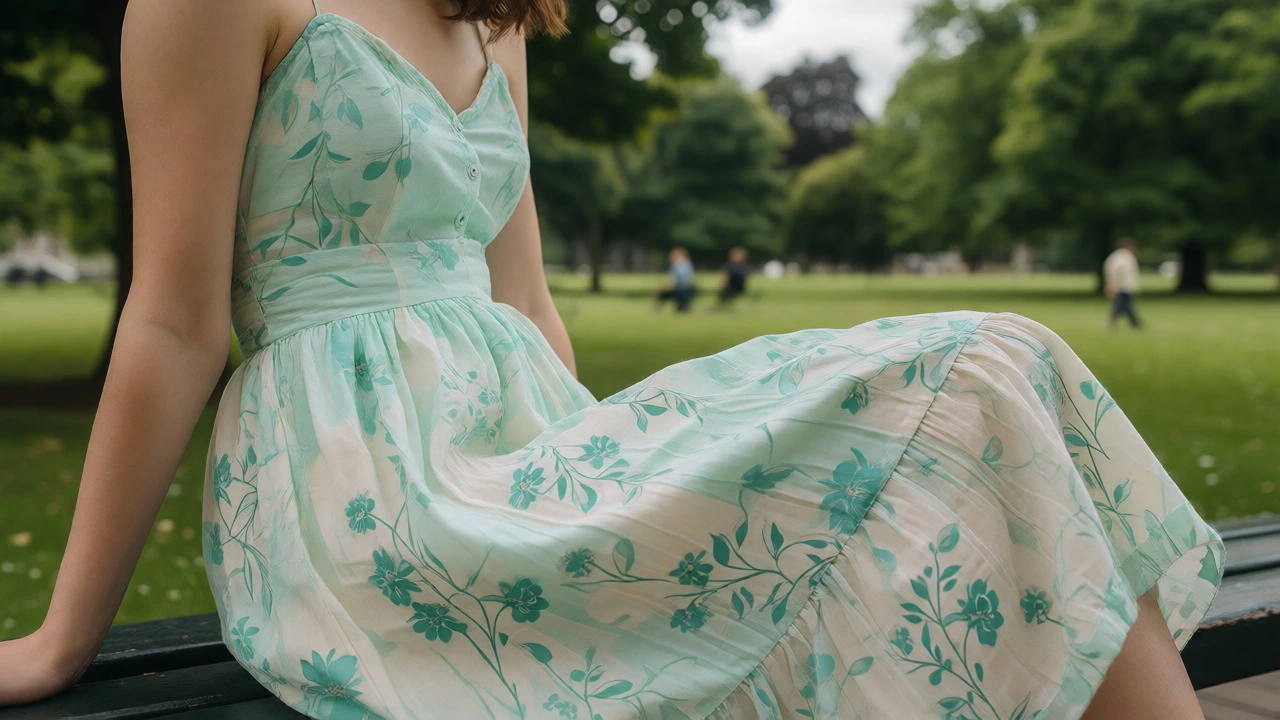
If you want to add some personality without overheating, pastels are your best friend. Mint green, baby blue, pale lavender, and soft peach all have low heat absorption rates. More importantly, they complement the specific lighting conditions we get here. Irish sunlight, especially in June and July, can be quite diffuse due to cloud cover. Bright neons can sometimes clash with this soft light, making you look washed out. Pastels, however, glow gently in that diffused light.
Consider the local flora. When you walk through Phoenix Park in Dublin or the gardens of Powerscourt in Wicklow, you see these colors naturally. Wearing them helps you blend into the environment rather than fighting against it. A mint-green sundress feels fresh and airy, psychologically cooling you down even before the fabric touches your skin. It’s a mental hack that works surprisingly well.
Blue deserves special mention. Not navy, but sky blue or aqua. Blue is associated with water and air, both of which evoke feelings of coolness. Given that we live on an island surrounded by the Atlantic Ocean, choosing a blue dress feels culturally appropriate and visually soothing. It pairs perfectly with the denim jackets we all inevitably carry around, just in case the wind picks up off the coast.
Fabric Matters More Than Color Alone
Here is a crucial point that often gets overlooked: a black cotton dress might be cooler than a white polyester dress. Why? Because fabric breathability plays a massive role in how hot you feel. Synthetic materials like polyester trap heat and sweat against your skin, creating a greenhouse effect regardless of color.
Natural fibers are king for Irish summers. Linen is the gold standard. It’s highly breathable, dries quickly if you get caught in a shower, and improves with age. A white linen shirt-dress is arguably the most practical garment for our climate. However, linen wrinkles easily. If you hate looking rumpled, opt for a linen-cotton blend. Cotton itself is excellent-it absorbs moisture and allows air circulation. Look for loose weaves or lightweight knits rather than tight synthetics.
Silk is another contender, particularly for evenings. It regulates temperature well, keeping you cool when it’s hot and warm when it’s chilly. A silk slip dress in a pale champagne shade is elegant for a night out in Belfast or Galway city. Just remember that silk stains easily, so handle it with care.
Patterns Can Trick the Eye (and the Thermometer)
You don’t have to stick to solid colors. Patterns can be incredibly effective for managing heat perception. Small prints, like florals or geometric shapes, break up the surface area of the fabric. This prevents large blocks of color from absorbing too much heat in one spot. Additionally, patterns distract the eye from sweat marks, which is a huge plus for those of us prone to perspiring in humid conditions.
Choose patterns with a light background. A floral print on a cream base will behave similarly to a solid cream dress in terms of heat reflection. Avoid dense, dark backgrounds with small light flowers; the net effect is still dark and heat-absorbing. Instead, look for large, sparse prints on light fabrics. This keeps the overall tone light while adding visual interest.
Stripes are another great option. Vertical stripes elongate the figure, and horizontal stripes can add width, but both work well in light colors. A blue-and-white striped Breton-style top paired with a white skirt is a classic look that remains popular across Europe and fits perfectly into the casual chic aesthetic common in cities like Dublin and Edinburgh.

Practical Tips for Buying Summer Dresses in Ireland
When shopping for your summer wardrobe, keep these local realities in mind:
- Check the label for fiber content: Aim for at least 50-70% natural fibers (cotton, linen, hemp, silk). If it’s mostly polyester, leave it on the rack unless it’s designed for active wear.
- Test the weave: Hold the fabric up to the light. If you can see through it slightly, it’s likely breathable. Tight, opaque weaves trap heat.
- Consider layering: Even in July, evenings can drop to 12°C. Choose dresses that pair well with a light cardigan or denim jacket. Neutral colors make mixing and matching easier.
- Watch for transparency: Lighter colors, especially whites and pastels, can become transparent in strong sunlight. Always check if the dress has a lining or wear nude-toned undergarments.
- Local brands to explore: Check out Irish designers who understand our climate. Brands focusing on sustainable, natural fabrics are increasingly common in boutiques across Galway and Dublin.
Remember, the goal isn’t just to look good-it’s to feel comfortable enough to enjoy the long evenings. There’s nothing worse than being too hot to sit outside for a pint after work. By choosing lighter colors and breathable fabrics, you ensure you stay fresh from the morning commute to the late-night dinner.
FAQ: Common Questions About Summer Dress Colors
Is black really the worst color for summer?
Not necessarily. While black absorbs the most heat, a loose-fitting black dress made from lightweight, breathable fabric like chiffon or thin cotton can still be comfortable. The key is airflow. If the fabric clings to your skin, black will feel hot. If it billows and allows air circulation, it can be surprisingly wearable, especially in shaded areas or during cooler evenings.
Which pastel color is the coolest?
Generally, very light yellows and creams reflect the most light. However, the difference between mint green, pale pink, and sky blue is negligible in terms of actual temperature change. Choose based on your personal style and skin tone. Psychologically, blues and greens tend to feel cooler to the wearer.
Can I wear red in the Irish summer?
Red absorbs a significant amount of heat, similar to orange and purple. It’s best reserved for cooler days or evening events. If you love red, choose a lighter coral or salmon shade instead of deep crimson. These lighter reds reflect more light and are more suitable for daytime wear in sunny conditions.
Does wearing white make me look sickly?
This depends on your skin undertone. If you have cool undertones, stark white can sometimes wash you out. Try cream, ivory, or off-white instead. These warmer neutrals provide the same heat-reflective benefits but flatter a wider range of complexions. Adding a pop of color with accessories can also help balance the look.
What is the best fabric for a white summer dress?
Linen is the top choice for its breathability and quick-drying properties, though it wrinkles easily. Cotton voile or poplin is a great alternative if you prefer less wrinkling. Avoid heavy cottons or synthetics, as they can trap heat and show sweat patches more prominently on white fabric.