Irish Leather Shoe Quality Checker
Use this interactive tool to inspect a pair of shoes before buying. Check off each feature you observe. The more boxes you tick, the higher the likelihood that the shoes are built to survive the Irish elements.
Touch & Feel
Smell & Sound
Construction & Stitching
Visual Inspection
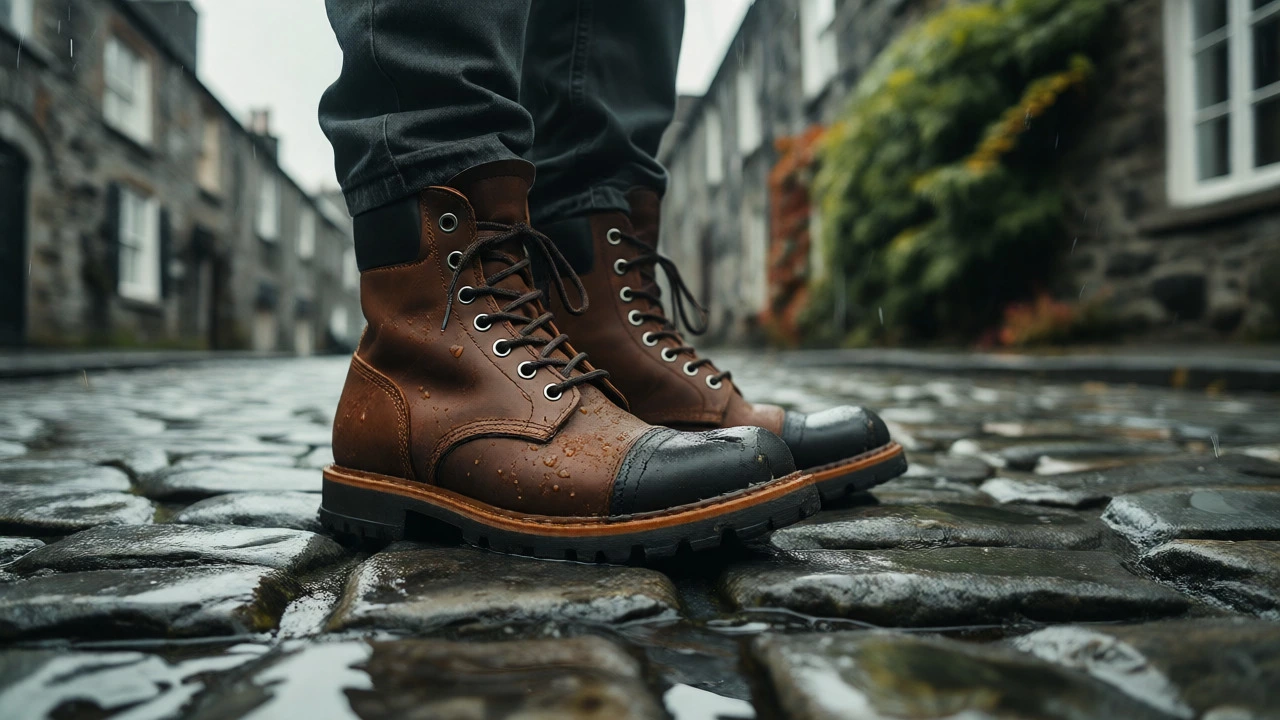
You walk into a shop in Dublin’s Grafton Street or browse the racks at Brown Thomas, and there they are: a pair of boots that look expensive. The price tag reflects it, too. But here is the tricky part-expensive doesn’t always mean good. In Ireland, where we spend more time walking on wet pavement than almost anywhere else in Europe, bad leather isn’t just an aesthetic issue; it’s a durability disaster. You need shoes that survive the Galway rain, the cobblestones in Kilkenny, and the damp chill of a Tuesday morning in Cork.
So, how do you know if those €300 loafers are actually worth your paycheck? It’s not about the brand name on the tongue. It’s about feeling the material, checking the construction, and understanding what happens when that shoe meets our notoriously unpredictable weather. Let’s break down exactly how to inspect leather shoes so you don’t end up with cracked soles by Christmas.
Touch It: The Feel Test
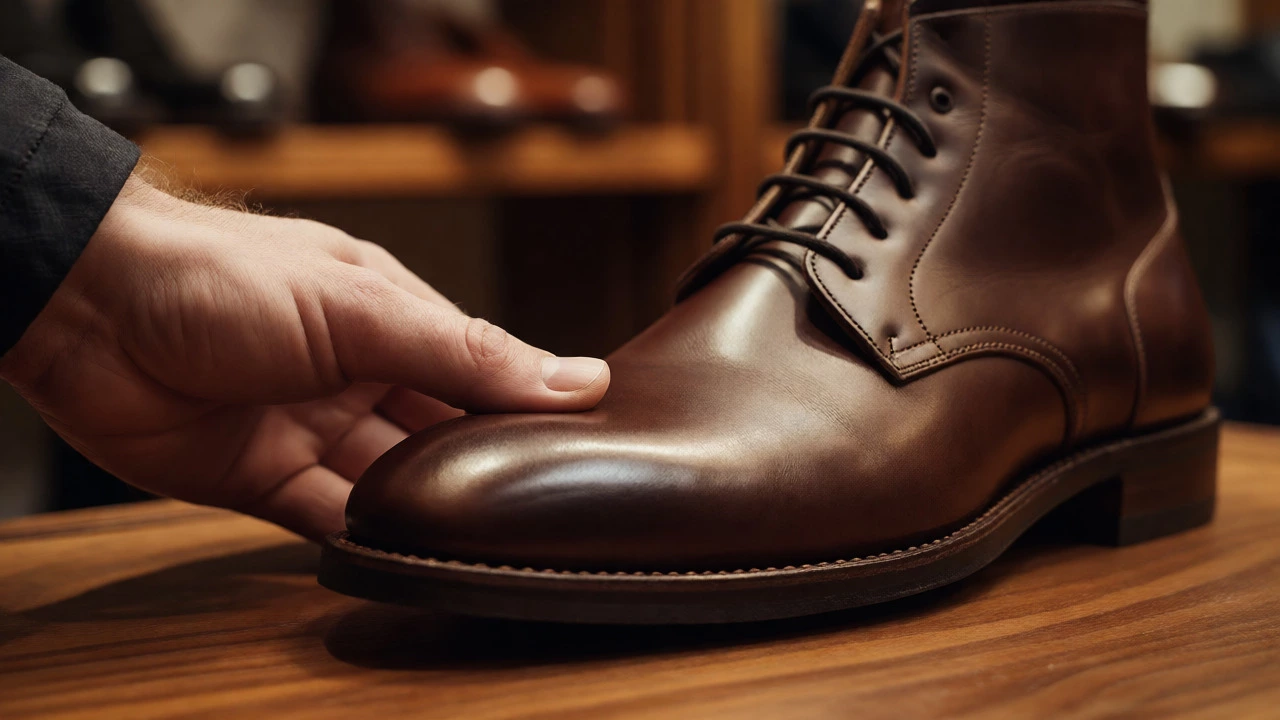
Before you even look at the stitching, use your hands. This is the fastest way to separate real quality from cheap imitations. High-quality full-grain leather is the top layer of the hide, retaining its natural grain and strength. It feels dense, slightly oily, and warm to the touch. If you press your thumb into the upper part of the shoe (not the sole), it should bounce back slowly. That slow rebound indicates high density and proper tanning.
If the leather feels plasticky, cold, or snaps back instantly like a rubber band, you’re likely looking at corrected grain or bonded leather. Corrected grain has been sanded down and coated with plastic to hide imperfections. It looks perfect out of the box but cracks easily once it gets flexed repeatedly on Irish streets. Bonded leather is essentially sawdust glued together with polyurethane. It’s fine for a desk chair, but terrible for feet that walk through puddles.
Pro Tip: Try this in the shop. Pinch the toe box gently. Good leather will wrinkle naturally around your fingers. Fake or low-grade leather will crease sharply or show white stress marks immediately.
Check the Smell and Sound
Your nose knows better than your eyes sometimes. Genuine, high-quality leather has a distinct, earthy scent. It smells like tannins, oil, and animal hide. If the shoes smell strongly of chemicals, glue, or artificial vanilla, that’s a red flag. Cheap manufacturers use heavy adhesives and synthetic finishes to mask poor-quality hides.
Now, tap the heel counter (the stiff back part of the shoe) with your knuckle. A solid, hollow thud usually means good internal structure. A dull, soft thud might indicate thin padding or weak materials. While sound isn’t a definitive test on its own, combined with smell and touch, it gives you a clearer picture.
Inspect the Stitching and Construction Method
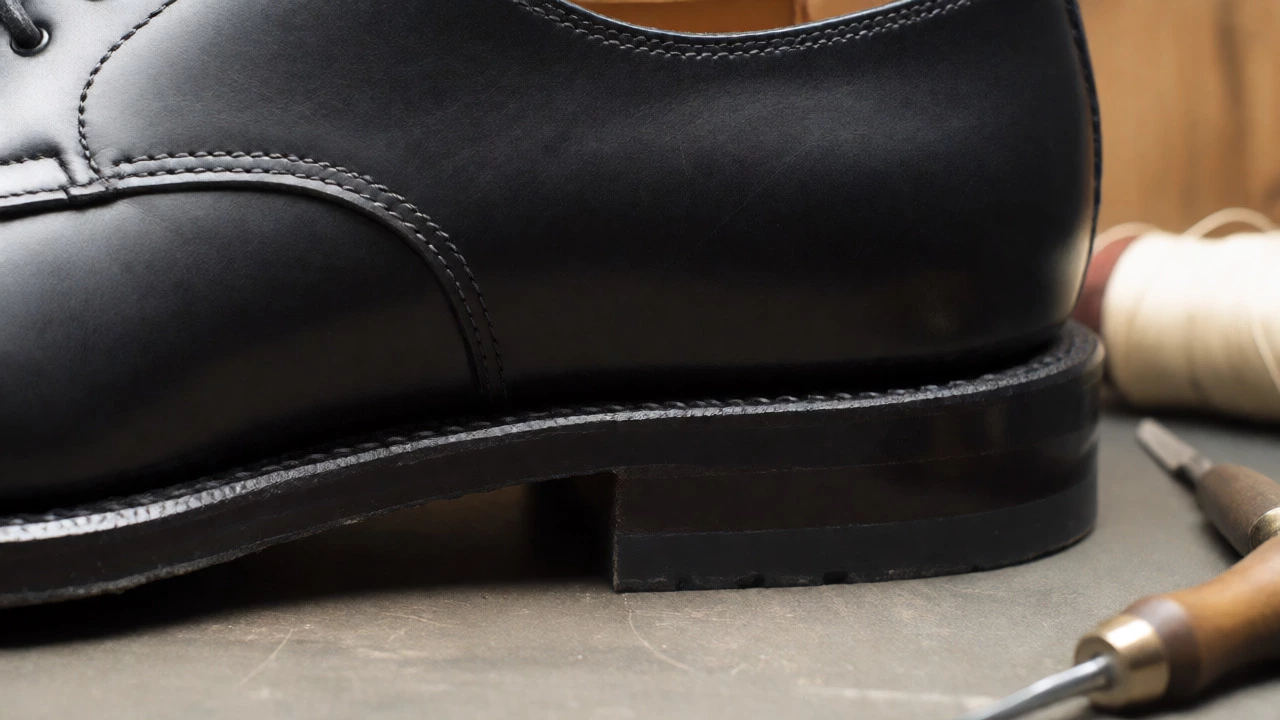
This is where most people get fooled. They see neat stitches and assume quality. But you need to look closer. Are the stitches uniform? Do they go all the way through the leather, or are they just glued on top?
The gold standard for durable dress shoes and boots is the Goodyear welt construction. This method involves stitching the upper, lining, and insole together, then attaching the outsole separately. Why does this matter in Ireland? Because Goodyear welted shoes can be resoled multiple times. When your favorite boots wear out after two years of commuting in Limerick, you take them to a cobbler, pay €40-€60 for new soles, and they last another five years. Cheaper methods like cementing (gluing) mean once the sole separates-which happens quickly in wet conditions-the shoe is trash.
| Construction Type | Durability | Resoleability | Water Resistance | Best For |
|---|---|---|---|---|
| Goodyear Welt | High | Yes (Multiple times) | Good (with care) | Daily wear, rainy climates |
| Cemented | Low-Medium | No (Rarely) | Poor (Glue fails when wet) | Fashion trends, dry seasons |
| Blake Stitch | Medium-High | Yes (Specialized cobblers) | Moderate | Sleek dress shoes, lighter weight |
Look for Natural Imperfections
We live in an age of perfection. We want our phones without scratches and our faces filtered. But in leather, perfection is suspicious. Real animal hides have scars, wrinkles, and variations in texture. These are called "natural markings." If a pair of leather shoes looks unnaturally smooth, like vinyl, it’s probably been heavily processed.
In Ireland, we appreciate authenticity. Check the side panels and the vamp (front part). See tiny pores? Those are hair follicles from the original animal. Full-grain leather retains these. Top-grain leather has them buffed away. Split leather has none because it’s the bottom layer. The presence of small, irregular pores is a strong indicator of high-quality, breathable material that will mold to your foot over time.
Test the Sole Material
The upper matters, but the sole determines your safety and comfort on Irish terrain. Avoid hard plastic soles if you plan to walk much. They become slippery when wet-a genuine hazard on mossy stones in Killarney or slick tiles in city centers.
Look for leather soles if you want elegance, but be aware they require maintenance. Rubber soles offer better grip and water protection. Vibram soles are a popular choice among Irish walkers because they provide excellent traction on wet surfaces. If you’re buying formal shoes, consider having a thin rubber topy added to the leather sole. It adds minimal bulk but saves you from slipping on wet tram tracks or marble floors.
Consider the Source: Where to Buy in Ireland
You don’t need to fly to Italy to find great leather. Ireland has a rich tradition of craftsmanship, though many local brands now manufacture abroad while maintaining strict quality controls. Brands like John Hanly or heritage makers available in independent boutiques often source European leathers. Stores like Brown Thomas or Arnotts carry reputable international labels, but always apply the physical tests above regardless of the store’s prestige.
For a more budget-friendly option, check out outlets near Dublin Airport or specialized shoe repair shops that sell second-hand vintage leather goods. Sometimes, older shoes were made with thicker, higher-grade leather than modern fast-fashion equivalents. Just ensure the structural integrity hasn’t failed before you buy.
Maintenance Matters More Than Price
Even the best Italian leather will fail in Ireland if ignored. Our humidity is the enemy. Mold loves damp, dark closets. If you buy good shoes, you must maintain them.
- Use shoe trees: Cedar wood absorbs moisture and keeps the shape. Essential for any leather shoe worn more than twice a week.
- Rotate your pairs: Never wear the same leather shoes two days in a row. They need 24 hours to dry out completely.
- Condition regularly: Use a neutral cream conditioner every 1-2 months. This replenishes oils lost to wind and rain.
- Waterproof wisely: Don’t use silicone sprays on premium leather; they can clog pores. Use wax-based polishes instead.
Buying quality is an investment, but only if you treat it as one. A €250 pair of Goodyear-welted boots maintained well will cost less over ten years than three pairs of €80 cemented boots that fall apart in the first winter.
Is Italian leather always better than Irish leather?
Not necessarily. "Italian leather" refers to where the hide was tanned, not necessarily where the shoe was made. Many Irish brands source high-quality Italian hides but construct shoes locally or in Portugal. Focus on the grade of the leather (full-grain vs. split) rather than just the country of origin label.
Can I wear leather shoes in the rain in Ireland?
Yes, but with precautions. Full-grain leather is naturally water-resistant due to its tight fiber structure. However, prolonged exposure to standing water can damage it. Always let wet shoes air dry away from direct heat sources like radiators, which cause cracking. Using cedar shoe trees helps absorb internal moisture effectively.
What is the difference between full-grain and top-grain leather?
Full-grain leather is the outermost layer of the hide, including the natural grain. It is the strongest and most durable type. Top-grain leather has the surface sanded down to remove imperfections and is coated with a finish. It is softer and more stain-resistant initially but less durable long-term and prone to peeling.
Why do my new leather shoes squeak?
Squeaking often comes from friction between the insole and the midsole, or moisture trapped inside. It can also happen if the leather is too dry. Conditioning the interior with a light leather balm or using talcum powder under the insole can resolve this. If it persists, check for loose stitching or separated layers.
Are expensive shoes always higher quality?
No. You often pay for the brand logo, marketing, and retail overheads. A mid-range shoe from a reputable manufacturer using full-grain leather and Goodyear welt construction may outlast a designer shoe made with bonded leather and glued soles. Always inspect the materials and construction yourself.