Suit Quality Inspector
Check all the "Red Flags" you observe on the suit you are inspecting.
Quick Audit ToolYou’re standing in a shop on Grafton Street or browsing a boutique in Galway, and you see a suit that looks sharp on the mannequin. The price tag is surprisingly low, and for a second, you think you've found a steal. But here is the truth: in the world of menswear, if a price seems too good to be true, the suit is likely hiding some ugly secrets. Knowing how to spot a cheap suit in Ireland means looking past the brand name and focusing on the actual construction. Whether you are dressing for a wedding in Adare Manor or a high-stakes meeting in the Docklands, you don't want to be the guy wearing a garment that looks like it's made of recycled plastic.
The Fabric Lie: Polyester vs. Wool
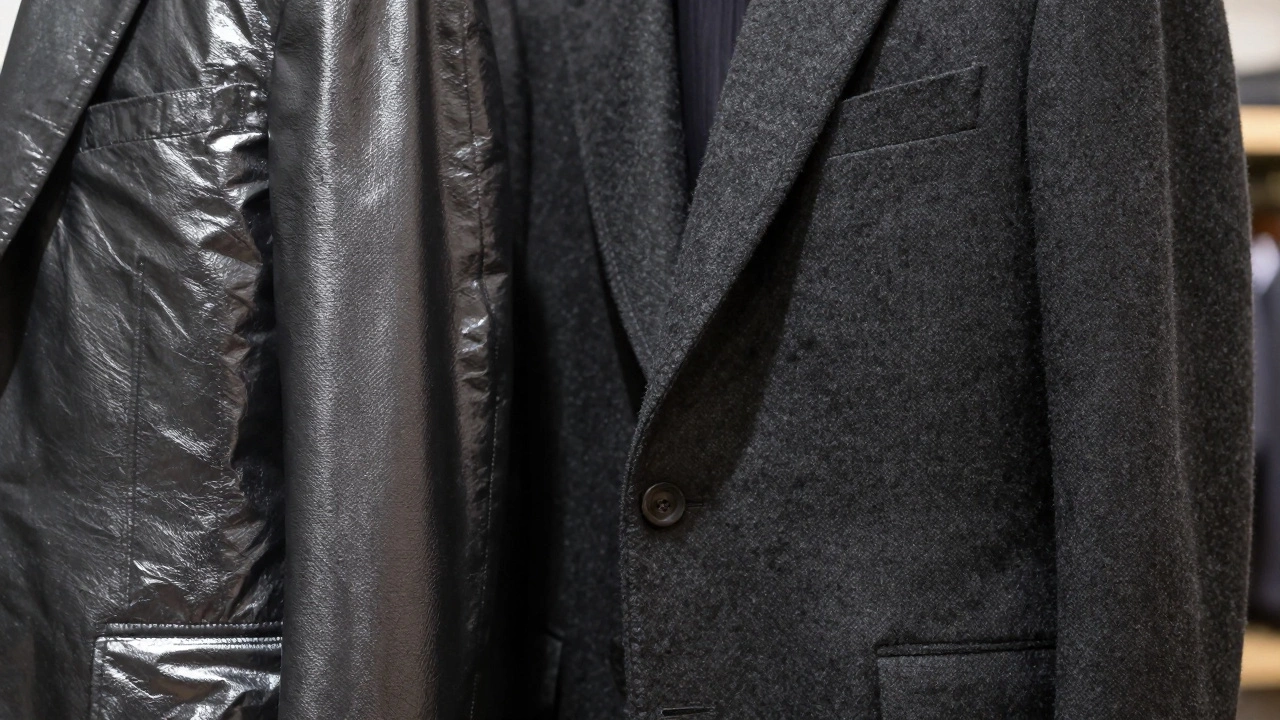
The first and most obvious giveaway is the material. Many budget suits sold in high-street shops across the country rely heavily on synthetic blends. Polyester is a synthetic polymer that is cheap to produce and highly durable but lacks breathability. When a suit has too much polyester, it doesn't breathe. If you've ever spent an hour in a crowded pub during a rainy Dublin afternoon and felt like you were wearing a sauna, that's the polyester talking. It also has a tell-tale "sheen"-a slight, unnatural shine that catches the light in a way that screams "budget."
On the other hand, Wool is a natural fiber that offers superior drape, temperature regulation, and a matte finish. A high-quality suit uses wool or a wool-silk blend. When you touch the fabric, wool feels substantial and slightly springy. If the fabric feels slippery, thin, or like a gym tracksuit, put it back on the rack. In the damp Irish climate, wool is your best friend because it naturally repels light rain and keeps you warm without making you sweat.
| Feature | Cheap Suit (Synthetic) | Quality Suit (Wool/Natural) |
|---|---|---|
| Breathability | Poor (Traps heat) | Excellent (Air flows) |
| Texture | Slippery or "Plasticy" | Soft, structured, organic |
| Visuals | Artificial sheen/glare | Rich, deep matte finish |
| Longevity | Pills and wears thin quickly | Holds shape for years |
The Shoulder Test and the Canvas Secret
Look at the shoulders. A cheap suit usually has thick, rigid padding that makes you look like a 1980s linebacker. This is done to hide the fact that the suit doesn't actually fit the human body. A quality garment follows the natural slope of your shoulder. Give the shoulder a pinch; if it feels like a stiff piece of cardboard is tucked inside, you're looking at a budget build.
Now, let's talk about the Canvas. This is the layer of fabric inside the chest piece that gives the suit its shape. A fused canvas is essentially glued to the outer fabric, which is the hallmark of a cheap suit. Over time, this glue breaks down, leading to "bubbling" on the chest-small ripples that make the suit look old and worn out after just a few dry cleans.
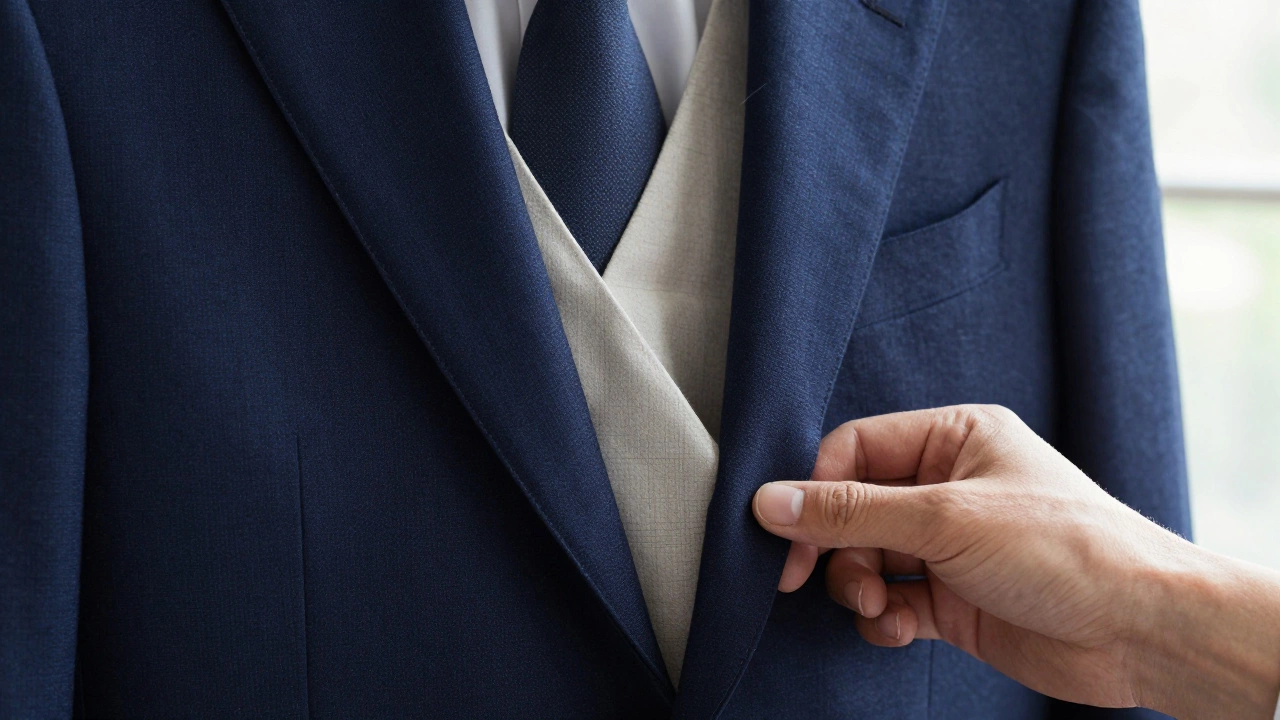
A premium suit uses a Full Canvas or Half Canvas construction. Here, the canvas is stitched to the fabric, allowing it to mold to your body over time. To test this, pinch the fabric at the bottom of the jacket's chest. If you can feel a distinct layer of fabric moving independently of the outer shell, it's canvassed. If it feels like one solid, stiff piece, it's fused and cheap.
The Telling Details: Buttons, Linings, and Stitching
If you want to spot a low-quality garment, look at the parts the manufacturer hopes you'll ignore. Start with the buttons. Cheap suits use plastic buttons that look like faux-horn from a distance but feel light and hollow. High-end suits use Horn Buttons or corozo nut, which have a natural weight and unique grain.
Check the lining. A cheap suit uses a thick, shiny polyester lining that feels like a cheap hotel bedsheet. A quality suit will use Bemberg or cupro, which is a breathable, silky material that doesn't cling to your shirt. If you're wearing a suit for a long day at the RDS or a corporate event in Cork, a Bemberg lining is the difference between staying cool and feeling sticky.
Don't forget the stitching. Look at the buttonholes. Are they sewn with a machine in a way that looks slightly frayed? Or is there a clean, tight stitch? Many luxury Irish tailors still use hand-finished buttonholes, which are a clear sign of craftsmanship. Also, check the vents. Cheap suits often have poorly aligned vents that gap open or pull awkwardly when you move.
The Fit Trap: Off-the-Rack vs. Bespoke
Many people mistake a "slim fit" label for a quality suit. In reality, a lot of budget brands just shrink the dimensions without adjusting the proportions. This leads to the "pulling" effect-where you see horizontal stress lines across the button when you close the jacket. This isn't a fit issue; it's a pattern-cutting issue common in mass-produced clothing.
In Ireland, we have a great tradition of Bespoke Tailoring, which is the process of creating a garment from scratch based on a customer's exact measurements. Even if you can't afford a full bespoke suit, look for Made-to-Measure (MTM) options. MTM takes a pre-existing pattern and alters it to your specs. A cheap suit is designed to fit "everyone and no one," while a quality suit is designed to highlight your specific frame.

The Red Flags Checklist
Next time you're shopping, keep these warning signs in mind. If you hit more than three of these, you're probably looking at a cheap suit:
- The fabric has a metallic or plastic-like shine under the store lights.
- The shoulder pads feel like rigid blocks rather than soft padding.
- The lining feels sticky or "sweaty" to the touch.
- The buttons are lightweight, hollow plastic.
- There are visible loose threads or uneven stitching around the pockets.
- The price is suspiciously low for a "100% Wool" claim (check the inner label for the actual percentages).
Investing in Longevity
It's tempting to buy three cheap suits for the price of one good one. But a cheap suit wears out fast. Polyester doesn't age; it just degrades. A wool suit, however, can be pressed and steamed back into shape for decades. If you buy a quality piece from a reputable Irish clothier, you aren't just buying a look; you're buying a garment that will survive a rainy commute and a long night of dancing at a wedding without losing its silhouette.
Can a cheap suit be tailored to look expensive?
A tailor can fix the fit-shortening sleeves or taking in the waist-but they cannot change the fabric or the internal construction. A tailor can make a cheap suit fit you better, but they can't remove the polyester shine or replace a fused canvas with a full canvas. It will fit better, but it will still look like a cheap suit.
What is the best fabric for the Irish weather?
Medium-weight wool or wool blends are ideal. Wool is naturally water-resistant and breathable, which is essential for the unpredictable Irish climate. For winter, consider a heavier tweed, which is a staple of Irish heritage and provides excellent warmth and durability.
Is a 'slim fit' suit always a sign of quality?
Not at all. 'Slim fit' is just a cut, not a quality marker. Many budget suits use the 'slim fit' label to mask poor proportions. True quality is found in how the suit drapes over your shoulders and chest without pulling, regardless of whether the style is slim, modern, or classic.
How do I tell if a suit is 'Full Canvas'?
Use the pinch test. Gently pinch the fabric on the chest area above the pocket. If you can feel a separate layer of fabric (the canvas) moving between the outer cloth and the inner lining, it's canvassed. If it feels like one thick, glued-together layer, it is fused.
Are synthetic blends ever okay?
A small amount of stretch (like 2% elastane) can be helpful for comfort in very slim cuts. However, once polyester makes up a significant portion of the blend (e.g., 30% or more), you start losing the benefits of wool, such as breathability and the natural matte look.