Boot Fit & Size Advisor
Caught between sizes? Use this advisor to see if a 0.5 size difference will work for your specific boots.
Our Verdict:
Pro Tip for this fit:
Quick Takeaways
- A 0.5 size difference usually equals about 3 to 4 millimeters in length.
- Upsizing by 0.5 is often better for thick winter socks or foot swelling.
- Downsizing by 0.5 is rarely recommended, as it leads to toe cramping and blisters.
- The 'rule of thumb' is to have about a finger's width of space at the toe.
- Boot style (ankle vs. knee-high) changes how a half-size gap affects stability.
The Math Behind the Half Size
To understand the impact, we have to look at what that 0.5 actually represents. In most standard sizing systems, a half size isn't a random number; it's a precise measurement. Shoe Sizing is the standardized system of measuring foot length and width to ensure a proper fit. In a typical UK or EU scale used across the Republic, a half size usually translates to roughly 3 to 4 millimeters of additional length. Now, 3mm sounds like a grain of rice, but when you're walking 10,000 steps a day through the damp streets of Dublin or Cork, those millimeters multiply. If the boot is too big, your foot slides forward, crashing your toes into the front. If it's too small, your toes are crushed against the sole, which can lead to permanent nail damage over time.
When Going Up 0.5 is a Smart Move
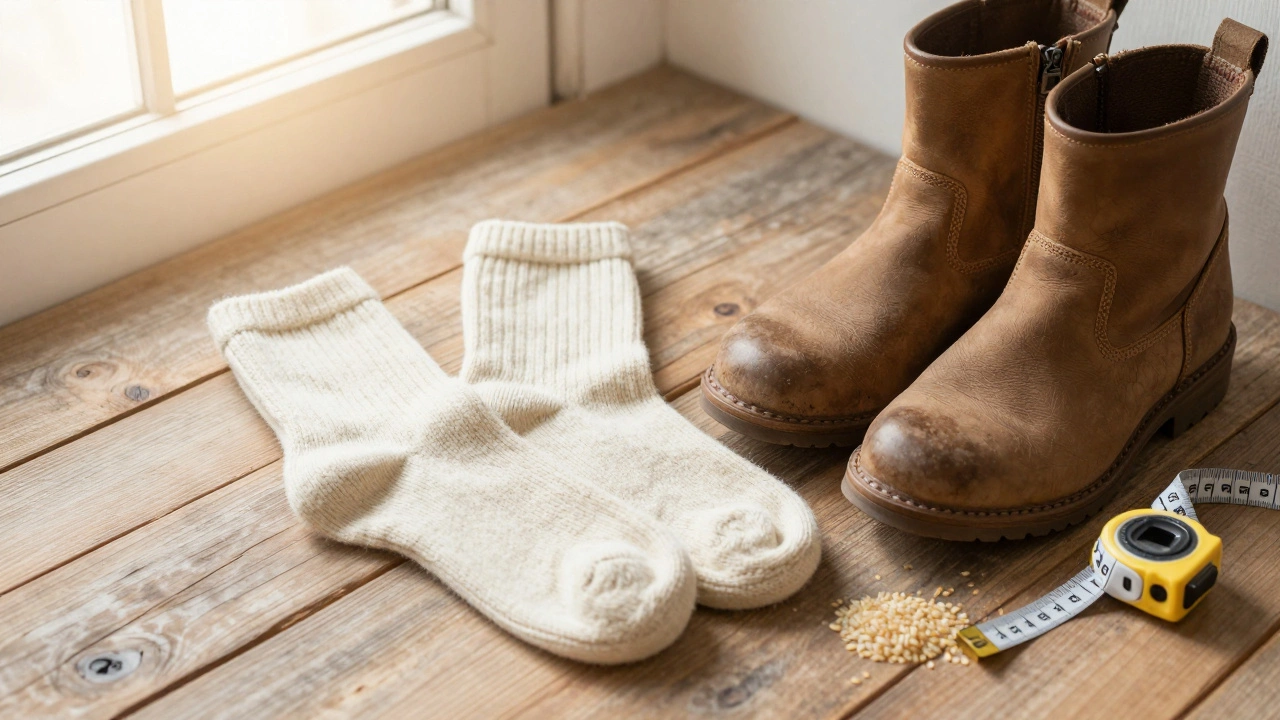
There are times when buying a half size larger is actually the pro move. Consider the typical Irish winter. You aren't wearing thin nylon socks; you're likely reaching for heavy Wool Socks, which are thick, insulating socks often made from merino wool to keep feet warm in cold, wet climates. These socks can easily take up that 0.5 size gap. If you buy your exact size, the thick wool will compress your foot, cutting off circulation and making your feet feel colder because the blood can't flow properly.
Another factor is the "afternoon swell." Your feet naturally expand throughout the day. If you try on boots at 10 AM in a shop in Grafton Street, they might feel perfect. By 6 PM, after a full day of work, your feet will be slightly larger. If you're right on the edge of two sizes, the 0.5 size increase provides a necessary buffer that prevents the boots from feeling like a vice by the end of the day.
The Danger of Going Down 0.5
If you're tempted to squeeze into a half size smaller because the boots are on sale at a place like Penneys or Brown Thomas, stop right there. Unlike leather that stretches *out*, boots never stretch *longer*. If your toes are touching the end of the boot, they will stay there. This leads to "toe jamming," where the pressure causes blisters on the tips of your toes or causes your nails to bruise.
In a boot, a tight fit is exacerbated by the structure. Because boots have a higher shaft than shoes, they hold your ankle more firmly, which pushes your foot further forward into the toe box. If you're already half a size too small, there is zero room for error. You'll likely find yourself walking differently-curling your toes to avoid pain-which can lead to calf strain and lower back aches during a long stroll through the Phoenix Park.
| Boot Style | 0.5 Too Small | 0.5 Too Large | Verdict |
|---|---|---|---|
| Ankle Boots (Chelsea) | Immediate toe pressure | Heel slippage | Stay true to size |
| Knee-High Boots | Cramped toes | Gapping at the ankle | Upsize for socks |
| Combat/Lace-up Boots | Severe pinching | Easily fixed with laces | Upsize is safer |
| Heeled Boots | Foot slides forward (toes crush) | Blisters on the heel | Crucial precise fit |
Combatting the Gap: How to Fix a 0.5 Size Error
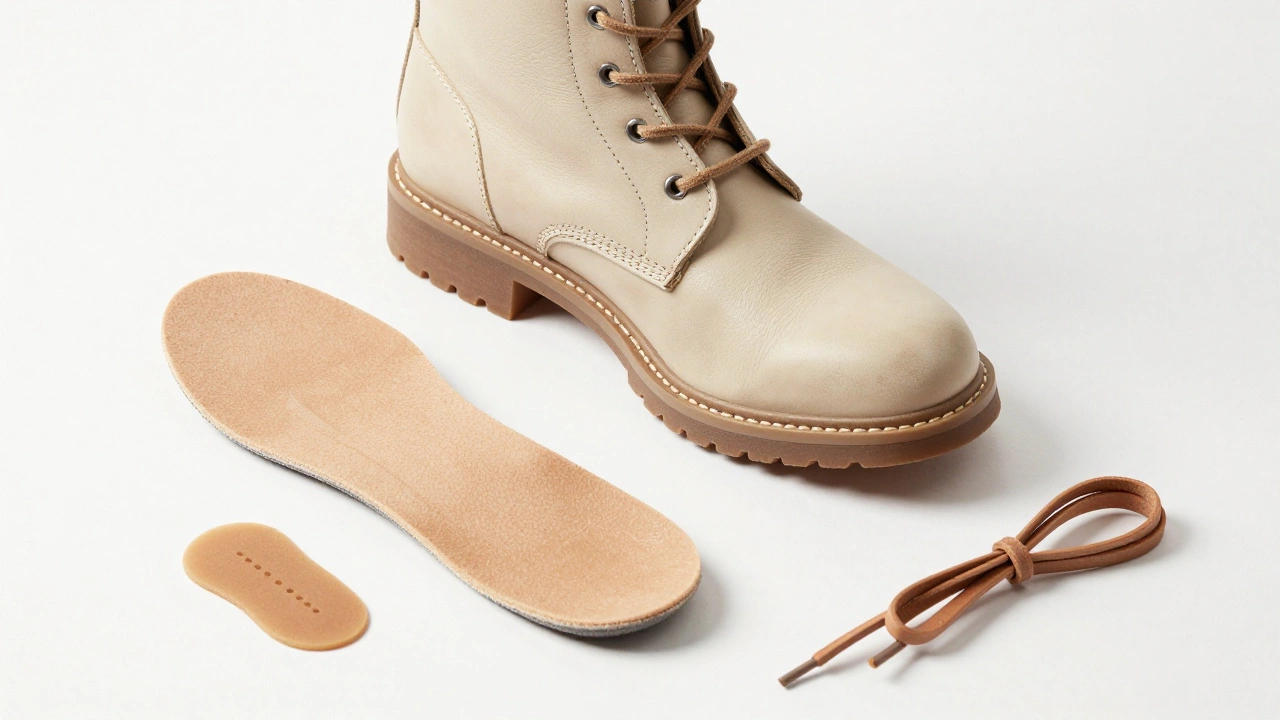
Let's say you've already bought the boots and they're a half size too big. You don't have to send them back. There are several ways to "cheat" the fit. The most effective is using Insoles, which are removable inserts placed inside a shoe to provide extra cushioning or adjust the internal volume. A thin foam or gel insole lifts the foot slightly, filling the extra vertical space and pushing the foot more snugly against the upper material. This often eliminates the heel slip associated with being a half size too large.
Alternatively, you can use heel grips-small adhesive pads that stick to the back of the boot. These are lifesavers for women's boots in Ireland, especially when dealing with the smooth lining of high-end leather boots. They grip the skin of your heel and push your foot slightly forward, making a 6.5 feel more like a 6. If you're wearing lace-up boots, simply tightening the laces across the bridge of your foot can lock the heel in place, making that 0.5 difference virtually unnoticeable.
The Role of Material: Leather vs. Synthetic
The material of your boot changes whether that 0.5 size is a dealbreaker. Full-Grain Leather is a high-quality leather that retains the natural grain and is known for stretching and molding to the wearer's foot over time. If you buy leather boots that are a tiny bit snug (but not painful), they will likely stretch to accommodate your foot. In this case, a 0.5 size smaller might actually become a perfect fit after a few weeks of wear.
Synthetic materials, like faux leather or rubberized rain boots, do not stretch. If a pair of synthetic boots is 0.5 size too small, they will be too small forever. If they are 0.5 size too big, they will stay big. When shopping for waterproof boots for the West Coast's unpredictable weather, always lean toward the larger half size. It's much easier to add a sock than it is to stretch a piece of waterproof plastic.
Can I just wear thicker socks if my boots are 0.5 size too big?
Yes, this is the most common fix. However, be careful not to overstuff the boot. If the socks are so thick that your toes are pressed against the front, you've actually created a "too small" problem. The goal is to fill the volume, not compress the foot.
How do I know if my boots are truly 0.5 size too large?
Perform the "finger test." Slide your foot forward until your toes touch the front. If you can fit more than one finger comfortably behind your heel, they are likely too large. If you can't even fit a pinky finger, they are likely too small.
Does the heel height affect how a half size feels?
Absolutely. In high heels, your foot is pushed forward. This means a boot that is 0.5 size too large will cause your heel to slip out more frequently, while a boot that is 0.5 size too small will crush your toes against the front of the shoe much more aggressively than a flat boot would.
Should I buy different sizes for each foot?
Many people have one foot slightly larger than the other. If you are caught between sizes, always buy for the larger foot. You can easily make a boot fit a smaller foot using an insole, but you can't make a boot fit a larger foot.
Will leather boots stretch enough to fix a 0.5 size too small issue?
Leather stretches in width, but it almost never stretches in length. If the boot is too tight across the ball of your foot, it will likely loosen up. If your toes are hitting the front wall, no amount of stretching will fix that.
Final Checks Before You Buy
Before you commit to a pair of boots, especially if you're debating that half size, do a quick trial run. Don't just stand in the store; walk around. Feel where the friction is. If you feel a "rub" on your heel, that's a sign the boot is too long (0.5 too big) and your foot is sliding. If you feel a "pinch" at the toes, it's too short (0.5 too small).
If you're shopping online from Irish retailers, check the return policy specifically for "fit issues." Some stores offer free exchanges for half sizes, which takes the risk out of the gamble. When in doubt, remember that a slightly loose boot is a solvable problem with an insole, but a tight boot is a recipe for a miserable walk through the rain.