When you live in Ireland, rain isn’t just weather-it’s a daily companion. From Galway’s misty mornings to Dublin’s sudden downpours, your leather shoes take a beating. So when you step out in the morning and find your favorite brogues soaked by lunchtime, the question isn’t just are leather shoes ruined if they get wet? It’s how do you save them before they crack, warp, or smell like a bog after a storm?
Leather Shoes and Irish Rain: A Real-Life Battle
Leather isn’t waterproof. That’s not a flaw-it’s a fact. But in Ireland, where the average annual rainfall hits 1,100mm and it’s not unusual to see three showers before noon in Cork, treating leather like it’s a raincoat is a recipe for disaster. I’ve seen people walk through puddles in Connemara with their new John Lobb loafers, then wonder why they cracked by March. Leather absorbs water like a sponge. If left untreated, it swells, then shrinks as it dries. That’s when the cracks form. The stitching pulls. The sole starts to separate.
But here’s the good news: leather shoes don’t have to be casualties of the Irish climate. With the right care, they can last decades-even through Galway’s wettest winters. The key isn’t avoiding water. It’s managing it.
What Happens When Leather Gets Wet
When water hits untreated leather, three things happen:
- It swells. The natural fibers in the hide expand as they soak up moisture. This stretches the material beyond its normal shape.
- It loses oils. Leather is tanned with natural fats to stay supple. Water washes those oils away.
- It dries unevenly. If you leave wet shoes by a radiator or in front of a fire, the outside dries fast while the inside stays damp. That’s when the leather hardens, becomes brittle, and cracks.
That’s why you see so many worn-out shoes in Dublin’s city center-people rush them into heat after a walk through Trinity Park or along the Liffey. The damage isn’t immediate. It builds up over months. One rainy Tuesday here, one soggy Wednesday there, and suddenly your £200 Allen Edmonds are unrepairable.
Immediate Steps After Your Shoes Get Wet
Don’t panic. Don’t throw them in the dryer. Don’t even wipe them with a towel yet. Here’s what to do, step by step:
- Remove the insoles. If they’re removable, take them out. Wet insoles are the main source of odor and mold in Irish footwear.
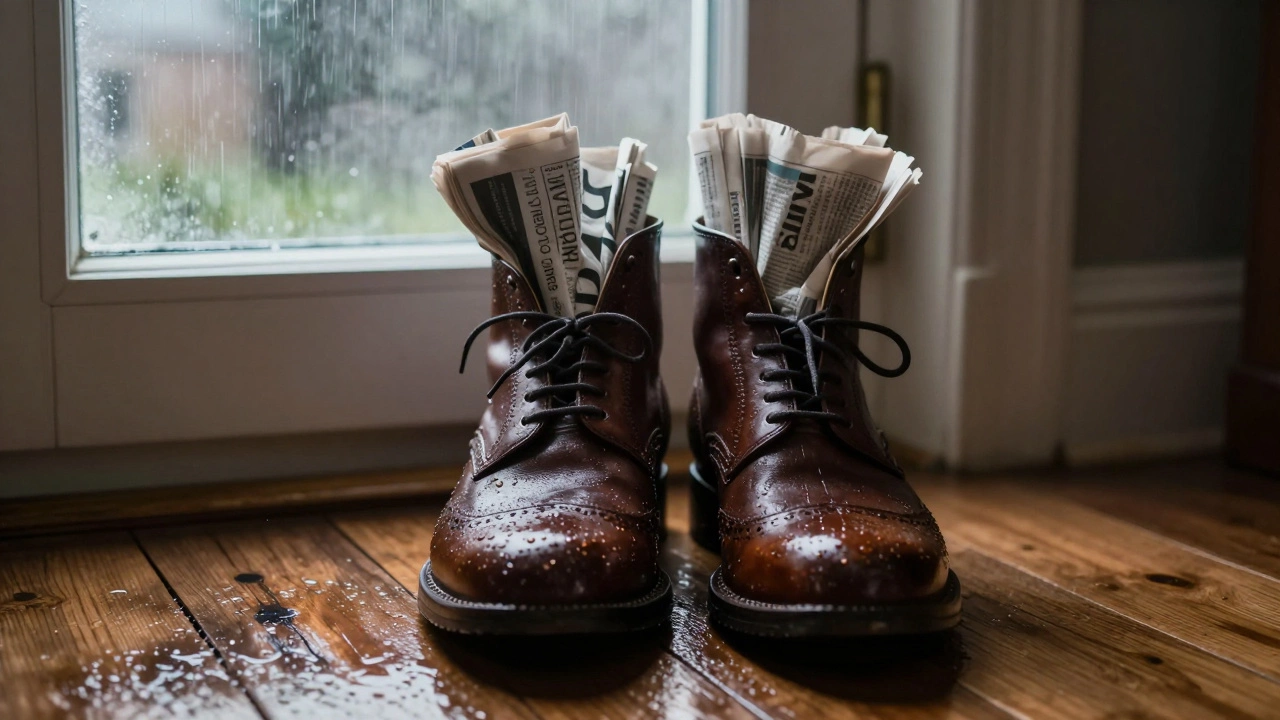
- Stuff them with newspaper. Crumple plain, unprinted newspaper and pack it inside. It soaks up moisture without scratching the leather. Avoid glossy magazine pages-they transfer ink. In Galway, locals swear by using old copies of the Connacht Tribune-they’re free, absorbent, and often already damp from the weather.
- Let them air dry naturally. Place them in a cool, ventilated spot. Not near a radiator. Not in direct sunlight. Not under a heat lamp. A hallway in your Clonmel cottage or the back of your Belfast closet works best. It can take 24 to 48 hours. Be patient.
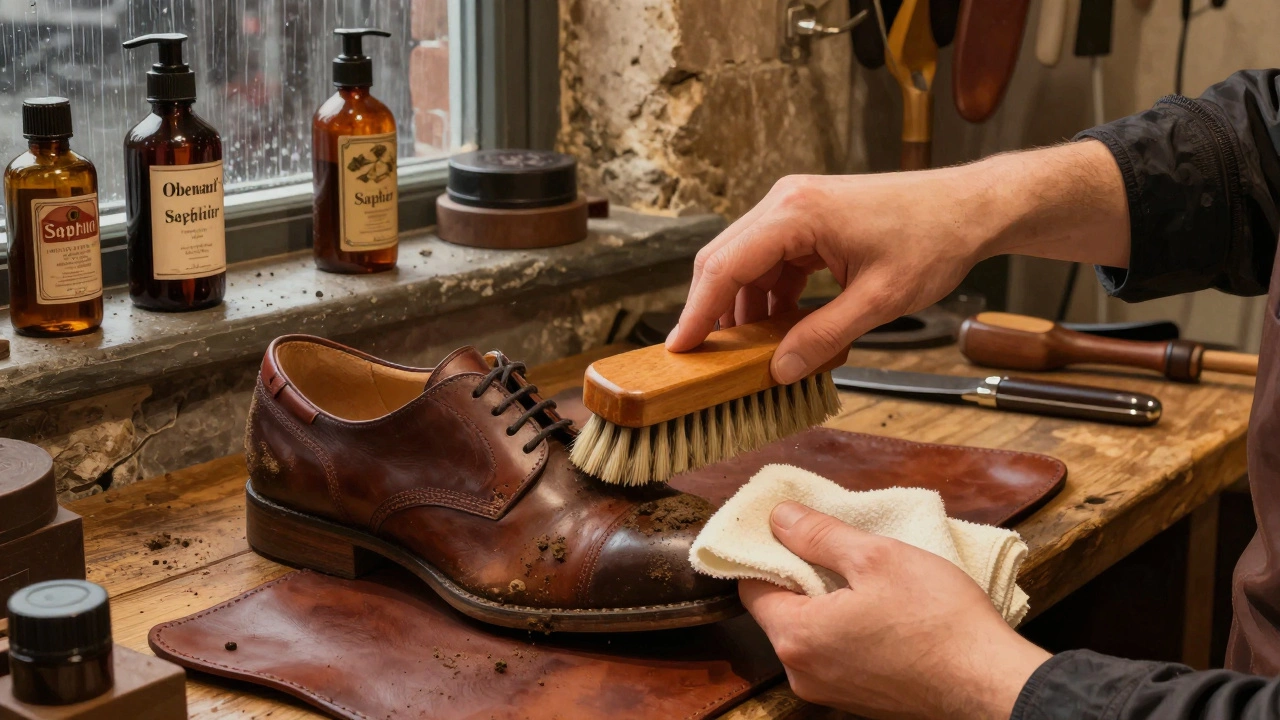
- Once dry, clean them. Use a soft horsehair brush to remove dirt. Then wipe with a slightly damp cloth. Don’t soak them. Just a light pass.
And here’s a tip from the shoe repair shops on Grafton Street: if your shoes were muddy, don’t scrub. Let the mud dry first. Then brush it off. Scrubbing wet mud into the grain is like sandpaper on leather.
Conditioning: The Real Lifesaver
Drying your shoes isn’t enough. You need to replace the oils that water washed out. That’s where conditioning comes in.
Use a quality leather conditioner-preferably one with beeswax and lanolin. In Ireland, brands like Obenauf’s Leather Oil and Saphir Medaille d’Or are common in shoe repair shops from Waterford to Derry. Apply it with a soft cloth, in thin layers, once every 4-6 weeks if you’re walking in rain often. Do it after every major soaking.
Don’t use shoe polish as a conditioner. Polish is for color and shine. Conditioner is for survival. You wouldn’t put sunscreen on your face and call it moisturizer. Same logic applies here.
Waterproofing: Your Shield Against the Irish Sky
Conditioning keeps leather soft. Waterproofing keeps it dry. The two go hand-in-hand.
After conditioning, apply a waterproofing spray. Look for one with silicone or fluoropolymer. Avoid wax-based sprays if your shoes have a smooth finish-they can leave a greasy film. In Ireland, Nikwax Leather Waterproofer is widely available in outdoor stores like Mountain Equipment in Dublin or Decathlon in Limerick. It’s affordable, effective, and doesn’t clog the pores of the leather.
Apply it in a well-ventilated area. Two light coats, 24 hours apart. Reapply every 3-4 months, or after every deep soaking. Don’t skip this. Even the best leather shoes will fail without it.
What to Avoid in Ireland’s Climate
There are a few myths that ruin leather shoes faster than rain:
- Never use hairdryers or radiators. Heat cracks leather faster than ice in January.
- Avoid olive oil or coconut oil. They go rancid. You’ll end up with smelly, sticky shoes by summer.
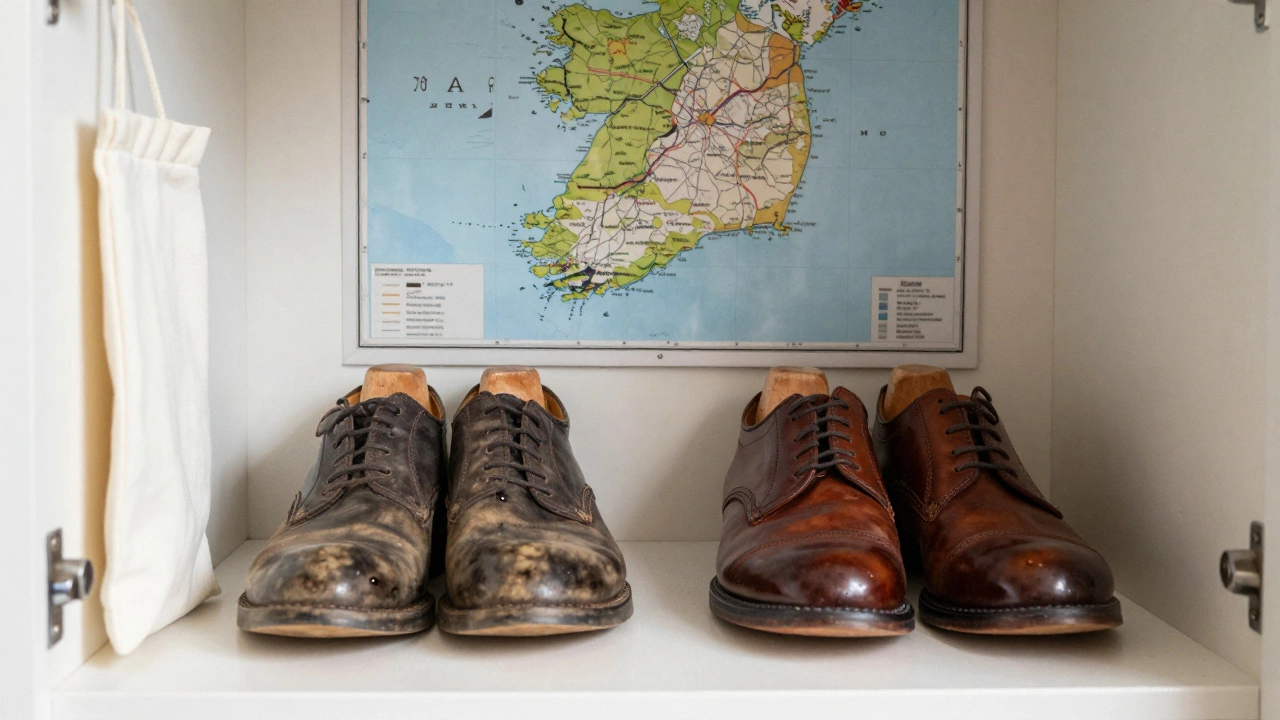
- Don’t store them in plastic bags. Leather needs to breathe. Use cotton shoe bags or keep them on wooden lasts in a dry cupboard.
- Don’t wear them in snow or slush. Salt and grit eat through leather faster than rain. If you need winter boots, get dedicated ones with rubber soles and waterproof membranes.
And yes-I’ve seen people wear their suede Chelsea boots to the Galway Races. Don’t be that person. Suede is leather’s weak cousin in rain. If you must wear it, treat it with a suede protector and carry a brush. But for daily wear in Ireland, stick to smooth, grained leather.
When It’s Too Late
Some damage can’t be undone. Deep cracks, warped soles, or mold inside the lining mean your shoes are beyond home repair. But before you toss them, take them to a local cobbler.
Ireland still has a thriving network of independent cobblers. In Cork, Shoe Repair Centre on Grand Parade can resole your brogues for €45. In Belfast, McKenna’s Shoe Repair can re-heel and re-stitch your Oxfords for less than half the price of a new pair. Many even offer free pickup from local post offices.
Don’t underestimate the value of repair. A well-maintained pair of leather shoes can last 15-20 years. A new pair? Maybe two. In a country where rain is constant, longevity isn’t a luxury-it’s a necessity.
Final Tip: Build a Rain-Ready Rotation
If you’re serious about keeping your leather shoes alive, build a rotation. Don’t wear the same pair two days in a row. Let them rest. That gives the leather time to recover. In Ireland, where the ground stays damp for weeks, that rest period is critical.
Have two pairs of leather shoes. One for dry days. One for rain. Rotate them. Condition them weekly. Waterproof them monthly. Your feet-and your wallet-will thank you by the time winter rolls around again.
Can I wear leather shoes in the rain in Ireland?
Yes, but only if they’re properly conditioned and waterproofed. Untreated leather will absorb water, crack, and eventually fall apart. In Ireland’s wet climate, treating your shoes isn’t optional-it’s part of your daily routine, like checking the weather before leaving the house.
How often should I condition my leather shoes in Ireland?
If you’re walking in rain regularly, condition them every 4-6 weeks. If you’ve had a major soaking, condition them immediately after they dry. In winter, when the air is cold and damp, you may need to condition them every 3 weeks. Always condition before waterproofing.
Is it better to buy waterproof leather shoes or treat regular ones?
Treat regular ones. Waterproof leather shoes often use chemical coatings that wear off after a few months and can’t be easily reapplied. Regular leather that’s been properly conditioned and sprayed with a quality waterproofing product lasts longer and can be repaired. Brands like Church’s or Crockett & Jones, commonly found in Irish boutiques, are made for this kind of care.
What’s the best brand of leather shoe for Irish weather?
There’s no single “best” brand, but look for full-grain leather, Goodyear welted construction, and a rubber sole. Brands like Church’s, Tricker’s, and Allen Edmonds are common in Ireland and built to last. For budget options, Clarks and Ecco offer good quality with water-resistant finishes. Avoid cheap, glued soles-they’ll separate after one wet winter.
Can I use candle wax to waterproof my shoes?
No. Candle wax can clog the leather’s pores and trap moisture inside, leading to mold and rot. It also turns brittle in cold weather. Stick to products made for leather-like Nikwax, Obenauf’s, or Saphir. They’re designed to breathe while repelling water.
Final Thought: Your Shoes Are Part of Your Story
Leather shoes in Ireland aren’t just footwear. They’re companions through rainy walks in Phoenix Park, commutes on the 145 bus in Limerick, and Sunday strolls along the Causeway Coast. A pair that’s been cared for carries the marks of your life here-the puddles you jumped, the cobblestones you crossed, the festivals you attended in the rain.
They don’t need to be perfect. They just need to be respected. Treat them right, and they’ll walk with you for years. Ignore them, and you’ll be buying new ones every season-spending more money, wasting more leather, and missing out on the quiet pride that comes from wearing something that’s lasted.